Surrounded by storefronts, but nowhere to shop? Charlotte, NC, like many reviving downtowns, has a plethora of restaurants but a lack of significant retail.


"Charlotte's retail problem is striking because it contrasts so sharply with the ongoing revival, but it is a problem that afflicts most big cities in America, whether their downtowns are reviving, declining or standing still. They all are having trouble attracting any significant retail presence to the traditional urban core. People move to the center of town, live in luxury apartments, wait in line at expensive restaurants, enjoy the late-night entertainment scene. But when they want to buy something - a screwdriver, a pair of socks, a tablecloth, a printer cartridge - they have to drive somewhere else in the city or the suburbs, often to a mall several miles away.
Is there a solution? In Charlotte, the civic establishment is convinced there is. At Charlotte Center City Partners, one of the most active and entrepreneurial downtown development organizations in the country, they talk endlessly about "the retail problem." Last December, the group completed a 14-month study of the issue, releasing a detailed statistical report citing possibilities for a retail revival."
Read the full story: Revival by Restaurant

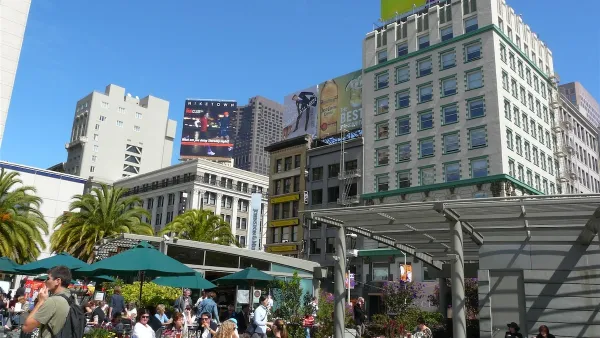
Traditional Retail is Hanging by a Thread. What Now for Cities?
After Kaid Benfield paints a rather grim retail outlook — where even retail bastions like San Diego are going dark — he suggests a series of actions for city leaders and planners.
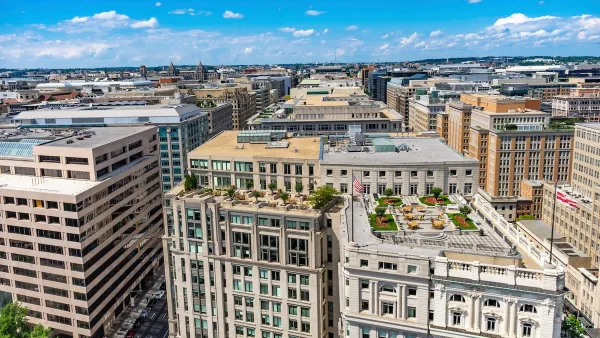
DC Announces ‘Office to Anything’ Adaptive Reuse Program
The program complements an existing residential conversion initiative and could yield up to 2.5 million square feet of new commercial space.
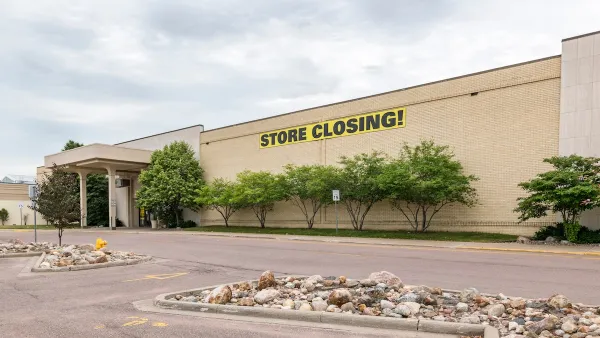
Shifts in Shopping: Transforming Malls Into Parks
Maybe zombie malls still have a second life — one with a little greenery.

Planetizen Federal Action Tracker
A weekly monitor of how Trump’s orders and actions are impacting planners and planning in America.

The state-sanctioned urbicide of Austin
People don’t kill cities. Freeways do.

US to reduce Colorado River water deliveries to Mexico
A new Colorado Treaty amendment reduces Mexico’s Colorado River water allocation by 250,000 acre feet.

Nation's most wind-powered state turns to coal as data centers increase energy demand
For the first time in decades, Iowa has increased its generation of coal power.

NYC cools commuters with city's first rain garden above a bus stop
New York City officials say the plants in the rain garden can absorb 16 gallons of rainwater during heavy storms.

Brightline West’s future may rely on $6 billion federal loan
The company has until Nov. 2 to make a $400 million equity investment into its proposed high-speed rail line.

FREE Course: Walkable City 1: Why Walkability?
After describing his path towards focusing on walkability as the essence of good planning, Jeff Speck marches through his five principal reasons for making more walkable places.
Reinventing Malls: Planning Alchemy—Turning Gray Fields Into Gold
The course focuses on the opportunities and imperatives that shape reinvention of mall sites.

Greater Baltimore Committee
Eagle County Government
Harvard University Graduate School of Design
The Architects Foundation
University of Cincinnati Online
The Pocatello Development Authority
The Urban Renewal Agency of the City of Pocatello
Journal of the American Planning Association