Across the country, cities are trying to figure out how to handle the rising tide of cyclists riding through their streets. A common reaction is to offer classes on safe cycling.


"The high price of gas is creating a surge in bicycle commuting across the country, not just in West Coast cities but in places like Louisville, Ky., and Charlotte, N.C. The rush of newbies has triggered tensions with drivers unaccustomed to sharing the road, and driven cyclists to seek out traffic training."
"'I'm getting hammered by mayors asking, 'What are you doing about all these new bikers on the street and nobody knows the rules of the road?' ' says Robert Raburn, executive director of the East Bay Bicycle Coalition in Oakland. When the organization started classes in 2003, it offered maybe two a year. Now, it has six slated for September with two more to be announced."
"In the Bay State, MassBike reports offering two dozen classes this year, compared with three the year before."
"To be sure, $4 gas isn't going to turn America into Amsterdam. The latest US census figures from 2006 offer perspective: Only one half of one percent of Americans commuted by bike."
"But the rise, even if it's a small number, is affecting cities in everything from transportation funding to traffic safety."
Read the full story: New bike commuters hit the classroom, then the road

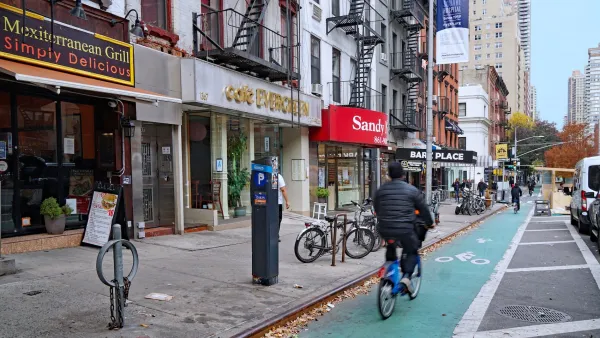
Study: Protected bike lanes increase Citi Bike rides by nearly 400 rides a month
An analysis of millions of NYC bike share rides reveals that only protected bike lanes have a 'statistically significant' increase in ridership.
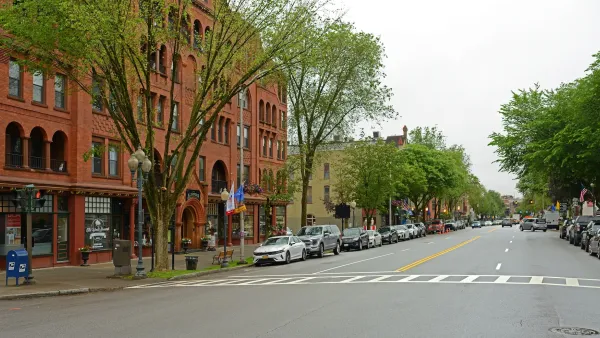
Saratoga Springs bike advocates say city is ignoring its Complete Streets plan
Despite a commitment to improving its multimodal infrastructure, the city has no plans to install bike lanes or curb cuts as part of repaving projects on two streets.
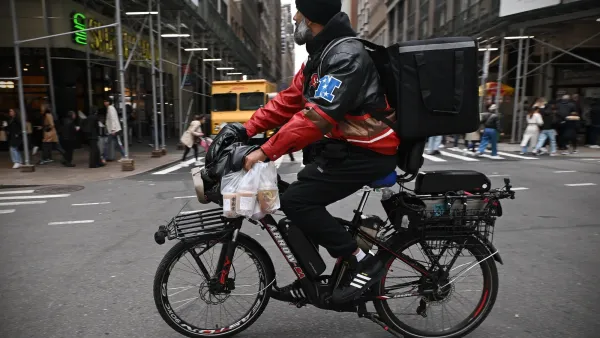
Study: Delivery Workers Are the Safest Cyclists on NYC Roads
A new study shows that delivery workers are more likely to stop at red lights and obey traffic rules than recreational or commuter riders.

Planetizen Federal Action Tracker
A weekly monitor of how Trump’s orders and actions are impacting planners and planning in America.

The state-sanctioned urbicide of Austin
People don’t kill cities. Freeways do.

US to reduce Colorado River water deliveries to Mexico
A new Colorado Treaty amendment reduces Mexico’s Colorado River water allocation by 250,000 acre feet.

Nation's most wind-powered state turns to coal as data centers increase energy demand
For the first time in decades, Iowa has increased its generation of coal power.

NYC cools commuters with city's first rain garden above a bus stop
New York City officials say the plants in the rain garden can absorb 16 gallons of rainwater during heavy storms.

Brightline West’s future may rely on $6 billion federal loan
The company has until Nov. 2 to make a $400 million equity investment into its proposed high-speed rail line.

FREE Course: Walkable City 1: Why Walkability?
After describing his path towards focusing on walkability as the essence of good planning, Jeff Speck marches through his five principal reasons for making more walkable places.
Reinventing Malls: Planning Alchemy—Turning Gray Fields Into Gold
The course focuses on the opportunities and imperatives that shape reinvention of mall sites.

Greater Baltimore Committee
Eagle County Government
Harvard University Graduate School of Design
The Architects Foundation
University of Cincinnati Online
The Pocatello Development Authority
The Urban Renewal Agency of the City of Pocatello
Journal of the American Planning Association