A powerful Harlem church that has expanded its reach into local real estate development is coming under fire from locals who say their projects are damaging Harlem's small-town character and encouraging gentrification.


"Its projects include the first high school built in Harlem in 50 years, some of the neighborhood's first national retail chain stores, one of its few full-service supermarkets, a department store and a shopping center. Abyssinian also owns more than 1,100 rental units, nearly all of them for low-income residents."
"As the church's development arm has grown in size and influence, however, it has become a target of critics who say it has ushered in a wave of gentrification that has displaced longtime residents and has been a neglectful landlord of some of its apartment buildings, which have amassed hundreds of unresolved violations. But the Rev. Calvin O. Butts III, Abyssinian's pastor, who founded the development corporation 19 years ago, said the organization is a good landlord that has stayed true to its aim of providing affordable housing and offering an array of social services in a neighborhood where more than one-third of the residents live below the poverty line."
"Critics have a list of complaints: that Abyssinian does not keep the community apprised of its development plans; that it has pushed through projects over the objections of the local community board; that it does not ensure the hiring of minority contractors; that it has opposed historic preservation; and that it has virtually ignored small businesses in favor of chain stores that have damaged the small-town character of Harlem."
Read the full story: Powerful Harlem Church Is Also a Powerful Harlem Developer
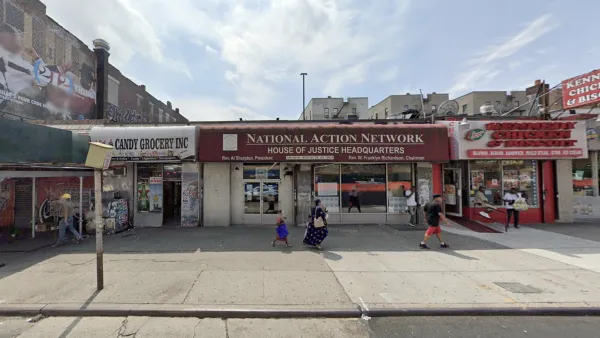
Market Rate Condos Could Replace Harlem Towers Proposal
After facing community opposition and a call for more deeply affordable housing units, developers withdrew their proposal for Harlem’s One45, prompting questions about the future of the site.
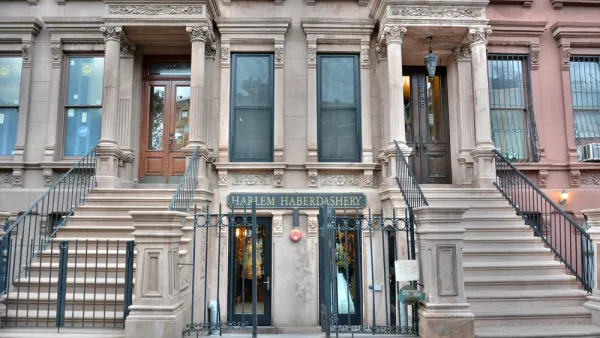
The Langston Hughes House and a Gentrifying Harlem
Artists and community members seek to preserve the culture and identity of Harlem amid the growing popularity and expense of housing in their community and all over New York.
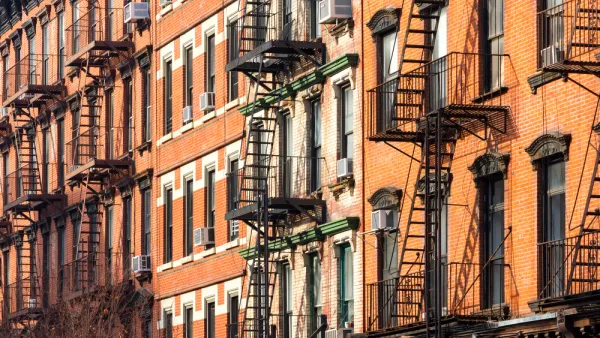
One Fourth of East Harlem Housing Set to Lose Affordability
The area could lose up to 500 units of affordable housing every year for the next 30 years if the city doesn't extend existing protections.

Planetizen Federal Action Tracker
A weekly monitor of how Trump’s orders and actions are impacting planners and planning in America.

Washington state to charge fee to drivers with fuel-efficient cars
Revenue from the fee will go towards supporting the state’s highways.

Trump to blast ‘hydrocarbon highway’ through ‘world’s longest art gallery’
Environmental and historic preservation groups are suing to stop the project.

Data centers need power – lower income, rural residents pay the price
In 2025, data centers paid only 38% of the energy infrastructure costs linked to their growth, with households, especially rural and low-income residents, bearing the remaining burden.

MBTA Green Line project moved to next phrase of CIG program
The modernization effort will cost $4.08 billion.

22-mile pedestrian and bike path to encircle Atlanta by 2030
The project will also support affordable housing.

FREE Course: Walkable City 1: Why Walkability?
After describing his path towards focusing on walkability as the essence of good planning, Jeff Speck marches through his five principal reasons for making more walkable places.
Reinventing Malls: Planning Alchemy—Turning Gray Fields Into Gold
The course focuses on the opportunities and imperatives that shape reinvention of mall sites.

City of Charlotte
City of Rosemead
Rutgers University, Edward J. Bloustein School of Planning and Public Policy
University of Michigan School for Environment and Sustainability (SEAS)
Hunter College, City University of New York (CUNY)
The Architects Foundation
University District Partnership