New York's Chinatown is a popular place for filming, which brings a lot of film crews to the neighborhood. A temporary film crew parking ban has been put in place, but the results are mixed.


"A month ago, a local community leader finally came up with a plan intended to remedy the situation. Justin Yu, president of the Chinese Consolidated Benevolent Association, presented the Mayor's Office of Film, Theater and Broadcasting, the agency that regulates filming in the city, with a map of Chinatown and suggested that the streets he had highlighted be deemed a "no go" zone for film crew parking."
"His effort succeeded. For 60 days starting on July 1, the city has forbidden vehicles for film productions to park in a several-block area bounded by Canal Street, Worth Street, Baxter Street and East Broadway."
"The first casualty of the new policy was "Brooklyn's Finest," a crime drama starring Richard Gere. Mr. Gere had planned to film in Chinatown in mid-July, but the shoot was canceled because the production crew couldn't park on Doyers Street."
"For Gine Lui, the location supervisor of "Brooklyn's Finest," the ban on parking represents a ban on all film activity. 'It's no different from a ban on shooting,' Ms. Lui said, 'because there is no way we can shoot without the service trucks parking nearby.'"
"By contrast, some local merchants are delighted with the ban."
Read the full story: For Better (and Worse), the Film Crews Depart

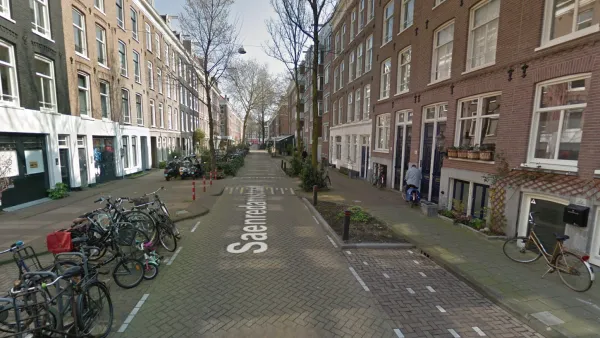
Watch: How to Remove Thousands of Parking Spaces
What the city of Amsterdam will gain by removing cars from on-street parking space.
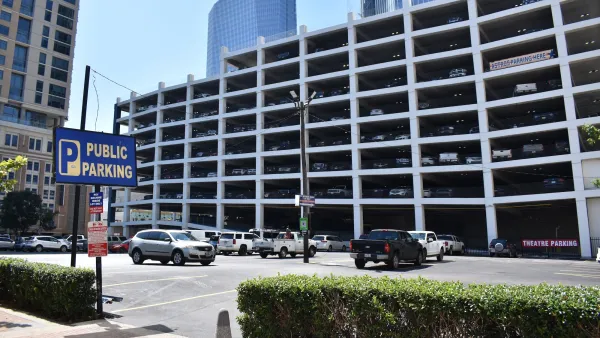
Downtown Houston parking garage will take up an entire block
The garage will connect to the Houston Center retail complex, a 4.6-million square foot office and commercial site.
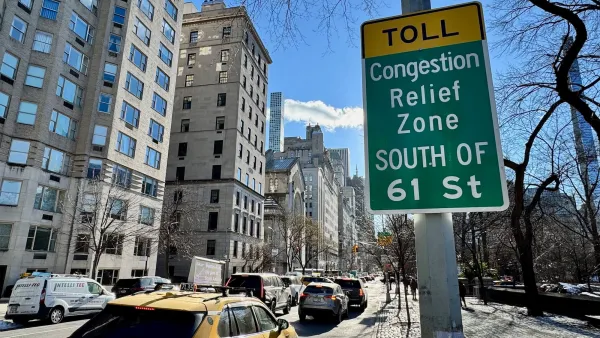
Study: NYC congestion pricing didn't impact parking demand
A city report shows that free parking, not congestion pricing, is the main driver of limited parking demand in the city.

Planetizen Federal Action Tracker
A weekly monitor of how Trump’s orders and actions are impacting planners and planning in America.

The state-sanctioned urbicide of Austin
People don’t kill cities. Freeways do.

US to reduce Colorado River water deliveries to Mexico
A new Colorado Treaty amendment reduces Mexico’s Colorado River water allocation by 250,000 acre feet.

Nation's most wind-powered state turns to coal as data centers increase energy demand
For the first time in decades, Iowa has increased its generation of coal power.

NYC cools commuters with city's first rain garden above a bus stop
New York City officials say the plants in the rain garden can absorb 16 gallons of rainwater during heavy storms.

Brightline West’s future may rely on $6 billion federal loan
The company has until Nov. 2 to make a $400 million equity investment into its proposed high-speed rail line.

FREE Course: Walkable City 1: Why Walkability?
After describing his path towards focusing on walkability as the essence of good planning, Jeff Speck marches through his five principal reasons for making more walkable places.
Reinventing Malls: Planning Alchemy—Turning Gray Fields Into Gold
The course focuses on the opportunities and imperatives that shape reinvention of mall sites.

Greater Baltimore Committee
Eagle County Government
Harvard University Graduate School of Design
The Architects Foundation
University of Cincinnati Online
The Pocatello Development Authority
The Urban Renewal Agency of the City of Pocatello
Journal of the American Planning Association