At a time when highway infrastructure is already facing challenges such as the rising costs of concrete and steel, a change in driving habits is causing a major reduction in available funds.


"A report to be released Monday by the Transportation Department shows that over the past seven months, Americans have reduced their driving by more than 40 billion miles. Because of high gasoline prices, they drove 3.7% fewer miles in May than they did a year earlier, the report says, more than double the 1.8% drop-off seen in April.
The cutback furthers many U.S. policy goals, such as reducing oil consumption and curbing emissions. But, coupled with a rapid shift away from gas-guzzling vehicles, it also means consumers are paying less in federal fuel taxes, which go largely to help finance highway and mass-transit systems. As a result, many such projects may have to be pared down or eliminated.
The challenge comes at a time when surging costs for asphalt and other construction materials already are straining state and local transportation budgets. Those cost increases make it more expensive to maintain the nation's roads, bridges and rail networks."
FULL STORY: Funds for Highways Plummet As Drivers Cut Gasoline Use

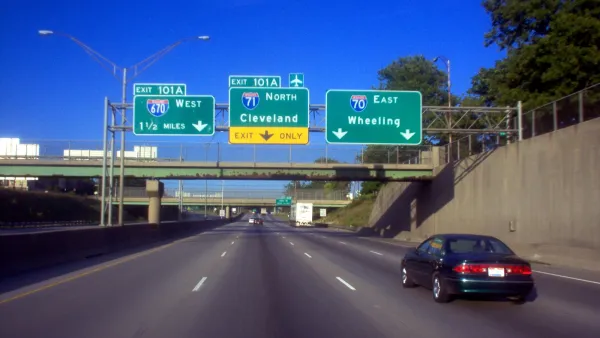
Northeast Ohio Agency Set to Reject Three Highway Proposals
The agency's recommendations are based on a new method of cost-benefit analysis that includes equity and environmental sustainability as key measures.
Should Fuel Taxes Pay For Alternative Transportation?
Planetizen has teamed up with National Journal, a weekly politics and policy magazine, to explore transportation issues. As part of National Journal's Transportation Experts blog, we've asked Planetizen Interchange bloggers and National Journal's Transportation Experts whether money from the Highway Trust Fund should be used for non-highway projects like bike lanes and pedestrian walkways.
How States are Divvying Up the Transportation Money
This article provides a general breakdown of how state governments plan to use the first installment of transportation spending money from the stimulus. The leeway states have in how to spend has sparked debates among legislators.

Planetizen Federal Action Tracker
A weekly monitor of how Trump’s orders and actions are impacting planners and planning in America.

The state-sanctioned urbicide of Austin
People don’t kill cities. Freeways do.

US to reduce Colorado River water deliveries to Mexico
A new Colorado Treaty amendment reduces Mexico’s Colorado River water allocation by 250,000 acre feet.

5 New England states march closer to 800 megawatt wind energy project
Securing federal approval for the project may be complicated under the Trump administration, which has historically been hostile towards domestic wind power.

Baltimore to break ground on $50 million Transit Priority Project
The project will bring faster bus trips, safer streets and better bike connections to Baltimore.

Airbnb launches $250 million 'last-dollar financing' housing accelerator, makes first investment in Austin
The company will put $6.4 million towards affordable housing development in Texas’ capital.

FREE Course: Walkable City 1: Why Walkability?
After describing his path towards focusing on walkability as the essence of good planning, Jeff Speck marches through his five principal reasons for making more walkable places.
Reinventing Malls: Planning Alchemy—Turning Gray Fields Into Gold
The course focuses on the opportunities and imperatives that shape reinvention of mall sites.

Eagle County Government
Harvard University Graduate School of Design
Nashville Planning Department
The Architects Foundation
University of Cincinnati Online
The Pocatello Development Authority
The Urban Renewal Agency of the City of Pocatello
Journal of the American Planning Association