New York City is looking at ways to keep beloved local stores from being forced out by high-end shops and restaurants in up-and-coming neighborhoods such as lower Ninth Avenue near the Meatpacking District.


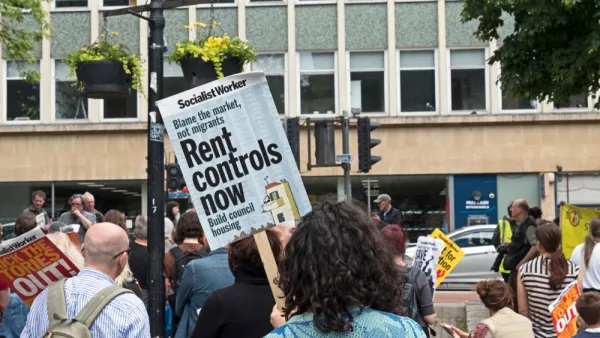
"From tailored zoning regulations to special tax arrangements to bringing back an idea from the 1980s of 'commercial rent control,' land use analysts are examining the options. State Assemblyman Richard Gottfried, who represents the area, is one who's interested in the potential of commercial rent control. 'Just as residential rents can drive people out of the community if they're not protected by rent stabilization, the same can happen with commercial tenants,' says Gottfried. 'A neighborhood can have whole blocks or avenues of stores wiped out in a very short period of time as these come due, because landlords can refuse to renew a lease or insist on any rent they can get without limitation. Without some kind of rent law in place, a landlord needs no excuse for throwing residential or commercial tenants out on the street.'
Sung Soo Kim, founder and president of the Small Business Congress of New York City, a federation of 70 trade organizations, agrees that when it comes to disappearing businesses – whether Coliseum Books or CBGB's – "Rent is the major issue." Kim says the city averaged 6,000 commercial evictions per year under Mayor David Dinkins; this number jumped to 7,500 per year while Rudy Giuliani was in office, and has soared to more than 10,000 per year under Bloomberg. In 2006, Kim cites data that there were more than 14,000 commercial evictions in the city. While these figures are for commercial evictions, a broader category than small businesses, he's convinced that the vast majority of the casualties are small businesses."
Read the full story: MAYBE BELOVED SHOPS DON'T HAVE TO DISAPPEAR

Another Rent Control Initiative on the Ballot in California
There are significant differences between Proposition 21, a statewide rent control measure on the ballot in California, compared to a similar measure defeated soundly by voters in 2018.

As Vacancy Rates Climb in New York's Rental Market, Landlords Blame New Rent Control Law
Vacancy rates in New York City have climbed to unexpected heights in 2020, and landlords aren't pinning all the blame on a pandemic-induced urban exodus.

Berlin Caps Rents as Anti-Gentrification Measure
The capital city, known for its artists and party scene, is aiming to reduce gentrification by capping rent prices for a period of five years.

Planetizen Federal Action Tracker
A weekly monitor of how Trump’s orders and actions are impacting planners and planning in America.

California plans to bury El Niño’s downpour
If the state plays its cards right, it may be able to store a billion acre-feet of El Niño’s water in aquifers.

Chicago breaks ground on $3 billion megadevelopment
The new neighborhood, titled Foundry Park, will one day host 3,700 residences.

Satanic place names
From streams and lakes to valleys and canyons, I mapped more than 1,000 places named after the Devil.

California High-Speed Rail Authority CEO resigns after $600,000 scandal
Under Ian Choudri, the authority used taxpayer dollars to fund first class flights and trips to nightclubs.

Want to study the Missouri River? Soon, you may need unanimous approval from 10 states
Legislation would require 10 governors’ permission to study or build projects moving water outside the basin.

FREE Course: Walkable City 1: Why Walkability?
After describing his path towards focusing on walkability as the essence of good planning, Jeff Speck marches through his five principal reasons for making more walkable places.
Reinventing Malls: Planning Alchemy—Turning Gray Fields Into Gold
The course focuses on the opportunities and imperatives that shape reinvention of mall sites.

City of Rosemead
Rutgers University, Edward J. Bloustein School of Planning and Public Policy
One Hundred Miles
Hunter College, City University of New York (CUNY)
The Architects Foundation
University of Cincinnati Online
City of Cambridge
Montrose County
The Pocatello Development Authority