Later this summer residents in the Province of Ontario will be able to plug in their homes to a new source of electrical power: biogas derived from cow manure.


"The idea of turning cow waste into electricity, according to its boosters, which include the Ontario government, the source of $2.5-million in financing for the venture, sidesteps one of the biggest quandaries in agriculture today.
It's the question of whether it is good sense or folly to turn valuable human food, such as corn and soybeans, into renewable fuels, such as ethanol or diesel, to use for cars.
The rush to make ethanol from corn has more than doubled the price of the agricultural staple, and although it has also helped to curb petroleum use, it has prompted global worries about food-price inflation.
But in the case of manure, it is a material nearly no one wants; while farmers typically spread it on their land as a substitute for fertilizer, the activity is often a source of complaints from neighbours offended by its pungent smell, and worried about its potential to pollute groundwater."
Read the full story: On the farm, a back-end solution to an energy crisis

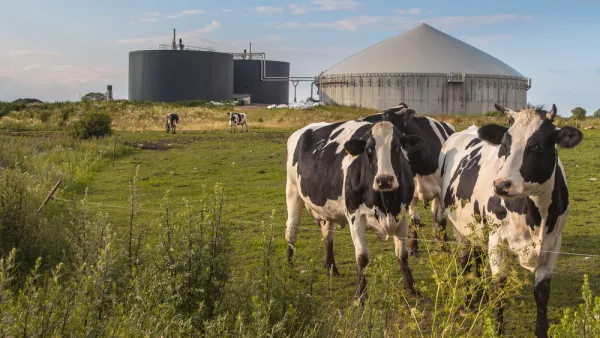
Renewable Natural Gas Makes Inroads in California, Oregon, and Missouri
What is expected to be the nation's largest dairy biogas operation opened in the Central Valley. To the north, Gov. Kate Brown signed the nation's first bill to establish goals to add renewable gas to pipelines, and pigs in Missouri also made news.
Renewable Natural Gas and Electricity Should Power Los Angeles Bus Fleet
It's not one or the other but both, argues Denny Zane of Move LA in a guest commentary for the Los Angeles Daily News about the decision that Los Angeles County Metro will make on June 22 on the future of the nation's second largest bus fleet.
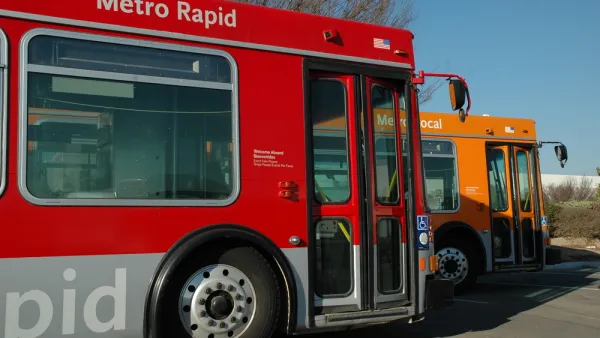
Best Fuel to Power Buses: Renewable Natural Gas or Battery-Electric?
Next month the Los Angeles County Metropolitan Authority will decide what type of buses to purchase to replace 1,000 aging diesel buses. Two op-eds in the Los Angeles Daily News present alternative viewpoints.

Planetizen Federal Action Tracker
A weekly monitor of how Trump’s orders and actions are impacting planners and planning in America.

‘Going backwards:’ Baltimore mayor, students rally against state's transit funding plan
Maryland's proposed six-year plan provides no funding for Baltimore’s BMORE bus program and reduces its road maintenance funding.

Detroit to transform waterfront with $2.2 billion investment
Developers will convert about 18 acres of unused parking lot space into civic spaces.

Newsom vetoes high-speed rail supervision bill after agency receives condemnatory audit
The audit found the CHSRA approved almost $600,000 in unallowable travel expenses.

Nation sees first electric plane-boat hybrid take off in public demo
The Viceroy Seaglider can fly at speeds of 180mph for up to 180 miles.

One of nation’s poorest counties to receive $6 billion data center
The developers estimate the project will create 200 permanent jobs and 1,000 temporary construction jobs.

FREE Course: Walkable City 1: Why Walkability?
After describing his path towards focusing on walkability as the essence of good planning, Jeff Speck marches through his five principal reasons for making more walkable places.
Reinventing Malls: Planning Alchemy—Turning Gray Fields Into Gold
The course focuses on the opportunities and imperatives that shape reinvention of mall sites.

City of Thousand Oaks
City of Wisconsin Rapids
Harvard University Graduate School of Design
The Architects Foundation
University of Cincinnati Online
Northern Illinois Transit Authority (NITA)
The Pocatello Development Authority
The Urban Renewal Agency of the City of Pocatello