The developers estimate the project will create 200 permanent jobs and 1,000 temporary construction jobs.


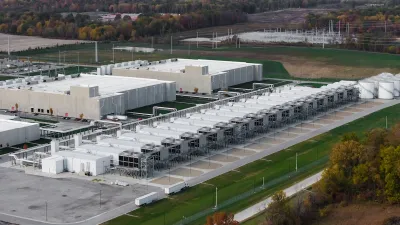
Eagle Rock Partners is designing a $6 billion, roughly 2 million square-feet data center for Jefferson Davis County, Mississippi, one of the nation's poorest counties. Eagle Rock Partners estimates the project will create 1,000 temporary construction jobs and 200 permanent jobs.
Gary Russell Bass, director of the Jefferson Davis County Economic Development Association, said the tax revenue, investment and jobs the data center would bring “could completely transform this county.” Bass also said he “wants the project to be transparent to the public and be a model for how to develop a data center well,” Katherine Lin writes for Mississippi Today.
Eagle Rock Partners will build the data center away from homes in the county, and will use a “closed loop cooling system to consume minimal water and use natural gas generation located on site that will need to be approved by the Mississippi Department of Environmental Quality before operation,” Mississippi Today reports.
Read the full story: $6B data center planned for Jefferson Davis, one of the poorest counties in the country

Illinois considers spending $1 billion in taxpayer money on data center
A quantum computing campus and data center are currently under construction in Chicago.
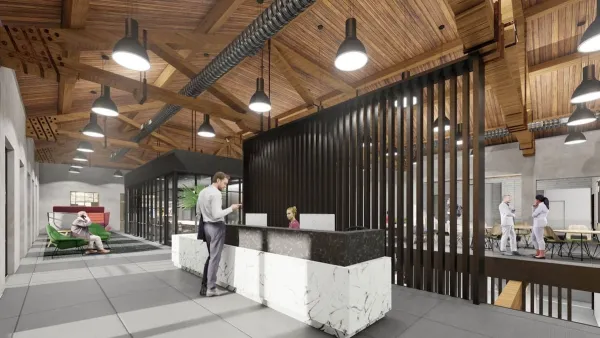
Strained electrical grid forces San Francisco to choose: housing, or data centers?
The city is approaching its maximum grid capacity, leaving leaders with tough choices about what projects to siphon energy toward.
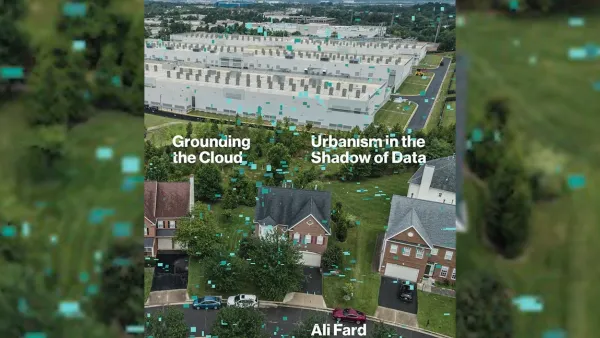
What is the impact of cities' ever-growing reliance on the tech sector?
Book review: "Grounding the Cloud: Urbanism in the Shadow of Data" is an important look at how we define and understand the cloud.

Planetizen Federal Action Tracker
A weekly monitor of how Trump’s orders and actions are impacting planners and planning in America.

Washington state to charge fee to drivers with fuel-efficient cars
Revenue from the fee will go towards supporting the state’s highways.
Illinois considers spending $1 billion in taxpayer money on data center
A quantum computing campus and data center are currently under construction in Chicago.

Mamdani unveils his ‘most ambitious bus lane project’ so far
The city has added two new bus lanes, which it expects to speed up tens of thousands of bus riders’ commutes.

New Jersey and New York suggest $10.3 billion budget for transit
Some of the budget is dedicated to replacing Manhattan's Midtown Bus Terminal.

States split over EPA’s proposal to drop greenhouse gas rules for power plants
The proposed rule drew over 165K comments, including from officials, health and environmental groups, and private citizens.

FREE Course: Walkable City 1: Why Walkability?
After describing his path towards focusing on walkability as the essence of good planning, Jeff Speck marches through his five principal reasons for making more walkable places.
Reinventing Malls: Planning Alchemy—Turning Gray Fields Into Gold
The course focuses on the opportunities and imperatives that shape reinvention of mall sites.

City of Charlotte
City of Rosemead
Rutgers University, Edward J. Bloustein School of Planning and Public Policy
University of Michigan School for Environment and Sustainability (SEAS)
Hunter College, City University of New York (CUNY)
The Architects Foundation
University District Partnership
City of Cambridge
The Pocatello Development Authority