The audit found the CHSRA approved almost $600,000 in unallowable travel expenses.


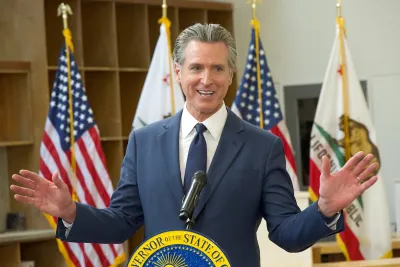
California Gov. Gavin Newsom vetoed a bill on Sept. 30 that would have increased the Office of Inspector General's oversight of California’s High-Speed Rail Authority. The bill would have allowed the office to hire more workers and sign contracts under $1 million. “Newsom’s veto comes two weeks after the investigative office released a scathing report in which its auditors found that the high-speed rail authority approved nearly $600,000 in unallowable travel expenses for its consultants,” Yue Stella Yu writes for Cal Matters.
Inspector General Ben Belnap told Cal Matters that the CHSRA “needs timely oversight right now.” The auditing agency that oversees CHSRA has never been fully staffed because of budget constraints, and Belnap said the state guardrails hinder the agency’s efficiency and cost effectiveness.
In his veto message, Newsom told the inspector general’s office to “work with what it had,” Cal Matters summarized.
Read the full story: Newsom vetoes high-speed rail oversight bill weeks after scathing audit of rail agency

California's $100 Billion High-Speed Gamble
The state has less than one-third the funds necessary to build the 800-mile line connecting Northern and Southern California, depending on the cost estimate. The immediate goal is to build a 119-mile section in the Central Valley.

California distributes $1.3 billion to prevent transit service cuts, bolster projects
Twenty-eight projects across California received a portion of the funding.
California’s ‘unrecognizable’ water plan may go down the drain
After four years of regulatory processes, water agencies say the plan to overhaul how cities and farms take water from the Sacramento-San Joaquin Delta has changed dramatically.

Planetizen Federal Action Tracker
A weekly monitor of how Trump’s orders and actions are impacting planners and planning in America.

Washington state to charge fee to drivers with fuel-efficient cars
Revenue from the fee will go towards supporting the state’s highways.

Illinois considers spending $1 billion in taxpayer money on data center
A quantum computing campus and data center are currently under construction in Chicago.

‘Demolition of our heritage:’ Some US tribes speak out against BAAJA
A coalition of indigenous groups in the United States are concerned about provisions in the bill that may weaken their ability to halt large energy projects.

How LA’s new mayor plans to tackle affordable housing crisis
Mayor-elect Nithya Raman has proposed overhauling the city’s permitting process.

Interactive map reveals Pennsylvania's abandoned oil, gas wells — many on residential property
It is difficult for residents to know if a well is near their home, or if it poses a threat to them.

FREE Course: Walkable City 1: Why Walkability?
After describing his path towards focusing on walkability as the essence of good planning, Jeff Speck marches through his five principal reasons for making more walkable places.
Reinventing Malls: Planning Alchemy—Turning Gray Fields Into Gold
The course focuses on the opportunities and imperatives that shape reinvention of mall sites.

City of Charlotte
City of Rosemead
Rutgers University, Edward J. Bloustein School of Planning and Public Policy
University of Michigan School for Environment and Sustainability (SEAS)
Hunter College, City University of New York (CUNY)
The Architects Foundation
University District Partnership