West Baltimore residents and community groups see a new light rail project as their way up for their blighted neighborhood.


"Mayor Sheila Dixon walked down a block in West Baltimore yesterday and noticed what wasn't there: doctors' offices, cleaners, grocery stores. Instead, she saw abandoned houses with collapsed roofs, vacant lots overrun with trash and weeds, and residents desperate for something better.
In a part of town that still has not recovered from the riots of 1968 or the infamous "Highway to Nowhere" that split a community and forced thousands to move away, hope for a renewal is being stirred by plans for the $1.3 billion Red Line east-west transit project. A station in West Baltimore near the current MARC stop would mean more retail, more housing and more homeowners, say residents and officials.
"We want to take control of our community and present people with opportunities so they don't have to go 20 miles out of their way to get to a decent grocery store," said Zelda Robinson of the West Baltimore Coalition. "This could be a real gem for the city.""
Read the full story: Neighborhood sees $1.3 billion lifeline

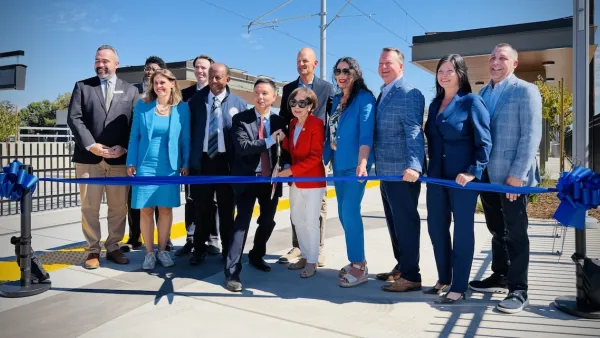
After decades of planning, Sacramento gains new light rail station
Trains will arrive every 15 minutes during peak hours and every 30 minutes during non-peak hours.
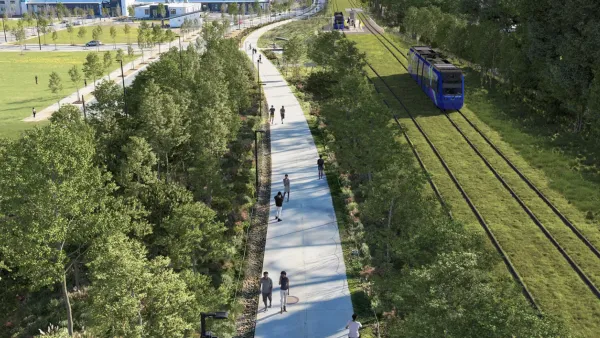
Atlanta City Council unanimously backs $3.5 billion Beltline light rail project
The resolution was drafted after Atlanta Mayor Andre Dickens pulled support for the Atlanta Streetcar extension last year.
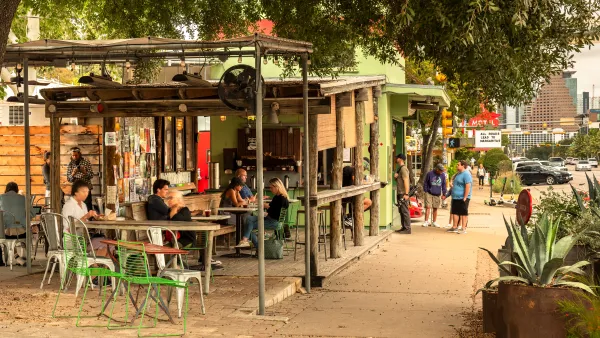
Large projects near Austin's light rail must include affordable housing
Elsewhere in the city, developers can pay into a city bank account for affordable housing rather than providing the required affordable units within their projects.

Planetizen Federal Action Tracker
A weekly monitor of how Trump’s orders and actions are impacting planners and planning in America.

‘Going backwards:’ Baltimore mayor, students rally against state's transit funding plan
Maryland's proposed six-year plan provides no funding for Baltimore’s BMORE bus program and reduces its road maintenance funding.

Detroit to transform waterfront with $2.2 billion investment
Developers will convert about 18 acres of unused parking lot space into civic spaces.

Newsom vetoes high-speed rail supervision bill after agency receives condemnatory audit
The audit found the CHSRA approved almost $600,000 in unallowable travel expenses.

Nation sees first electric plane-boat hybrid take off in public demo
The Viceroy Seaglider can fly at speeds of 180mph for up to 180 miles.

One of nation’s poorest counties to receive $6 billion data center
The developers estimate the project will create 200 permanent jobs and 1,000 temporary construction jobs.

FREE Course: Walkable City 1: Why Walkability?
After describing his path towards focusing on walkability as the essence of good planning, Jeff Speck marches through his five principal reasons for making more walkable places.
Reinventing Malls: Planning Alchemy—Turning Gray Fields Into Gold
The course focuses on the opportunities and imperatives that shape reinvention of mall sites.

City of Thousand Oaks
City of Wisconsin Rapids
Harvard University Graduate School of Design
The Architects Foundation
University of Cincinnati Online
Northern Illinois Transit Authority (NITA)
The Pocatello Development Authority
The Urban Renewal Agency of the City of Pocatello