Bruce Fisher laments Buffalo's decades-old decision to put their university campus outside of town, missing the lesson that "eds and meds" are central to the prosperity of a city.


"A generation ago, Buffalo and state politicians ignored the experience of New York City, Chicago, Boston, Philadelphia, San Francisco, Cleveland, Pittsburgh, Baltimore, and other American cities that have downtown college and university campuses. Instead, they built the State University of New York's biggest upstate university center far from the historic downtown transportation crossroads of the Western New York region.
In so doing, they marooned tens of thousands of students far from the places where education connects with the rest of life. The medical school is isolated from the teaching hospitals, the law school from the courts, the school of social work from the social-service agencies. Locally owned retail businesses, which in other cities are organized in commercial zones that serve whole communities of students, faculty and staff, must make do without them.
New York's leaders also forced the 25,000 students and 10,000 staff to rely on cars, because there is no effective regional transportation network-because there is no hub large enough to merit one. The regional crossroads is where it has always been: in downtown Buffalo. The university in isolation is not a city or even an "edge city." It's just a big node or activity center, off by itself, tangentially connected to the regional economy, much like the large state prison complex near Gowanda."
Read the full story: Eds and Meds


Evidence-based planning in a time of information overload
The field of academic publishing has become complex and crowded. What does it mean for urban planners?
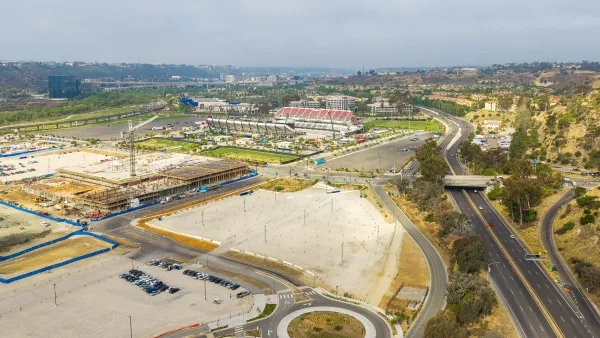
San Diego State intergenerational housing project will bring 250 homes for older adults to campus
The project is part of the university's Mission Valley campus that includes 4,600 housing units.
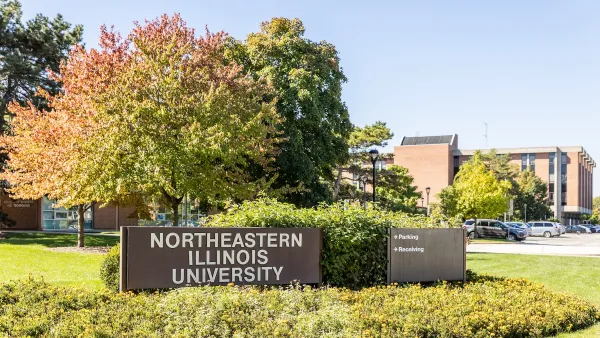
This university-owned city block in Chicago has languished for over a decade. Neighbors say it's time to let go
The university never built its planned student housing, letting a row of storefronts sit vacant for years.

Planetizen Federal Action Tracker
A weekly monitor of how Trump’s orders and actions are impacting planners and planning in America.

Northwest rail fans eager for Sept. 30 debut of Amtrak’s Airo fleet
Get ready for that new train smell and more seats. But they won’t go faster or run more frequently on the Cascades route in Washington and Oregon.
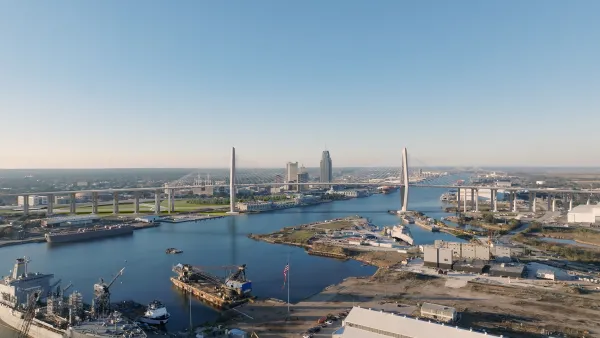
Alabama scores up to $2.5 billion federal loan for largest infrastructure project in state’s history
The Mobile River Bridge and Bayway Project aims to ease congestion at Alabama’s worst bottleneck.

Novel study finds extreme state-by-state disparity in housing construction timelines
The first comprehensive working paper on U.S. construction timelines also found that the permitting process for multi-family projects has slowed nationwide.

California may destroy its beaches trying to save homes from El Niño
Boulders and seawalls can protect homes from waves, but ultimately destroy sandy beaches.

California high-speed rail accomplishes only one legislative goal in 2026
The majority of the agency's failed pitches were never developed into written proposals.

FREE Course: Walkable City 1: Why Walkability?
After describing his path towards focusing on walkability as the essence of good planning, Jeff Speck marches through his five principal reasons for making more walkable places.
Reinventing Malls: Planning Alchemy—Turning Gray Fields Into Gold
The course focuses on the opportunities and imperatives that shape reinvention of mall sites.

City of Thousand Oaks
City of Wisconsin Rapids
Harvard University Graduate School of Design
The Architects Foundation
University of Cincinnati Online
Northern Illinois Transit Authority (NITA)
The Pocatello Development Authority
The Urban Renewal Agency of the City of Pocatello