A case over land rights in the West going back decades has been awarded to the estate of a deceased property rights activist, who contended that the Forest Service deprived his ranch of water.


"A judge awarded more than $4.2 million to a late Nevada rancher's estate after finding that the U.S. Forest Service engaged in an unconstitutional 'taking' of water rights out of hostility to the rancher, a property rights activist.
The rancher, Wayne Hage, bought the sprawling Pine Creek Ranch in central Nevada in 1978.
In the early 1980s, the Forest Service began to notify him he was in violation of his federal grazing permit. In 1983, the Forest Service sent him 40 letters and agency officials made 70 visits to his ranch.
[T]he taking occurred when the Forest Service made it impossible for Hage to maintain irrigation ditches, which deprived the ranch of water and made it unviable. The government demanded that he maintain the ditches using nothing more than hand tools.
Hage first filed a claim seeking $28 million in 1991. In an interview in 2004, two years before his death, he told The Associated Press his case could dramatically impact states' rights and federal lands in the West. 'It's the first time in nearly a century that someone has effectively challenged the government over who owns the range rights and water rights out here on these federal lands,' he told The Associated Press.
The judge noted that hand tools would not be effective over such vast expanse of land. The ditches brought water to the 7,000-acre ranch as well as the 700,000 acres of national forest land where Hage grazed his cattle.
Hage was one of the leaders of the so-called 'Sagebrush Rebellion' during the 1980s, a movement among Western landowners who believed the federal government had no jurisdiction over their property because the ranches predate the federal agencies that sought to regulate them."
Read the full story: Nev. rancher awarded $4.2M for 'taken' water right


Property Owners Sue Miami for Unlawfully Taking Property via Permit Applications
The suit claims the city is using unrelated permit applications to unlawfully gain right-of-way.

Commentary: Eminent Domain is a Slippery Slope
Can accepting eminent domain lead to accepting the loss of other, more foundational rights?
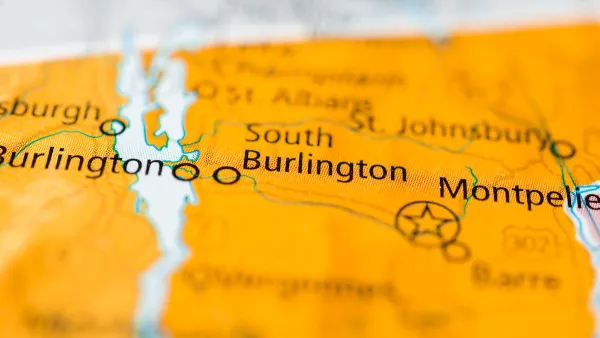
Vermont Land Use Case Could Go to Supreme Court
Property owners argue that a new law protecting wildlife corridors amounts to an unconstitutional taking of property.

Planetizen Federal Action Tracker
A weekly monitor of how Trump’s orders and actions are impacting planners and planning in America.

Amtrak, CN end decades-long dispute with eight-year agreement
The new operating agreement establishes an updated framework for the companies to work together, including processes to resolve disputes.

Northwest rail fans eager for Sept. 30 debut of Amtrak’s Airo fleet
Get ready for that new train smell and more seats. But they won’t go faster or run more frequently on the Cascades route in Washington and Oregon.

Eating, littering on Singapore buses now a fineable offense
Passengers who put other riders in danger may be charged thousands of Singapore dollars.

This rural Oklahoma town doesn’t want a data center. It may not be able to stop the project
With the project outside city limits and little county oversight of unincorporated land, officials are considering measures to gain local control.

Trump administration unlawfully slashed $7 billion in clean energy grants, judge rules
The Environmental Protection Agency ended the Solar For All program, which provided the grants, after President Donald Trump’s inauguration.

FREE Course: Walkable City 1: Why Walkability?
After describing his path towards focusing on walkability as the essence of good planning, Jeff Speck marches through his five principal reasons for making more walkable places.
Reinventing Malls: Planning Alchemy—Turning Gray Fields Into Gold
The course focuses on the opportunities and imperatives that shape reinvention of mall sites.

City of Thousand Oaks
City of Wisconsin Rapids
Harvard University Graduate School of Design
The Architects Foundation
University of Cincinnati Online
The Pocatello Development Authority
The Urban Renewal Agency of the City of Pocatello