Monocle Magazine looks worldwide for the most livable cities.


"What do you really want out of a city? And what can you do without? With the environment top of the agenda in mayors' offices around the world, Monocle looks beyond the recycling bins and congestion charges to see what makes for a liveable city. Tolerance, punctual transit, plenty of sunshine and the ability to get a drink in the wee hours all count for something.
Our mission for this issue is a simple one - we want to improve the urban experience. It's a tricky enough task for forward-thinking local governments to tackle, let alone a media brand, but we've been thinking about this theme since our launch and decided the best time to engage politicians, developers, architects, financiers and anyone else who has influence or an opinion about city-life was while they were stretched out, relaxed, taking the sun and fully focused on their own quality of life. By the time you've finished reading this issue we hope you'll be suitably moved to join our sun-lounger revolution and become an active player in raising the bar in whatever port you call home.
Before we go any further, however, we should start by defining a few terms. For avoidance of doubt, this is a quality of life survey and should not be confused with a ranking of the world's best financial centers, a listing of the top cities to be an expat or a rating of the leading centers of innovation. Our focus is firmly fixed on identifying the components and forces that make a city not simply attractive or wealthy but truly liveable. Researched over a three-month period, our quality of life survey is 50 per cent scientific (we'll come to our metrics shortly) and 50 per cent subjective (sometimes a place just rubs you the wrong way and you're not quite sure why). We feel the combination of raw data mixed with opinion offers a more accurate picture of urban environments than just relying on numbers. Indeed, the whole concept of liveability couldn't be more subjective territory."
Read the full story: Urban Manifesto: Factors that make a city great
Watch: The Errors Behind 'Best Cities' Rankings
Despite its long history of ranking the best cities to live in the United States, Money Magazine should not be cited as an authority on the matter, according to this video.
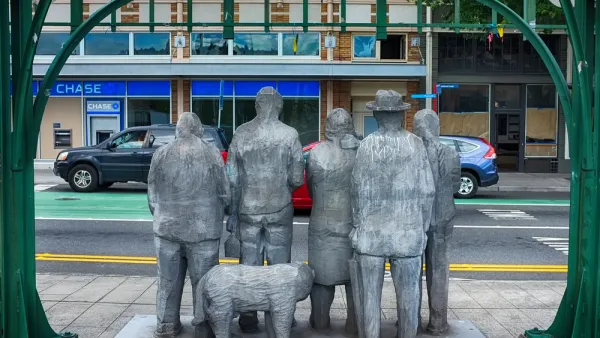
Waking Up to Seattle's New Density
Census data shows that Seattle jumped Baltimore to become the country's tenth most densely populated city. Is Seattle on the cusp of a changing of the guard when it comes to density and population growth?
Beware of Energy Rankings for Cities
In a special "Energy for Tomorrow" report, The New York Times looks at "clean city rankings" of energy efficiency and land use. But ranking cities is no easy task—"winners on one list may appears as sinners on another."

Washington state to charge fee to drivers with fuel-efficient cars
Revenue from the fee will go towards supporting the state’s highways.

Illinois considers spending $1 billion in taxpayer money on data center
A quantum computing campus and data center are currently under construction in Chicago.

Trump to blast ‘hydrocarbon highway’ through ‘world’s longest art gallery’
Environmental and historic preservation groups are suing to stop the project.

NYC, state sue feds over mixed-immigration-status housing assistance rule
The state’s lawsuit argues that the rule change violates the Administrative Procedure Act.

Michigan to turn neighborhood into virtual power plant
Residents will soon be able to divert their excess energy to the grid in exchange for compensation.

Data center, mining project swarm to long-awaited Alaska railroad line
The state-owned railroad approved final plans for the spur line this week; the project is expected to cost $311 million, mostly funded by the federal government

FREE Course: Walkable City 1: Why Walkability?
After describing his path towards focusing on walkability as the essence of good planning, Jeff Speck marches through his five principal reasons for making more walkable places.
Reinventing Malls: Planning Alchemy—Turning Gray Fields Into Gold
The course focuses on the opportunities and imperatives that shape reinvention of mall sites.

City of Charlotte
City of Rosemead
Rutgers University, Edward J. Bloustein School of Planning and Public Policy
University of Michigan School for Environment and Sustainability (SEAS)
Hunter College, City University of New York (CUNY)
The Architects Foundation
University District Partnership