In two separate examples, a Los Angeles Times columnist shows how stakeholders with money tend to win the support of local politicians more often than the less fortunate.


"Anyone who recently has tried to get across Los Angeles knows that the Westside and growing stretches of Mid-City are about two Priuses and a Lexus short of utter gridlock. As The Times' Steve Hymon wrote Tuesday, 'In the war against L.A. traffic, the Westside has become the frontline as more jobs have migrated to that part of town, bringing commuters and their cars with them. But the combination of affluence and political influence has historically made improving roads there a difficult proposition since every plan has its opponents.'"
Facing a proposal that would remove street parking in front of their businesses, local business people "pulled in some money from other well-heeled neighborhood groups and filed lawsuits demanding a full environmental review before the city could proceed. Monday, a Superior Court judge agreed that the proposal's cumulative effect was great enough to require a full study of its environmental impact, a process that will delay the project by at least a year."
"By then, City Hall will be in full election mode, which means that unless the city appeals right now, the project is as good as dead. No mayoral or council candidate with a functioning instinct for self-preservation is going to take on Westside neighborhoods, where voter turnout is high and activists understand the power of targeted campaign contributions."
"It's an axiom of L.A. politics: Those who have are heard."
Read the full story: Money talks, this city listens
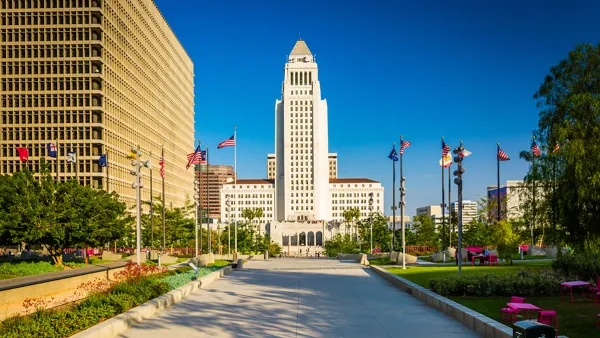
L.A. City Councilmember Arrested, to Face Charges in Development Corruption Scheme
Longtime City Councilmember Jose Huizar was arrested at his home in Boyle Heights this morning, in the latest signal of a culture of corruption at Los Angeles City Hall.

Los Angeles just elected an urban planner as its mayor
Transportation analysts are optimistic that Raman will be more aggressive in addressing transit issues than Bass.
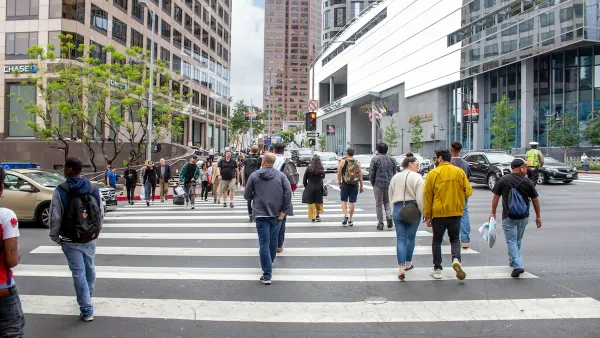
LA residents may be allowed to paint their own crosswalks
Councilwoman Katy Yaroslavsky put out a motion instructing the Los Angeles Department of Public Transportation to study the feasibility of allowing volunteers to paint crosswalks.

Desperate measures: Advocates weigh draining Lake Powell to fill Colorado River
Draining the reservoir could reduce evaporation losses by a couple hundred thousand acre-feet.

Eastern Nebraska is running out of electricity
Data centers and electrification are straining eastern Nebraska’s grid, throttling economic development.

Move over, LA: St. Louis gears up for Olympics, invests millions in downtown redevelopment
The Missouri city will host the 2028 Olympic soccer group stage and knockout matches.

Mass. votes against statewide minimum lot size for single-family homes
Over 2 million residents voted on Question 7; it was decided by just over 30,000 votes.

Maryland’s $15 billion bridge project gains key approval
The Maryland Transit Authority said the project will create over 60,000 jobs and add $23 billion to the local economy.

‘No clear next steps’ for Chicago's permanent festival grounds
Eleventh Ward Ald. Nicole Lee has suggested Soldier Field as a possible location for the permanent event space.

FREE Course: Walkable City 1: Why Walkability?
After describing his path towards focusing on walkability as the essence of good planning, Jeff Speck marches through his five principal reasons for making more walkable places.
Reinventing Malls: Planning Alchemy—Turning Gray Fields Into Gold
The course focuses on the opportunities and imperatives that shape reinvention of mall sites.

City of Rosemead
Rutgers University, Edward J. Bloustein School of Planning and Public Policy
One Hundred Miles
University of Michigan School for Environment and Sustainability (SEAS)
Hunter College, City University of New York (CUNY)
The Architects Foundation
City of Cambridge
Montrose County
The Pocatello Development Authority