In this opinion piece, Roger Snoble of the Los Angeles County Metropolitan Transportation Authority discusses why the region's mobility would benefit from toll lanes on highways.


"First, the freeways aren't free. L.A. County commuters waste, on average, 72 hours a year stuck in traffic, which translates into more than $1,000 in excess fuel costs and lost productivity. And congestion will get worse as our population grows. The Metropolitan Transportation Authority projects that by 2030, average freeway speeds will drop 40% if we do nothing."
"It may seem counterintuitive, but making this change will squeeze a lot more capacity out of our congested freeways -- and will benefit drivers of all classes."
"Building new freeways, or even expanding existing ones, is extremely difficult. The region is so built up, and the environmental and funding hurdles so onerous, it would be decades before any construction was complete. That's why Metro and Caltrans sought a federal grant to test congestion-reduction pricing on the San Bernardino Freeway between downtown and El Monte and the Foothill Freeway from Duarte to Pasadena, and on the transit way in the center of the Harbor Freeway if there's funding left over. The demonstration project could be in place by the end of 2010."
Read the full story: Highway toll lanes: the way to go
L.A. Offered Funding, With Toll Road Ultimatum
The federal government is tempting officials in Los Angeles County with more than $200 million in transportation funding -- but only if the county converts some highway lanes to congestion pricing toll lanes.
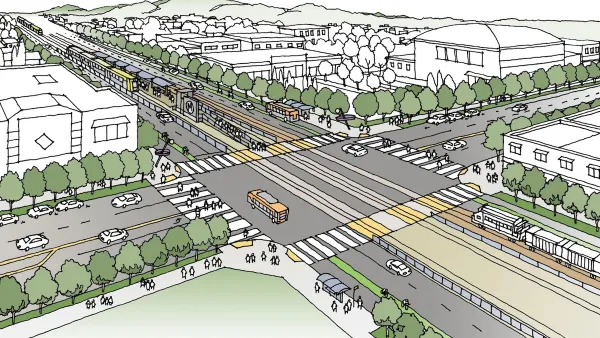
After years of opposition to light rail, this L.A. city wants a $200 million station
Cerritos officials want the Southeast Gateway Line, a planned 14.5-mile light rail route through Los Angeles County, to stop in their city.
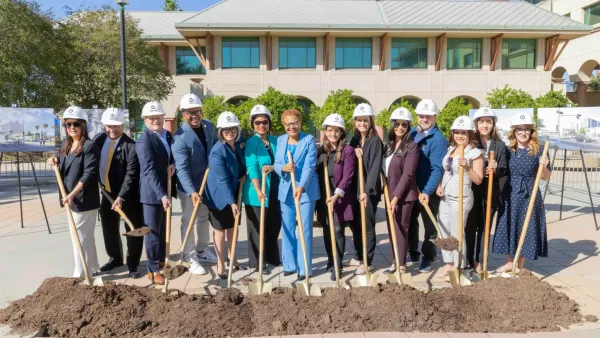
LA begins work on $4 billion light rail through San Fernando Valley
The project will be the areas first light rail service since the termination of the Pacific Electric Railway in the 1950s.

Planetizen Federal Action Tracker
A weekly monitor of how Trump’s orders and actions are impacting planners and planning in America.

Eastern Nebraska is running out of electricity
Data centers and electrification are straining eastern Nebraska’s grid, throttling economic development.

Study reveals best places in the U.S. for cycling, walking
New research from Streetlight Data examines bicycle and pedestrian miles per capita in the 100 largest U.S. cities by population.

DSA members accuse Mamdani of 'abandoning values' over housing redevelopment
New York City's mayor plans to replace about 2,000 units of public housing with private, mixed-income housing.

All sides of BRT debate unhappy with CDOT’s most recent move
The Colorado Department of Transportation is no longer considering center-running bus lanes for Colorado Boulevard.

Massachusetts bogs generate both power, and cranberries
Putting solar panels above farmland is one way Massachusetts is advancing toward its goal of net-zero carbon emissions by 2050.

FREE Course: Walkable City 1: Why Walkability?
After describing his path towards focusing on walkability as the essence of good planning, Jeff Speck marches through his five principal reasons for making more walkable places.
Reinventing Malls: Planning Alchemy—Turning Gray Fields Into Gold
The course focuses on the opportunities and imperatives that shape reinvention of mall sites.

City of Rosemead
Rutgers University, Edward J. Bloustein School of Planning and Public Policy
One Hundred Miles
University of Michigan School for Environment and Sustainability (SEAS)
Hunter College, City University of New York (CUNY)
The Architects Foundation
City of Cambridge
The Pocatello Development Authority
The Urban Renewal Agency of the City of Pocatello