This article from The Washington Post looks at what local municipalities are doing to reduce greenhouse gas emissions.


"Officials in King County and other places are rethinking the way their communities grow and operate, all with an eye toward reducing their overall carbon footprint. After decades of policies that encouraged people to move out to the suburbs in pursuit of larger homes and bigger back yards, some policymakers are now pushing aggressively to increase urban density and discourage the use of private cars."
"In Massachusetts, the state demands that developers calculate and disclose the climate impact of their projects. In California, Attorney General Edmund G. "Jerry" Brown Jr. has sued communities and power companies for failing to offset the greenhouse gases generated by their expansion plans. And Washington, D.C., officials are installing a new trolley line and bike rental kiosks in an effort to cut back on car trips within the city."
"Even though national politicians are beginning to eye a federal carbon cap more seriously, the flurry of activity in state and local jurisdictions highlights a little-noticed reality: Most of the measures to reduce greenhouse-gas emissions will be enacted outside the nation's capital."
FULL STORY: Fighting Global Warming Block by Block

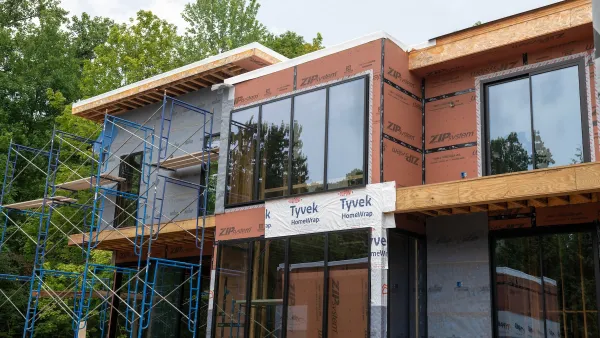
New HUD guidelines call for nixing green building requirements
The newly released 'best practices' advise local governments to streamline permitting processes, cap permitting fees and encourage by-right development of single-family homes.
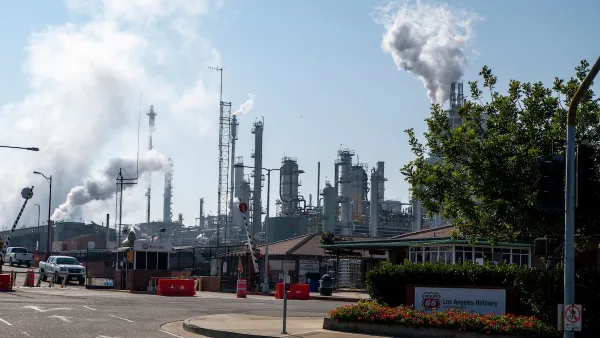
California’s Cap and Trade Program Up in the Air
The state’s carbon trading program is being attacked as ineffective from one side and overly onerous from the other.
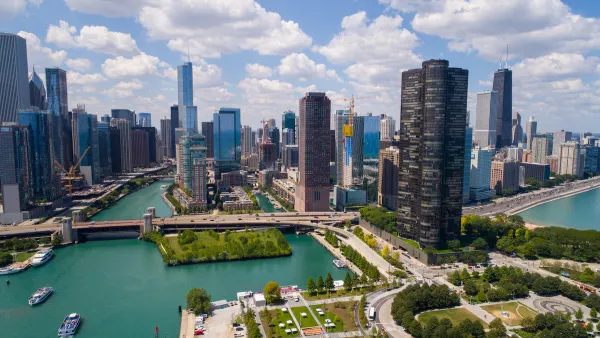
Chicago Approves Green Affordable Housing Plan
The Mayor’s plan calls for creating a nonprofit housing corporation tasked with building affordable housing that meets Green Building standards.

Planetizen Federal Action Tracker
A weekly monitor of how Trump’s orders and actions are impacting planners and planning in America.

The state-sanctioned urbicide of Austin
People don’t kill cities. Freeways do.

US to reduce Colorado River water deliveries to Mexico
A new Colorado Treaty amendment reduces Mexico’s Colorado River water allocation by 250,000 acre feet.

Mamdani overhauls NYC's Vision Zero plan with 100 new policy goals
The overhaul aims to reduce traffic deaths and make streets safer for pedestrians, cyclists and drivers through lower speed limits, new safety infrastructure and more.

Amtrak not solely to blame for New Jersey commuter rail's unreliability, report finds
A new study from the Garden State Initiative found that NJ Transit’s budget grew 20% across a 4 year period, but reliability declined significantly over the same period.

EPA erases limits on planet-warming pollution from power plants
Under Monday’s plan, power plants would still have some limits on how much mercury, arsenic and other contaminants they can emit.

FREE Course: Walkable City 1: Why Walkability?
After describing his path towards focusing on walkability as the essence of good planning, Jeff Speck marches through his five principal reasons for making more walkable places.
Reinventing Malls: Planning Alchemy—Turning Gray Fields Into Gold
The course focuses on the opportunities and imperatives that shape reinvention of mall sites.

Eagle County Government
Harvard University Graduate School of Design
Nashville Planning Department
The Architects Foundation
University of Cincinnati Online
The Pocatello Development Authority
The Urban Renewal Agency of the City of Pocatello
Journal of the American Planning Association