Americans who've lost their homes to foreclosure are now looking to rent, tightening up already low vacancy rates and driving up prices. Meanwhile, foreclosed homes sit empty.


"Foreclosures have helped swell the ranks of renters, according to a study released Wednesday by Harvard University's Joint Center for Housing Studies. The study shows that U.S. renter households increased by nearly one million last year -- four times the pace of renter growth from 2003 to 2006 -- to 35.1 million.
Competition for rental properties has pushed up average rents to a record $775 a month, says the Harvard center. Since only about one-third of rental properties are single-family houses as opposed to apartments, it can be hard for foreclosed homeowners to find an equivalent, affordable place to rent, says William Apgar, the center's senior scholar.
And though hundreds of thousands of houses and condos have gone back to the banks that lent money on them, few of these properties are being offered to tenants because lenders don't want to be in the property-management business. So they sit vacant."
Read the full story: The Accidental Renters

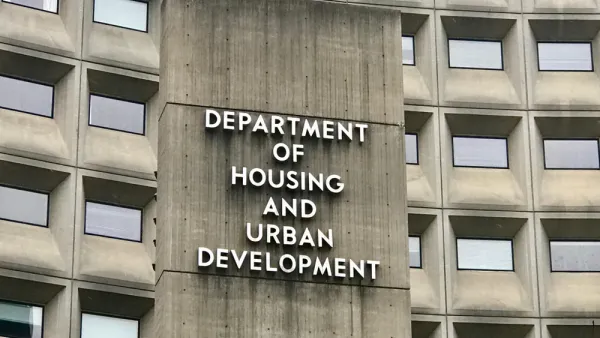
HUD Updates Fair Market Rate Definition
The U.S. Department of Housing and Urban Development announced two actions last week intended to expand the reach of federal housing voucher programs.
U.S. Now Thoroughly Rent Burdened
Average U.S. rent burden reached 30 percent for the first time ever at the end of 2022, according to a recent analysis.
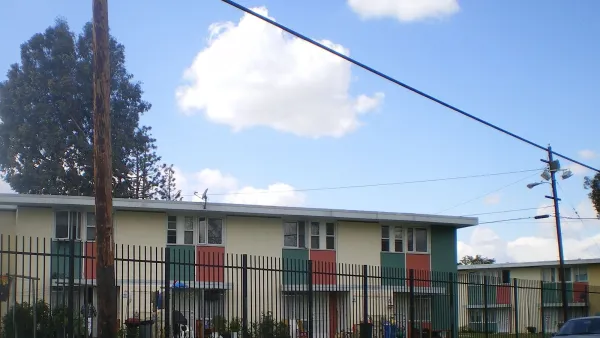
More Research Needed to Understand the Rental Market
Large institutional investors are changing the realities of the U.S. rental housing market, but a lack of information makes it hard for cities to respond.

Planetizen Federal Action Tracker
A weekly monitor of how Trump’s orders and actions are impacting planners and planning in America.

The state-sanctioned urbicide of Austin
People don’t kill cities. Freeways do.

US to reduce Colorado River water deliveries to Mexico
A new Colorado Treaty amendment reduces Mexico’s Colorado River water allocation by 250,000 acre feet.

Nation's most wind-powered state turns to coal as data centers increase energy demand
For the first time in decades, Iowa has increased its generation of coal power.

NYC cools commuters with city's first rain garden above a bus stop
New York City officials say the plants in the rain garden can absorb 16 gallons of rainwater during heavy storms.

Brightline West’s future may rely on $6 billion federal loan
The company has until Nov. 2 to make a $400 million equity investment into its proposed high-speed rail line.

FREE Course: Walkable City 1: Why Walkability?
After describing his path towards focusing on walkability as the essence of good planning, Jeff Speck marches through his five principal reasons for making more walkable places.
Reinventing Malls: Planning Alchemy—Turning Gray Fields Into Gold
The course focuses on the opportunities and imperatives that shape reinvention of mall sites.

Greater Baltimore Committee
Eagle County Government
Harvard University Graduate School of Design
The Architects Foundation
University of Cincinnati Online
The Pocatello Development Authority
The Urban Renewal Agency of the City of Pocatello
Journal of the American Planning Association