The housing markets most affected by the subprime mortgage fallout are those with the toughest land use regulations, argues Wendell Cox.


"As we know from introductory courses in economics, scarcity raises prices. In a number of metropolitan markets across the country, excessive land use policies have been adopted, such as urban growth boundaries, huge areas recently declared off-limits to development, building moratoria, confiscatory and unprecedented impact fees, and excessively large minimum lot sizes.
These policies, often referred to as "smart growth," create a scarcity of land, artificially raise the price of housing, and, again, have increased the exposure of the market to risky mortgage debt. When more liberal loan policies were implemented, metropolitan areas that had adopted these more restrictive policies lacked the resilient land markets that would have allowed the greater demand to be accommodated without inordinate increases in house prices.
A few voices in the wilderness on both sides of the political spectrum have pointed to the role of excessive land use policies in driving up housing costs. For example: Liberal economist Paul Krugman of The New York Times put most of his conservative colleagues to shame in noting that the house price bubble has been limited to metropolitan areas with strong land use regulation."
FULL STORY: How Smart Growth Exacerbated the International Financial Crisis

Did Smart Growth Policies Save Oregon's Housing Market?
Oregon's housing market has faired far better than other areas of the country, with some experts agreeing that the state's more restrictive land-use policies helped to prevent an oversupply of homes during the free-wheeling mortgage years.
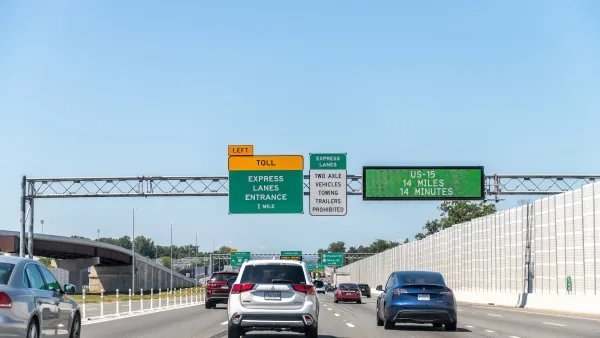
Congestion Costing Reality Check, Part 2: A congestion costing critique
There are good reasons to be skeptical of highway industry claims that traffic congestion is a growing problem. Their analysis is often incomplete and biased. Let’s pull back the curtain on some major congestion cost studies.
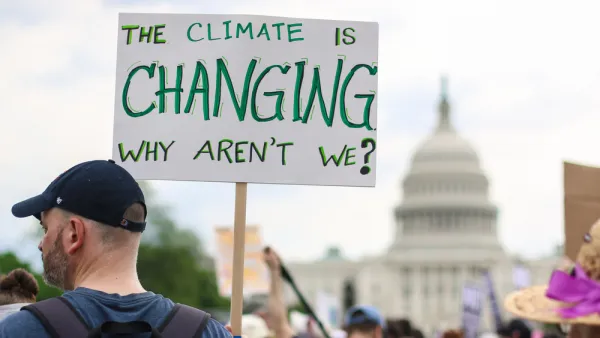
USDOT Releases Climate Strategies Playbook
The USDOT's new Climate Strategies that Work Playbook provides detailed information concerning benefits and implementation requirements for 27 transportation-related emission reduction strategies.

Planetizen Federal Action Tracker
A weekly monitor of how Trump’s orders and actions are impacting planners and planning in America.

The state-sanctioned urbicide of Austin
People don’t kill cities. Freeways do.

US to reduce Colorado River water deliveries to Mexico
A new Colorado Treaty amendment reduces Mexico’s Colorado River water allocation by 250,000 acre feet.

5 New England states march closer to 800 megawatt wind energy project
Securing federal approval for the project may be complicated under the Trump administration, which has historically been hostile towards domestic wind power.

Baltimore to break ground on $50 million Transit Priority Project
The project will bring faster bus trips, safer streets and better bike connections to Baltimore.

Airbnb launches $250 million 'last-dollar financing' housing accelerator, makes first investment in Austin
The company will put $6.4 million towards affordable housing development in Texas’ capital.

FREE Course: Walkable City 1: Why Walkability?
After describing his path towards focusing on walkability as the essence of good planning, Jeff Speck marches through his five principal reasons for making more walkable places.
Reinventing Malls: Planning Alchemy—Turning Gray Fields Into Gold
The course focuses on the opportunities and imperatives that shape reinvention of mall sites.

Eagle County Government
Harvard University Graduate School of Design
Nashville Planning Department
The Architects Foundation
University of Cincinnati Online
The Pocatello Development Authority
The Urban Renewal Agency of the City of Pocatello
Journal of the American Planning Association