Urban infill developments are slated to transform the vast industrial land between Charleston and North Charleston, South Carolina, known as "the Neck" area, into live-work communities that stitch the two cities together.


"Urban infill developments large and small, the type that brag of true sustainability because they are built around existing infrastructure and in tight spaces, are slated to transform a diverse tract of land that stretches from the Holy City at the foot of the Arthur Ravenel Jr. Bridge up to the shuttered Charleston Naval Base and into old North Charleston.
Considering the prime location of this property, in proximity to so many of the Lowcountry's main arteries, it's hard not to wonder why mass-scale development did not happen here sooner. It's downtown Charleston minus the parking headaches, an easy trip to Interstate 26, right off the foot of the Ravenel bridge and a quick hike to North Charleston.
But like a Southern conversation, this metamorphosis is slow-moving and prone to distraction."
Thanks to A. Lamar Calloway
Read the full story: Uniting Development
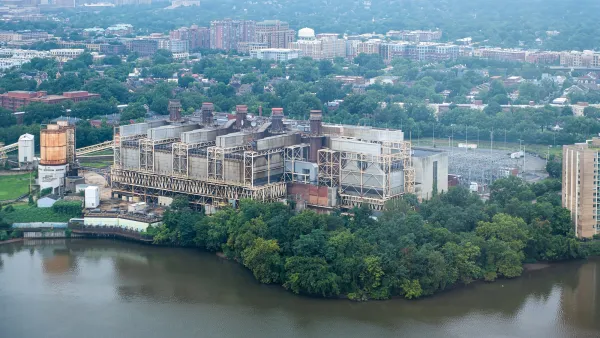
Former power plant in Alexandria to become walkable waterfront neighborhood with 800 homes
The Potomac River Generating Station was once the biggest source of air pollution in northern Virginia.
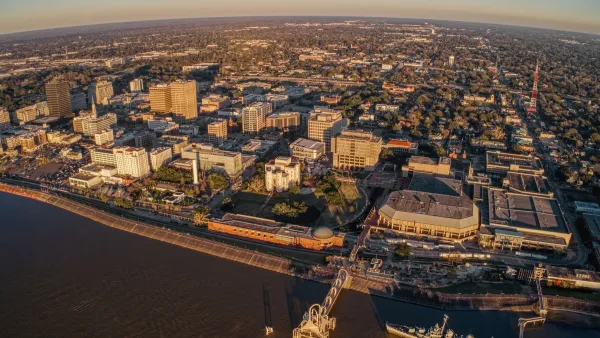
Baton Rouge master plan aims to triple downtown population
The Louisiana capital wants to entice developers to its riverfront district.
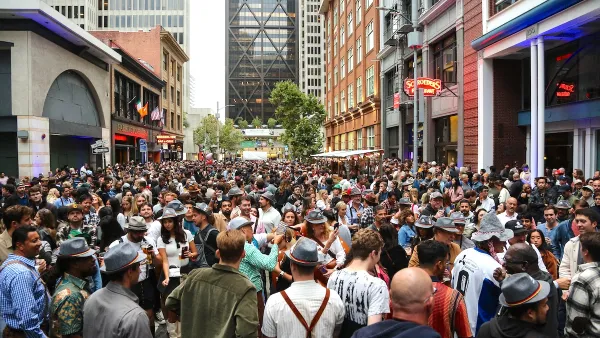
The Simple Legislative Tool Transforming Vacant Downtowns
In California, Michigan and Georgia, an easy win is bringing dollars — and delight — back to city centers.

Planetizen Federal Action Tracker
A weekly monitor of how Trump’s orders and actions are impacting planners and planning in America.

California plans to bury El Niño’s downpour
If the state plays its cards right, it may be able to store a billion acre-feet of El Niño’s water in aquifers.

Desperate measures: Advocates weigh draining Lake Powell to fill Colorado River
Draining the reservoir could reduce evaporation losses by a couple hundred thousand acre-feet.

US buildings threatened, destroyed by fires set to triple by 2060
Researchers found a high fire risk for socioeconomically vulnerable neighborhoods in the American West.

LA residents may be allowed to paint their own crosswalks
Councilwoman Katy Yaroslavsky put out a motion instructing the Los Angeles Department of Public Transportation to study the feasibility of allowing volunteers to paint crosswalks.

Dallas moves to overhaul its zoning code
The city's zoning reform will allow more multi-family and mixed-use developments.

FREE Course: Walkable City 1: Why Walkability?
After describing his path towards focusing on walkability as the essence of good planning, Jeff Speck marches through his five principal reasons for making more walkable places.
Reinventing Malls: Planning Alchemy—Turning Gray Fields Into Gold
The course focuses on the opportunities and imperatives that shape reinvention of mall sites.

City of Rosemead
Rutgers University, Edward J. Bloustein School of Planning and Public Policy
One Hundred Miles
Hunter College, City University of New York (CUNY)
The Architects Foundation
University of Cincinnati Online
City of Cambridge
Montrose County
The Pocatello Development Authority