This article from Discover takes a tour of Bodie, California, a gold-mining mountain ghost town, where the entire city is in a state of "arrested decay".


"Gaze into one of the ramshackle buildings in Bodie, California, and you might see dust-covered furniture, an old muffin pan, rusty tins, and broken kerosene lamps. Or you might see a fully stocked general store with original wooden boxes and shelves with tin cans. The old gold-mining town, once bustling with saloons, brothels, gambling halls, and even opium dens, is now a ghost town, probably the most famous one in America. But it is much more than that. According to cultural geographer Dydia DeLyser of Louisiana State University, ghost towns, like the ruins of Pompeii, help people understand the past. 'When people see Bodie,' DeLyser says, 'it's very powerful. They relate to the ideas the movies convey about the Old West, about the pioneering spirit of Americans, and read those into Bodie's landscape. By looking on the tarnished remains of the past, they feel they're experiencing that past.'"
"When the California State Parks Department took over Bodie in 1962, it initiated a program of 'arrested decay,' maintaining the dilapidated structures just as they appeared at the time of acquisition. According to Charley Spiller, a Bodie maintenance mechanic, the greatest enemies of preservation are wind, which can gust up to 100 miles an hour on nearby mountains, and snow, which averages 13 feet a year. 'When the roofs fail or the windows fail, then the snow gets in and sits and soaks into the floors, and then the floors deteriorate,' he says. Currently a team of three or four workers spend six months of each year shoring up walls, repairing roofs, and replacing smashed windows-a task that can eat up as much as half a million dollars for three years' work. Spiller and his team rebuild walls using pine similar to the native Jeffrey pine that settlers originally used. Without constant attention, most houses would disintegrate into splinters, he adds."
Read the full story: The Most Famous Ghost Town in America

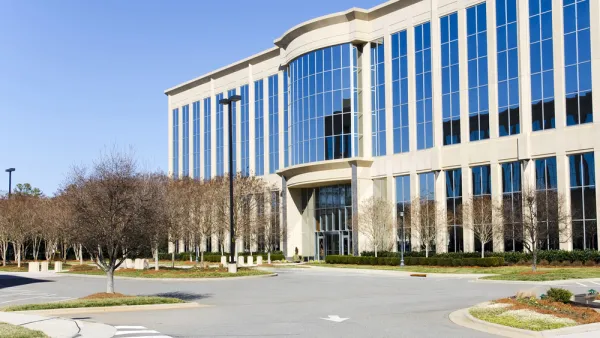
The New American Ghost Town: Suburban Office Parks
Suburban office parks are achieving the status of ghost towns in the Washington, D.C. area.
The Globe's Eeriest Ghost Towns
Apparently ghost towns aren't only found in America's Old West and at former nuclear test sites. Lifestyle website Thrillist has collected seven of the world's creepiest ghost towns.
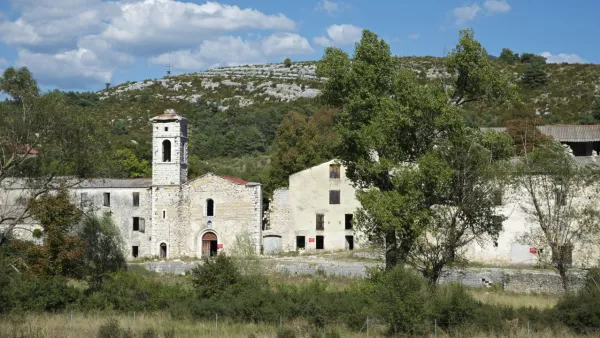
What Is a Place Without the People?
In an illustrated essay, Chuck Wolfe contrasts the ideal form of the New England town with an abandoned French village, calling out the human infrastructure essential to successful urban places.

Planetizen Federal Action Tracker
A weekly monitor of how Trump’s orders and actions are impacting planners and planning in America.

Amtrak, CN end decades-long dispute with eight-year agreement
The new operating agreement establishes an updated framework for the companies to work together, including processes to resolve disputes.

Northwest rail fans eager for Sept. 30 debut of Amtrak’s Airo fleet
Get ready for that new train smell and more seats. But they won’t go faster or run more frequently on the Cascades route in Washington and Oregon.

Brightline Florida files for bankruptcy
The transit company is over $5 billion in debt.

St. Louis Metro to test if single-car trains can reduce operating costs, maintain rider satisfaction
The pilot program will run from October to spring 2027, and begin with one single-car train operating on Metrolink’s Red and Blue lines.

Pennsylvania is building data centers in abandoned mines
Housing data centers in mines provides an alternative to destroying local forests and may spare residents from data centers’ noise and air pollution.

FREE Course: Walkable City 1: Why Walkability?
After describing his path towards focusing on walkability as the essence of good planning, Jeff Speck marches through his five principal reasons for making more walkable places.
Reinventing Malls: Planning Alchemy—Turning Gray Fields Into Gold
The course focuses on the opportunities and imperatives that shape reinvention of mall sites.

City of Thousand Oaks
City of Wisconsin Rapids
Harvard University Graduate School of Design
The Architects Foundation
University of Cincinnati Online
The Pocatello Development Authority
The Urban Renewal Agency of the City of Pocatello