Though the idea of congestion pricing has won over many planners and officials, as the failed proposal in New York shows, many members of the driving public are far more comfortable with sitting in traffic than paying tolls or riding transit.


"Should you have to pay to drive on the Capital Beltway -- and on Interstate 270, the George Washington Memorial Parkway and all the bridges that cross the Potomac?
Many economists would say yes. The Bush administration would agree. A federally funded study completed last week lays out how much revenue such a tolling system would generate and how much it could reduce traffic congestion.
But if you don't like the idea, don't fire off any angry e-mails just yet. "Road pricing," long the arcane province of a few academics, has become technically feasible and politically at least not unmentionable. But it still generates tremendous suspicion and opposition, and not along the usual left-right dividing lines.
Just ask Mayor Michael Bloomberg of New York City. He assembled a coalition of environmentalists, business groups, subway riders and others to back what he called "congestion pricing," an $8 fee he would have charged anyone driving downtown during business hours. The Bush administration offered a $354 million incentive -- or bribe, to opponents -- to be used for public transit if the plan was adopted. But Democrats in the New York legislature killed the proposal a week ago."
Read the full story: The Bumpy Road to Congestion Relief

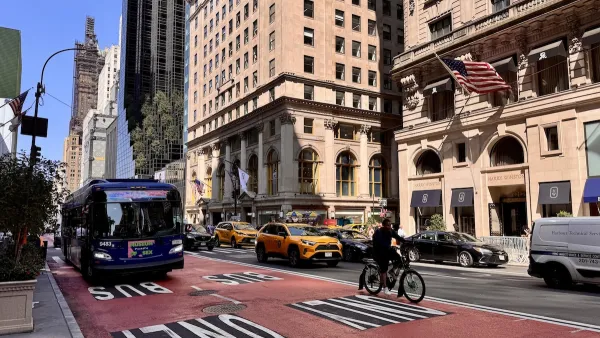
Congestion Costing Reality Check, Part 3: Smart congestion relief
There are many better ways to reduce congestion in your city than expensive roadway expansion projects. Win-win strategies reduce congestion and provide many other benefits.
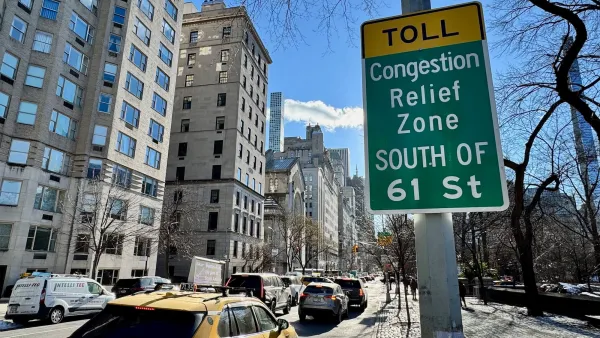
Study: NYC congestion pricing didn't impact parking demand
A city report shows that free parking, not congestion pricing, is the main driver of limited parking demand in the city.
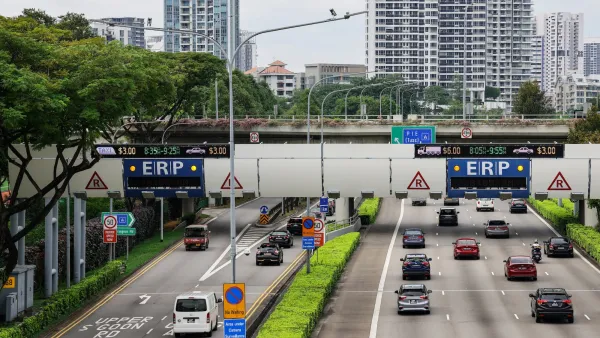
Singapore adopts in-vehicle GPS tech to manage road tolls
The city's latest update to its congestion pricing system could open the door to distance-based tolling.

Planetizen Federal Action Tracker
A weekly monitor of how Trump’s orders and actions are impacting planners and planning in America.

‘Going backwards:’ Baltimore mayor, students rally against state's transit funding plan
Maryland's proposed six-year plan provides no funding for Baltimore’s BMORE bus program and reduces its road maintenance funding.

Detroit to transform waterfront with $2.2 billion investment
Developers will convert about 18 acres of unused parking lot space into civic spaces.

SF residents can no longer use potential shadows to block housing developments
The SHADE act also halves the allotted time for certain appeals before projects can progress.

HUD, USDA agree on framework to simplify housing environmental review standards
Their agreement is a requirement of the 21st Century ROAD to Housing Act.

Cost of water rising at a faster pace than inflation, median household income
California and Maryland residents have seen their water bills grow especially high.

FREE Course: Walkable City 1: Why Walkability?
After describing his path towards focusing on walkability as the essence of good planning, Jeff Speck marches through his five principal reasons for making more walkable places.
Reinventing Malls: Planning Alchemy—Turning Gray Fields Into Gold
The course focuses on the opportunities and imperatives that shape reinvention of mall sites.

planning NEXT
City of Thousand Oaks
City of Wisconsin Rapids
The Architects Foundation
University of Cincinnati Online
Northern Illinois Transit Authority (NITA)
The Pocatello Development Authority
The Urban Renewal Agency of the City of Pocatello