Old subway cars are being dumped off the coast of Delaware, creating a manmade reef. Life is flourishing in this new underwater subway cemetery, but officials worry the reef may be too successful.


"One by one, a machine operator has been shoving hundreds of retired New York City subway cars off a barge, continuing the transformation of a barren stretch of ocean floor into a bountiful oasis, carpeted in sea grasses, walled thick with blue mussels and sponges, and teeming with black sea bass and tautog."
"'They're basically luxury condominiums for fish,' Jeff Tinsman, artificial reef program manager for the Delaware Department of Natural Resources and Environmental Control, said as one of 48 of the 19-ton retirees from New York City sank toward the 666 already on the ocean floor."
"But now, Delaware is struggling with the misfortune of its own success."
"Having planted a thriving community in what was once an underwater desert, state marine officials are faced with the sort of overcrowding, crime and traffic problems more common to terrestrial cities."
Read the full story: Growing Pains for a Deep-Sea Home Built of Subway Cars

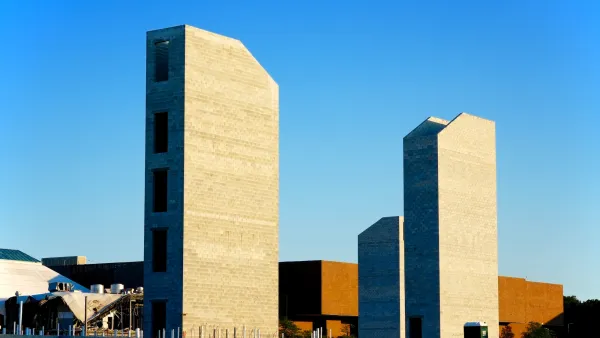
New Jersey affordable housing requirements spur infill development across the state
A 50-year-old law continues to reshape development around housing goals.
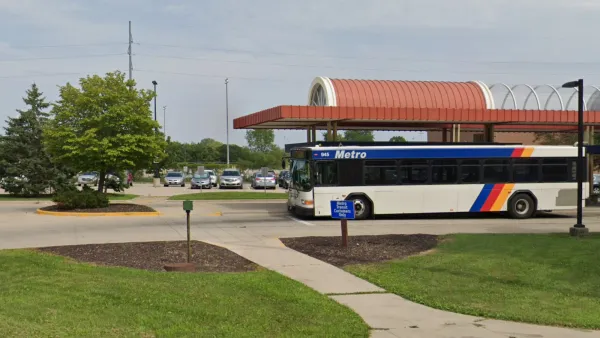
Madison approves hundreds of affordable apartments as deadline for federal funding looms
A recently approved project will bring 163 affordable units to the north side.
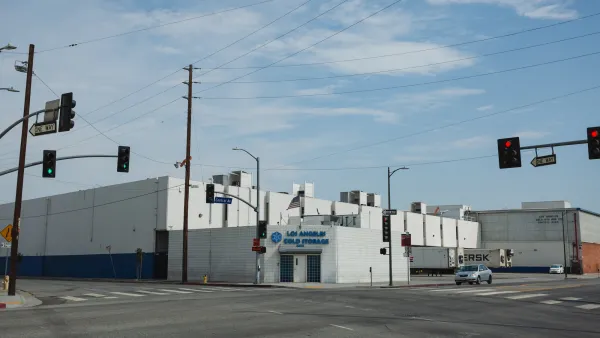
LA approves $2B 'urban village' plan for former cold storage facilities
The project promises an interconnected neighborhood with a focus on public space.

Planetizen Federal Action Tracker
A weekly monitor of how Trump’s orders and actions are impacting planners and planning in America.

California plans to bury El Niño’s downpour
If the state plays its cards right, it may be able to store a billion acre-feet of El Niño’s water in aquifers.

Chicago breaks ground on $3 billion megadevelopment
The new neighborhood, titled Foundry Park, will one day host 3,700 residences.

Want to study the Missouri River? Soon, you may need unanimous approval from 10 states
Legislation would require 10 governors’ permission to study or build projects moving water outside the basin.

Desperate measures: Advocates weigh draining Lake Powell to fill Colorado River
Draining the reservoir could reduce evaporation losses by a couple hundred thousand acre-feet.

This road in NYC is infamously dangerous — and Mamdani can't fix it
New York City's Ocean Parkway is known for reckless driving, but the power to implement safety measures lies with the state rather than the city.

FREE Course: Walkable City 1: Why Walkability?
After describing his path towards focusing on walkability as the essence of good planning, Jeff Speck marches through his five principal reasons for making more walkable places.
Reinventing Malls: Planning Alchemy—Turning Gray Fields Into Gold
The course focuses on the opportunities and imperatives that shape reinvention of mall sites.

City of Rosemead
Rutgers University, Edward J. Bloustein School of Planning and Public Policy
One Hundred Miles
Hunter College, City University of New York (CUNY)
The Architects Foundation
University of Cincinnati Online
City of Cambridge
Montrose County
The Pocatello Development Authority