The recent vote against a new toll freeway in Orange County signals that California's don't want more roads. Instead, transportation dollars should go to building the state's high-speed rail system.


"The recent 8-2 California Coastal Commission vote against the Foothill-South Toll Road extension through Orange County may have been bad news for those who like to build and drive on crowded freeways, but it was great news for the traveling public.
Besides underscoring strong concerns about potential long-term environmental damage in a project of this type and size, the lopsided vote sent out an important message: Californians are tired of the freeways-as-usual approach that creates more traffic congestion, not less.
The Transportation Corridor Agency, the Orange County entity behind the extension of the toll road through San Onofre State Beach, says it will appeal the ruling to the U.S. secretary of commerce because the road is considered a federal project. But the betting is that the Coastal Commission's ruling will not be reversed, and even if it were, the agency would have to go back to the Coastal Commission for final approval.
What the commission really said is that if close to $1 billion is available to build this project, let's use it on projects that will deliver more bang for the buck, reduce environmental impacts and energy use, and make a real dent in the highway congestion that plagues Orange County and most of California.
And that means high-speed rail. The $1 billion its sponsors wanted to spend on a toll road could go a long way toward paying for the cost of that portion of the state's high-speed rail plan that could take travelers from Los Angeles to San Diego in 55 minutes and from Irvine to either of those cities in less than a half-hour while eliminating a lot of congestion on Interstate 5, not only in Orange County but along the entire route."
Read the full story: Michael Dukakis: Toll road bad news is high-speed rail good news


Colorado unveils fox mascot, branding for 'CoCo' high-speed rail
The new Denver-to-Fort Collins train is expected to begin service in 2029.
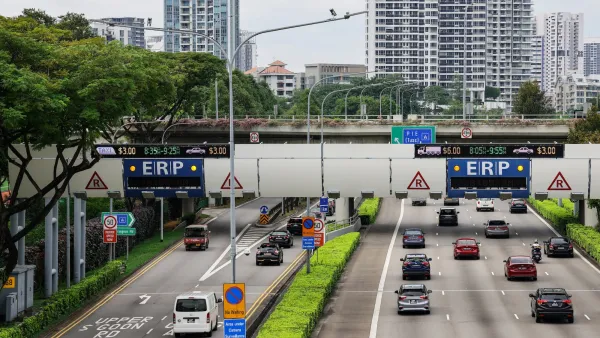
Singapore adopts in-vehicle GPS tech to manage road tolls
The city's latest update to its congestion pricing system could open the door to distance-based tolling.
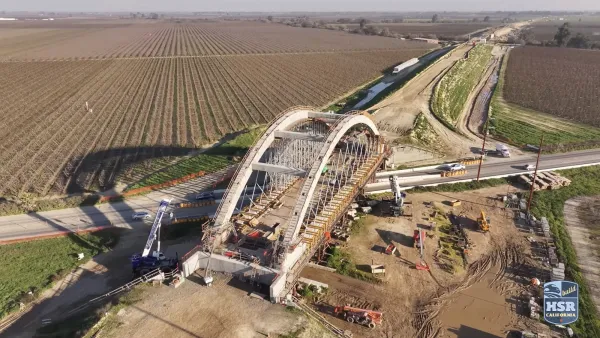
California High-Speed Rail wants to leverage data center revenue to fund trains
By positioning the rail line as a tech and renewable energy corridor, the agency hopes to increase revenue opportunities.

Planetizen Federal Action Tracker
A weekly monitor of how Trump’s orders and actions are impacting planners and planning in America.

Amtrak, CN end decades-long dispute with eight-year agreement
The new operating agreement establishes an updated framework for the companies to work together, including processes to resolve disputes.

Judges permit Denver to divert 77,000 acre feet from the Colorado River for reservoir expansion
Overuse and climate change have caused the Colorado River’s water levels to plummet.

Philadelphia to invest $2 billion into upgrading city airports as PHL places last in customer satisfaction
Modernizations to Philadelphia's airports will include baggage system upgrades and a new automated parking garage guidance system.

The LA housing policies making developers turn away from the city
Despite LA’s housing shortage, developers say the city’s "mansion-tax" and pandemic-era policies make it an unappealing place to build housing.

New density bill would require 7 California cities to establish regional transit hubs
The bill would also require major cities in California to permit high-rise residential buildings.

FREE Course: Walkable City 1: Why Walkability?
After describing his path towards focusing on walkability as the essence of good planning, Jeff Speck marches through his five principal reasons for making more walkable places.
Reinventing Malls: Planning Alchemy—Turning Gray Fields Into Gold
The course focuses on the opportunities and imperatives that shape reinvention of mall sites.

City of Wisconsin Rapids
Harvard University Graduate School of Design
KFH Group Inc.
The Architects Foundation
University of Cincinnati Online
The Pocatello Development Authority
The Urban Renewal Agency of the City of Pocatello