A six-month moratorium on new billboards has been passed by the Pittsburgh City Council as it struggles to formulate a policy for brightly lit LED signs.


"Pittsburgh City Council today passed a six-month moratorium on approving or erecting advertising billboards to give lawmakers time to write tighter zoning restrictions on the roadside placards -- particularly brightly lit, electronic ones.
"This is not about being unfriendly to business in any way, shape or form," said Councilman Bruce Kraus. "This is about taking a break to catch up with the technology of today."
The moratorium passed unanimously after a last-minute amendment stripped language that made the bill retroactive to March 12. Advertising companies have submitted dozens of billboard proposals in recent weeks in an attempt to beat when the moratorium takes effect.
"I would hope ... we could somehow put a policy in place in regards to swapping regular billboards for LED (billboards), which is what I think started this whole discussion," said Councilman Jim Motznik."
Read the full story: Pittsburgh council adopts billboard moratorium
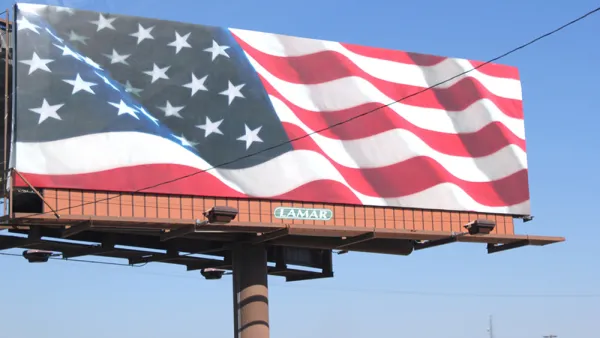
Supreme Court Case Could Transform Sign Regulations
If the Supreme Court upholds a lower court decision, cities could lose a long-standing right to regulate 'off-premises' billboards.

Criticism of San Jose's Plan to Add New Billboards to the City
San Jose banned new billboards in 1985, but a proposal making its way through the planning department would allow for a wave of new billboards in the city. One local columnist isn't buying it.
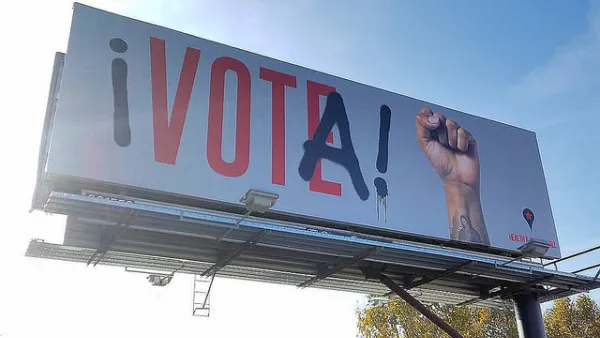
San Jose City Council Supports New Billboards
San Jose, California is suddenly taking a much more permissive approach to large billboards.

Planetizen Federal Action Tracker
A weekly monitor of how Trump’s orders and actions are impacting planners and planning in America.

California plans to bury El Niño’s downpour
If the state plays its cards right, it may be able to store a billion acre-feet of El Niño’s water in aquifers.

Desperate measures: Advocates weigh draining Lake Powell to fill Colorado River
Draining the reservoir could reduce evaporation losses by a couple hundred thousand acre-feet.

Voters choose public transit, approve $31 billion in funding
Approved projects include $101,000 for reduced-cost transit in a Michigan town and $14 billion for regional transit in the San Francisco Bay Area.

Study reveals best places in the U.S. for cycling, walking
New research from Streetlight Data examines bicycle and pedestrian miles per capita in the 100 largest U.S. cities by population.

Los Angeles just elected an urban planner as its mayor
Transportation analysts are optimistic that Raman will be more aggressive in addressing transit issues than Bass.

FREE Course: Walkable City 1: Why Walkability?
After describing his path towards focusing on walkability as the essence of good planning, Jeff Speck marches through his five principal reasons for making more walkable places.
Reinventing Malls: Planning Alchemy—Turning Gray Fields Into Gold
The course focuses on the opportunities and imperatives that shape reinvention of mall sites.

City of Rosemead
Rutgers University, Edward J. Bloustein School of Planning and Public Policy
One Hundred Miles
University of Michigan School for Environment and Sustainability (SEAS)
Hunter College, City University of New York (CUNY)
The Architects Foundation
City of Cambridge
Montrose County
The Pocatello Development Authority