As cities get serious about addressing climate change, a new city position -- the sustainability director -- is taking office all over the country.


"Fayetteville's mayor, Dan Coody, is one of 805 mayors nationally who have signed pledges to slash their cities' greenhouse gas emissions in line with targets set in the Kyoto Protocol. Those mayors have lapped up international praise for leading on climate change where Washington lagged. But the truth is, they are just now getting down to figuring out what exactly they have agreed to. What does it really mean to reduce a city's carbon footprint?"
"Most mayors haven't thought this question through too far yet. But the ones who have are finding that one of the first things to do is to hire a John Coleman. About three dozen cities now have sustainability directors of their own, and there are more whose job titles reflect either the broader fight against climate change or the somewhat narrower quest for energy efficiency. The idea is to have one person - or in Chicago, San Francisco, Seattle and other big cities, entire staffs - dedicated to squeezing greenhouse gas emissions out of the way government does business, and to serve as both a liaison and a beacon to businesses and citizens who want to limit their own carbon output."
Read the full story: Mr. Sustainability

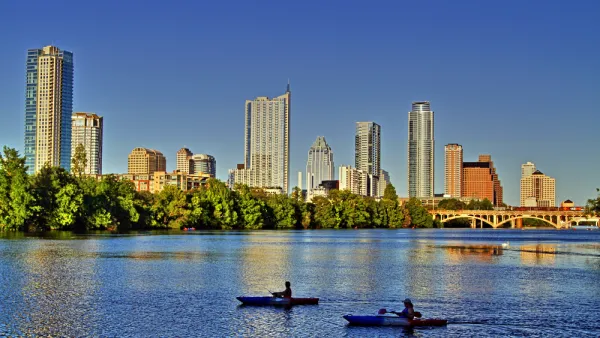
New Tool for Measuring Progress of Sustainability in Austin
Austin Office of Sustainability upgrades transparency with a new online resource.

Swapping your gas car for an EV is greener than keeping it, research shows
An EV repays the 'carbon debt' caused by building it after 4,400 miles.

Climate change could double household water costs in some cities, study finds
New research suggests that climate change-related stressors are straining municipal water systems.

Planetizen Federal Action Tracker
A weekly monitor of how Trump’s orders and actions are impacting planners and planning in America.

The state-sanctioned urbicide of Austin
People don’t kill cities. Freeways do.

US to reduce Colorado River water deliveries to Mexico
A new Colorado Treaty amendment reduces Mexico’s Colorado River water allocation by 250,000 acre feet.

Nation's most wind-powered state turns to coal as data centers increase energy demand
For the first time in decades, Iowa has increased its generation of coal power.

NYC cools commuters with city's first rain garden above a bus stop
New York City officials say the plants in the rain garden can absorb 16 gallons of rainwater during heavy storms.

Brightline West’s future may rely on $6 billion federal loan
The company has until Nov. 2 to make a $400 million equity investment into its proposed high-speed rail line.

FREE Course: Walkable City 1: Why Walkability?
After describing his path towards focusing on walkability as the essence of good planning, Jeff Speck marches through his five principal reasons for making more walkable places.
Reinventing Malls: Planning Alchemy—Turning Gray Fields Into Gold
The course focuses on the opportunities and imperatives that shape reinvention of mall sites.

Eagle County Government
Harvard University Graduate School of Design
Nashville Planning Department
The Architects Foundation
University of Cincinnati Online
The Pocatello Development Authority
The Urban Renewal Agency of the City of Pocatello
Journal of the American Planning Association