Residents in the small town of Qualicum Beach on Vancouver Island are starting a citywide carpooling program to help provide for people without cars after the city's underused public transit system was shut down.


"A pilot project that matches people needing a lift with drivers going in the same direction is getting rolling in Qualicum Beach."
"Its proponent, Coun. Mike Wansink, based the Good Samaritan Ride Program on a successful scheme that's been operating since 1971 in Washington D.C., where he attended university in the mid-1990s."
"Now Wansink is hoping a scaled-down program will work for Qualicum Beach, although heavy traffic is rarely an issue."
"'We don't have a rush hour; we don't even have a rush moment,' he quipped."
"'What prompted this is we lost our local transit service in town ... because of lack of ridership. We were averaging something like six or seven riders a day, and it was costing us a ton of money.'"
"The loss of buses left a few people stranded -- a big deal when 20 per cent of the population, or about 700, are seniors who don't drive."
Read the full story: Town considers mass carpooling
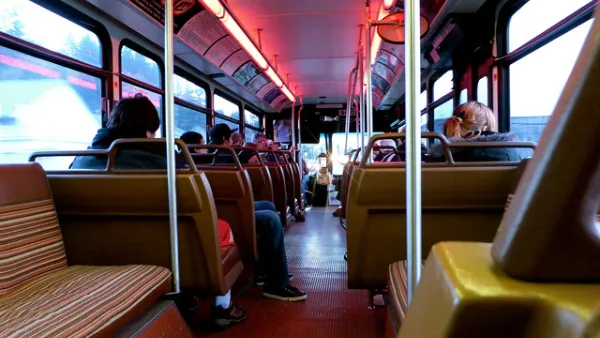
'OK Google, How Crowded is the Number 8 Bus?'
Google Maps will now share data about how crowded buses and trains are likely to be.
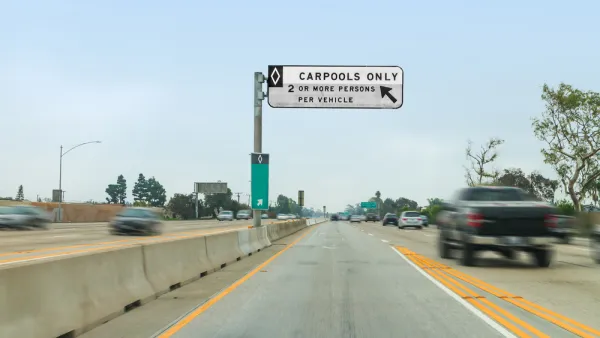
How Lyft and Uber Can Fix—Not Cause—Congestion
While evidence mounts that Uber and Lyft are stealing rides from public transit, there's still a chance for ride-hailing apps to do more to help than hurt congestion. The key: using ride-hailing apps to carpool.
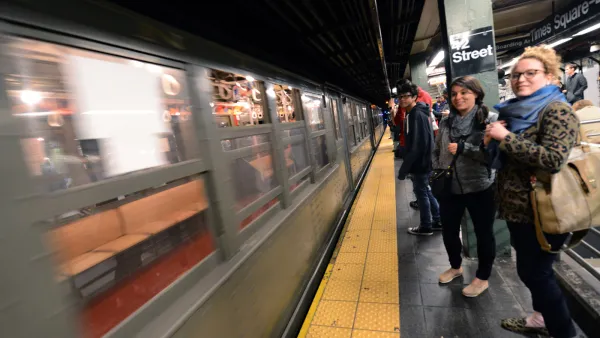
The Most Popular Forms of Alternative Transportation
When it comes to the Census, the term "alternative transportation" makes perfect sense. Eric Jaffe looks at the 15 metropolitan areas with the lowest auto commuting and describes the most popular alternatives.

Planetizen Federal Action Tracker
A weekly monitor of how Trump’s orders and actions are impacting planners and planning in America.

Eastern Nebraska is running out of electricity
Data centers and electrification are straining eastern Nebraska’s grid, throttling economic development.

Study reveals best places in the U.S. for cycling, walking
New research from Streetlight Data examines bicycle and pedestrian miles per capita in the 100 largest U.S. cities by population.

DSA members accuse Mamdani of 'abandoning values' over housing redevelopment
New York City's mayor plans to replace about 2,000 units of public housing with private, mixed-income housing.

All sides of BRT debate unhappy with CDOT’s most recent move
The Colorado Department of Transportation is no longer considering center-running bus lanes for Colorado Boulevard.

Massachusetts bogs generate both power, and cranberries
Putting solar panels above farmland is one way Massachusetts is advancing toward its goal of net-zero carbon emissions by 2050.

FREE Course: Walkable City 1: Why Walkability?
After describing his path towards focusing on walkability as the essence of good planning, Jeff Speck marches through his five principal reasons for making more walkable places.
Reinventing Malls: Planning Alchemy—Turning Gray Fields Into Gold
The course focuses on the opportunities and imperatives that shape reinvention of mall sites.

City of Rosemead
Rutgers University, Edward J. Bloustein School of Planning and Public Policy
One Hundred Miles
University of Michigan School for Environment and Sustainability (SEAS)
Hunter College, City University of New York (CUNY)
The Architects Foundation
City of Cambridge
The Pocatello Development Authority
The Urban Renewal Agency of the City of Pocatello