When California voters approved the $20 billion transportation bond in Nov., 2006 they supported the expenditure of over $2 billion for 'goods movement' stemming from the state's busy ports. However, some local officials object to rail projects.


"A proposal by the Schwarzenegger administration to use $170 million in voter-approved bond money for projects benefiting two private railroads is drawing ire from Southern California officials who want the funds for road improvements and other projects."
The funds are part of the $2-3 billion Trade Corridor Improvement Fund of Prop 1B, Nov. 2006.
"State transportation officials said in a recent report that Colton, in San Bernardino County, is "a major choke point that adversely impacts rail freight and has delayed implementation of additional passenger rail improvements."
"The biggest project in the package calls for the construction of a 1.4-mile railroad bridge that would eliminate a bottleneck in Colton" where Union Pacific and Burlington Northern Santa Fe tracks cross.
"The Colton project would cost $148 million, with the two railroads picking up half the bill and the rest coming from Proposition 1B money.
Another proposal involves spending $43 million to cover half the cost of providing extra tracks and improved tunnels for Union Pacific trains over Donner Pass in Northern California. The third project would use $53 million to cover half the cost of expanding the tracks and tunnels used by Burlington Northern SF over Tehachapi Pass."
"We think the intent of Proposition 1B was for public interchanges and not for the use of the railroad industry," said San Bernardino County Supervisor on behalf of the San Bernardino Associated Governments. "The group has asked the state commission to use the transportation bond money to improve freeways and provide grade separations at rail crossings."
Thanks to Clyde L. Anderson
Read the full story: Southern California officials not on board with plan to use bond money for railroads


Planetizen Federal Action Tracker
A weekly monitor of how Trump’s orders and actions are impacting planners and planning in America.

Amtrak, CN end decades-long dispute with eight-year agreement
The new operating agreement establishes an updated framework for the companies to work together, including processes to resolve disputes.

Colorado’s Largest Data Center Could Rise Next to Homes — Without a Public Hearing
The proposed campus would consume 11 times the power of Denver International Airport; as it has across the country, opposition mounts.

'This is going to be painful:’ Virginia stares down $1.7 billion funding gap for highway maintenance
The state may address the deficit by shifting $290 million from its construction budget to maintenance projects.
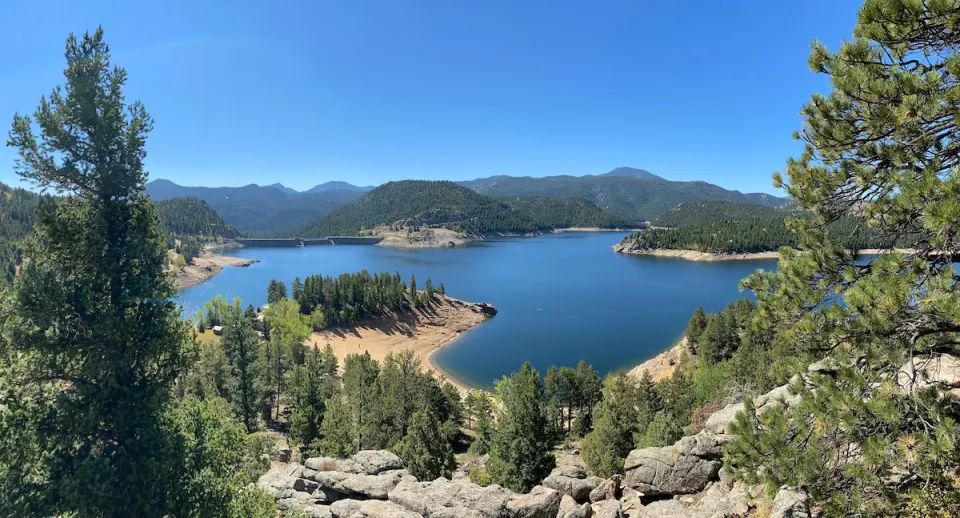
Judges permit Denver to divert 77,000 acre feet from the Colorado River for reservoir expansion
Overuse and climate change have caused the Colorado River’s water levels to plummet.
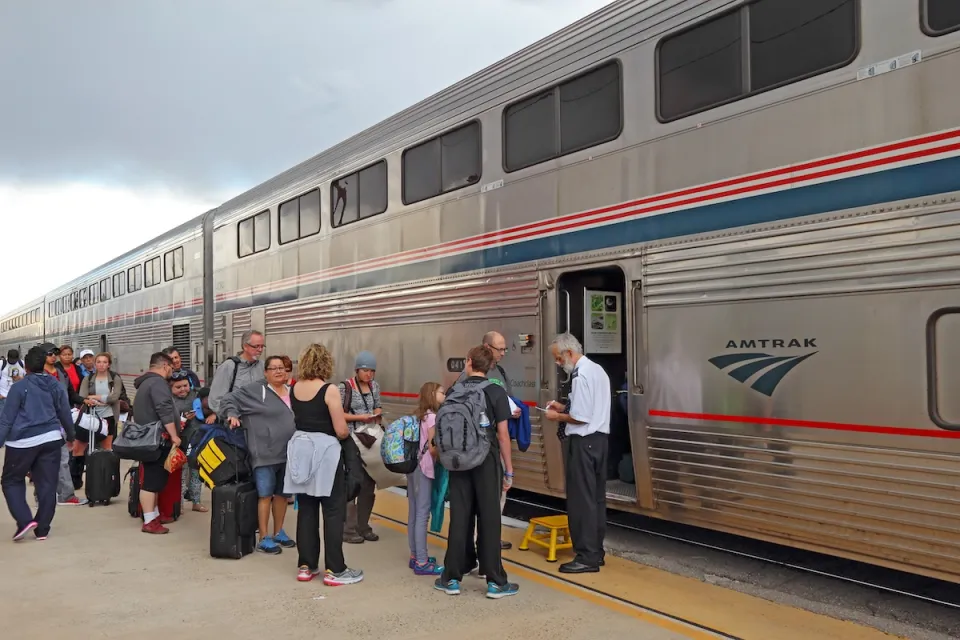
Amtrak, CN end decades-long dispute with eight-year agreement
The new operating agreement establishes an updated framework for the companies to work together, including processes to resolve disputes.

FREE Course: Walkable City 1: Why Walkability?
After describing his path towards focusing on walkability as the essence of good planning, Jeff Speck marches through his five principal reasons for making more walkable places.
Reinventing Malls: Planning Alchemy—Turning Gray Fields Into Gold
The course focuses on the opportunities and imperatives that shape reinvention of mall sites.

KFH Group Inc.
Greater Baltimore Committee
Eagle County Government
The Architects Foundation
University of Cincinnati Online
The Pocatello Development Authority
The Urban Renewal Agency of the City of Pocatello