


An ongoing Planetizen series profiles professionals in planning, design, development and related fields. Learn what influenced people to enter the field, what work they have been doing, and what advice they have to offer others interested in planning and development.
 Name:
Name:
Sean Garretson, AICP
Current position and affiliation:
I am one of several principals at TIP Strategies in Austin, Texas. We are one of the nation's leading economic development consulting companies. We work primarily with the public sector but are doing more work for private sector clients who are looking to do "the right thing" for their communities.
What do you do in your current position:
I lead economic development plans and revitalization planning projects. I also do a significant amount of business development for potential business and some of our new private sector consulting.
Last position and organization:
I started and ran my own planning business, Pegasus Planning and Development, for about one year. During this time I did some work for TIP Strategies and we decided to formalize our working relationship.
Brief description of a recent project:
I recently completed two, large county-wide economic diversification projects in Northwest Florida. I spent about one year working on these projects -- learning what the big issues were to address and crafting a strategy to improve and diversify the economies of the Pensacola and Destin area in Florida. It truly was a hardship -- I mean, staying at the beach on my trips! Seriously, I loved this project not only for the beaches, but because the people in Northwest Florida were great to work with, and they have a lot of wonderful opportunities to seize that could launch them into a more diverse economy.
What is the most challenging part of your job?
Managing client expectations, delivering quality work, and having fun -- a balance, but possible to do. Fortunately, my company is a great place to work -- we have a wonderful group of individuals who are smart and forward thinking, and we choose fun and challenging projects. We also encourage each other to have fun and experience the places we visit and work for.
What is the last planning (or other) book you read?:
A Good Place To Live by Terry Pindell. The book profiles several of the best communities in the United States. A very interesting read.
How did you get into the field?:
After my anthropology undergraduate degree, I went into the Peace Corps in Burundi, Africa. After that experience, I knew I wanted to work in community and economic development. I worked for an international development consulting company in Washington, DC, then managed an AmeriCorps project in Vermont before I got my graduate degree in planning from University of Texas, Austin. While working on my degree, I worked full-time as a planner at a Council of Governments. I then worked as a city planning consultant for a large river authority in central Texas. After that, I worked in several private consulting firms doing land use planning and economic development.
Where did you go to school?:
I received a B.A. in Anthropology from George Washington University in Washington, DC, and a M.S. in Community and Regional Planning with a specialization in Economic Development from the University of Texas at Austin.
Do you have any advice for someone entering the field?:
Get exposure to as many different facets of planning and volunteer in your own community, either by coordinating your neighborhood's newsletter, serving on a planning commission, or being on a board of a revitalization board.
What has been your greatest challenge?:
Patience. I laugh when I think about the stories of the planners who essentially built Chicago amidst the planning of the World's Fair. There were several quoted as saying "we plan because we know best." That was back before the public process became recognized as such an important part of planning. One of the hallmarks of TIP's work is our commitment to the public/stakeholder process. As a consultant, I have figured out that I am only as successful as the last plan that I developed was implemented, and I firmly believe that the involving key stakeholders throughout a process is a key to implementation.
What is your favorite city?:
Austin, of course! Austin doesn't have everything, but it is city that has a strong spirit that truly is palpable -- even when you fly into the new international airport. The music scene here is "off the hook" (as my daughter might say), and with a growing mixed-use downtown, strong university and entrepreneurship culture, this city just keeps getting better. We have not kept up transportation infrastructure with the growth demands, but we have a new commuter rail system being developed that should be operating in two years.


Planetizen Federal Action Tracker
A weekly monitor of how Trump’s orders and actions are impacting planners and planning in America.

Northwest rail fans eager for Sept. 30 debut of Amtrak’s Airo fleet
Get ready for that new train smell and more seats. But they won’t go faster or run more frequently on the Cascades route in Washington and Oregon.
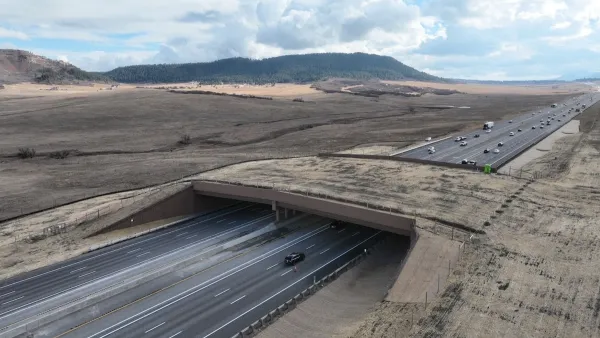
Record-breaking wildlife overpass in Colorado brings 91% reduction in animal collisions
Prior to the overpass, vehicles were hitting one deer per day on Colorado’s Interstate 25.

Detroit to transform waterfront with $2.2 billion investment
Developers will convert about 18 acres of unused parking lot space into civic spaces.

‘Going backwards:’ Baltimore mayor, students rally against state's transit funding plan
Maryland's proposed six-year plan provides no funding for Baltimore’s BMORE bus program and reduces its road maintenance funding.

Trump wants to cancel nearly 98% of funding for HUD housing support program
Multiple housing groups are suing the administration in an effort to preserve the funding.

FREE Course: Walkable City 1: Why Walkability?
After describing his path towards focusing on walkability as the essence of good planning, Jeff Speck marches through his five principal reasons for making more walkable places.
Reinventing Malls: Planning Alchemy—Turning Gray Fields Into Gold
The course focuses on the opportunities and imperatives that shape reinvention of mall sites.

City of Thousand Oaks
City of Wisconsin Rapids
Harvard University Graduate School of Design
The Architects Foundation
University of Cincinnati Online
Northern Illinois Transit Authority (NITA)
The Pocatello Development Authority
The Urban Renewal Agency of the City of Pocatello

