The 2026 FIFA World Cup in Los Angeles showed that if the county’s transit providers work together, they can move thousands of people with ease. With two years remaining before the Games, the region should treat that success as inspiration, not a finish line.


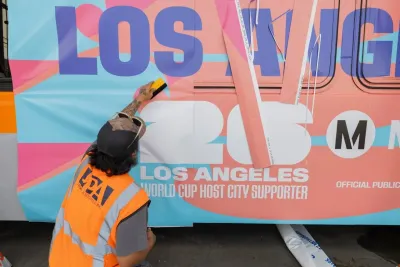
Preparations for the 2028 Olympic and Paralympic Games have been shaped by a bold objective: deliver a transit-first mega-event in a region where driving remains the dominant form of travel. This has contributed to the broader LA28 conversation about whether Los Angeles must fundamentally transform its transportation system to deliver a successful Games.
The region’s experience during the 2026 FIFA World Cup indicates that complete transformation may not be necessary. World Cup operations showed that existing transit agencies can move large crowds effectively when they coordinate their services as one regional network. With less than two years remaining, the World Cup experience provides a timely operational blueprint for LA28.
Public transit shines during World Cup
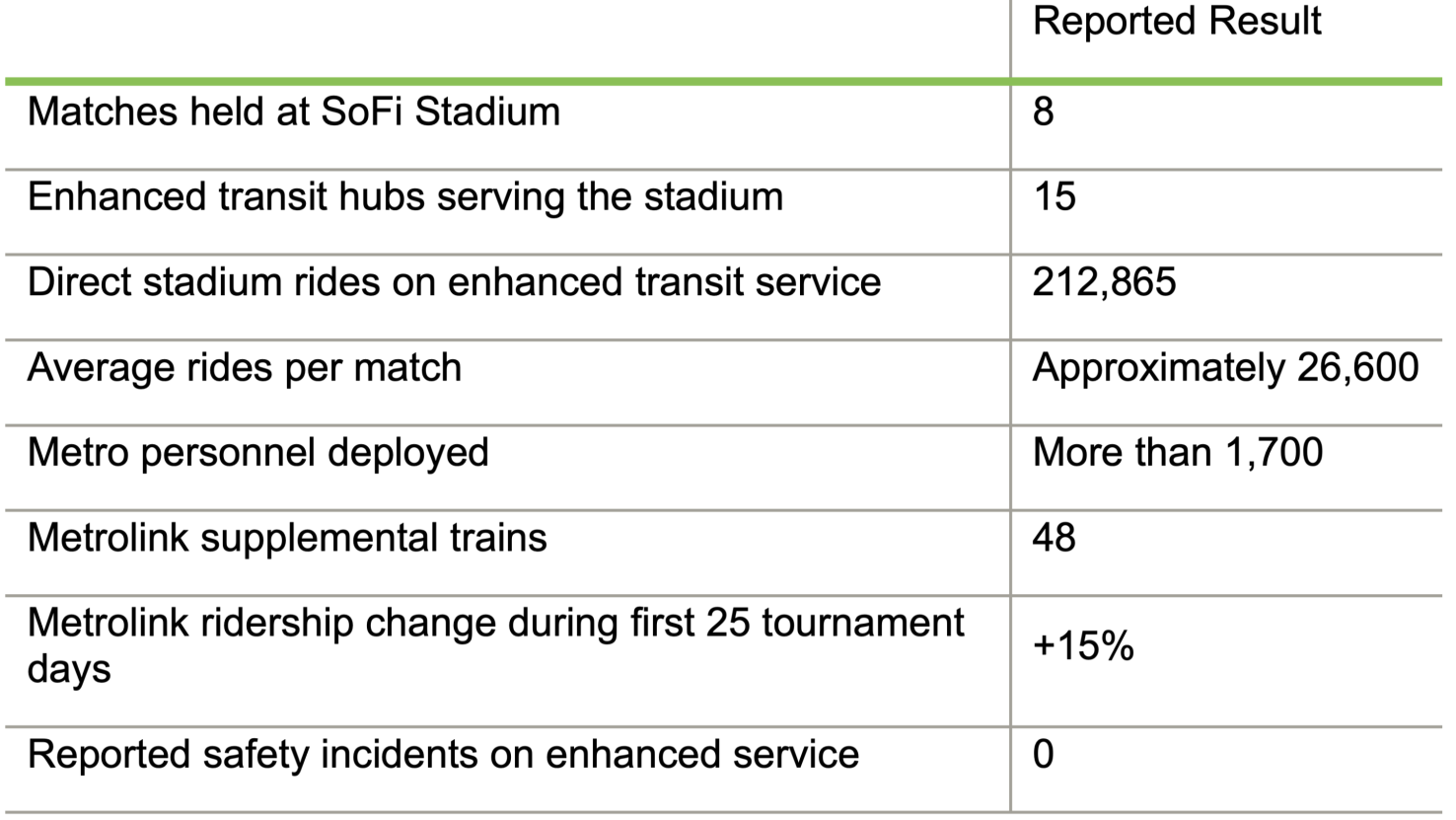
During the 2026 FIFA World Cup, eight matches were held at SoFi Stadium in Inglewood. The stadium is surrounded by an urban transportation system that is often defined by congestion rather than by public transit. Such a large sporting event in this area could have been a recipe for gridlock. Thankfully, local officials planned public transportation to the event with multiple route options in mind.
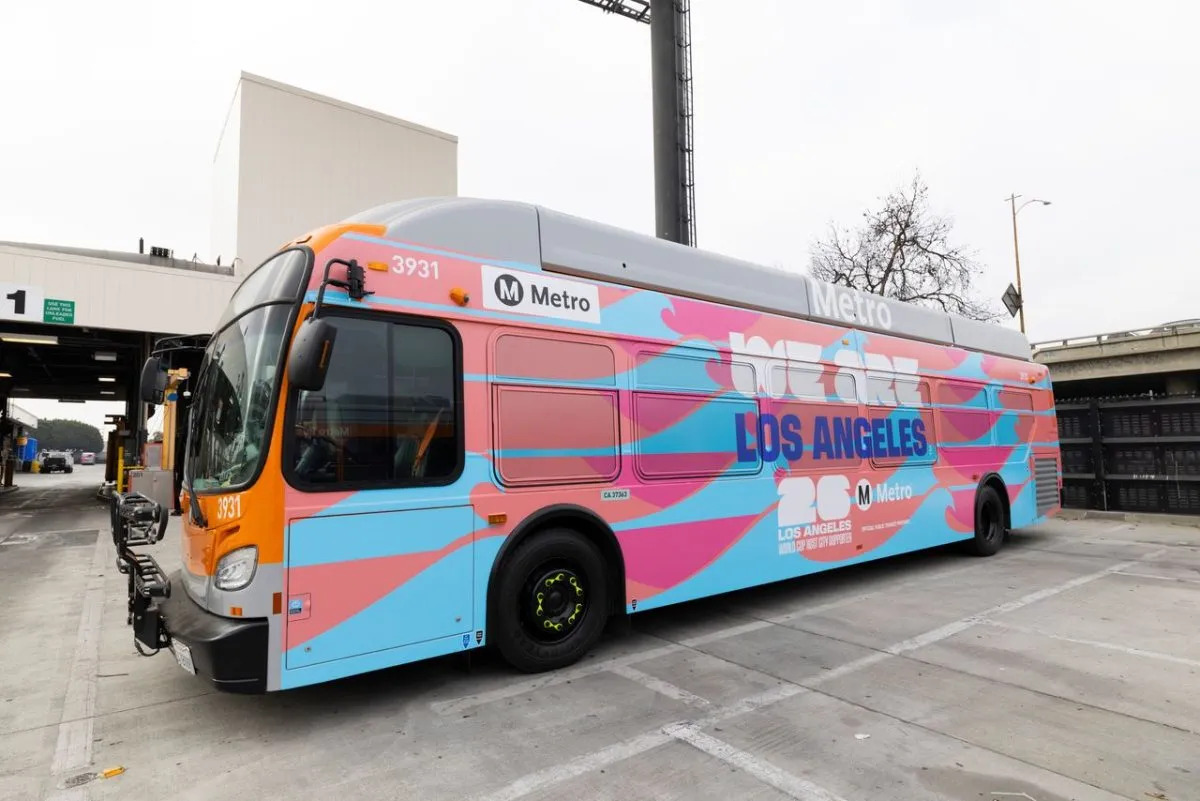
Because FIFA fans began their trips from throughout Southern California, LA Metro and its regional partners created direct bus connections from 15 transit hubs across Los Angeles and Orange county. This transit hub model was one of the tournament’s most important mobility innovations. Instead of attempting to funnel every spectator through one nearby station, the agencies distributed demand across the region. Fans could arrive at a hub by rail, local bus, regional train, rideshare, walking or driving and then transferring to a direct stadium bus.
The World Cup demonstrated the power of institutional partnerships and regional coordination. The participating organizations — Metro, Metrolink, Amtrak, local transit agencies, Caltrans, Los Angeles Department of Transportation, the host committee, law enforcement, local governments and mobility companies — acted as a regional mobility network rather than isolated operators and each controlled a different part of the journey. World Cup planning recognized that a spectator does not care which agency owns a bus or station. The traveler cares whether the full trip is understandable and reliable.
Last summer represented a philosophical shift in how Southern California viewed mobility: as a shared regional responsibility rather than an assignment belonging to one transportation agency. Similarly, for a successful LA28, travelers should not need to understand which agency owns which part of their journey. They should experience a well-connected network regardless.
World Cup transportation at a glance:
The Games: an even bigger challenge
Undoubtedly, the World Cup in Los Angeles was a success, but there’s still room for major improvement, especially for the 2028 Olympic and Paralympic Games — an event expected to generate 10 million to 15 million spectator visits across dozens of venues. Approximately 11,000 Olympic athletes and 4,400 Paralympic athletes will participate, alongside officials, media, workers and volunteers. All of this will occur while Angelenos go to work, businesses receive deliveries and the region continues its daily life.
Moving a crowd to a mega-event is only half of the task. The more difficult operational challenge often comes after the final whistle, when tens of thousands of people leave within a narrow period. Unlike arrivals, departures cannot be spread as easily over several hours. Vehicle staging, queue design, passenger information and wayfinding signage, accessible boarding, shade, lighting and staff deployment all become critical. During the Games, this mass exodus will happen multiple times a day, across all corners of Southern California.
Transit service to venues will be essential during LA28, but it cannot solve the mobility challenge on its own. The Southern California Association of Governments identified a planning benchmark of reducing background travel demand by approximately 15% during the Games. That means addressing the everyday car trips that normally occupy the transportation network, including commuting, shopping, deliveries and service calls. It also means carefully coordinating freight movement so that businesses and supply chains can continue operating.
Coordination can save the day
The Olympic and Paralympic Games will use dozens of venues distributed across a much larger geographic area than the World Cup, and no single capital project can connect every venue by July 2028. However, the strategies that thrived during the World Cup can work again during the Games, and the county should use the next two years to make the World Cup’s temporary strengths permanent. Rather than simply adding more buses or trains, that means better coordinating the regional transit services Los Angeles already has, strengthening frequent service, improving transfer points, expanding universally accessible wayfinding, preparing stations for extreme heat, coordinating fares and supporting community-centered transportation options. It also means maintaining honest performance measures, including ridership, travel time, missed connections, queue duration, accessibility, customer satisfaction and impacts on everyday riders.
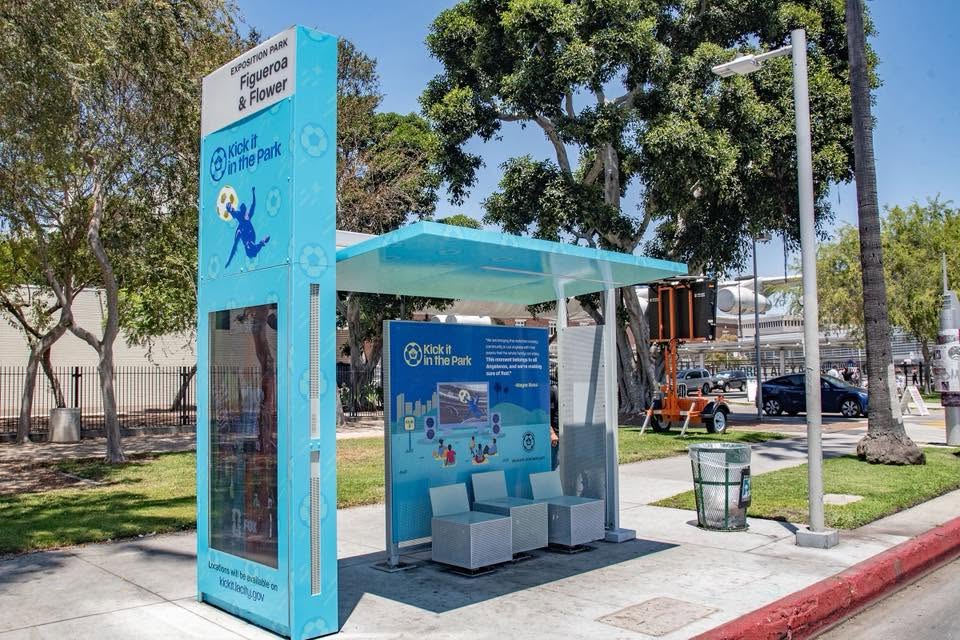
The transit-first ambition does not necessarily depend on the scale of the region’s physical transformation. LA28 transportation can instead be evaluated by what travelers experience, including reliable service, coordinated connections, accessibility and clear information. Although new infrastructure can close critical gaps, stronger operations, regional integration, and communication can help the existing network accommodate increased demand.
Los Angeles does not have to become a different city to deliver a successful transit-first Games. It needs to make its existing networks work as one, give travelers clear reasons to use it and carry the best improvements forward after the final event.
The World Cup did not prove that every LA28 transportation challenge has been solved. It proved something more useful — when the region plans together, communicates clearly and provides service designed around the traveler, Angelenos and visitors are willing to choose transit.
That is a strong starting position with two years left on the clock.

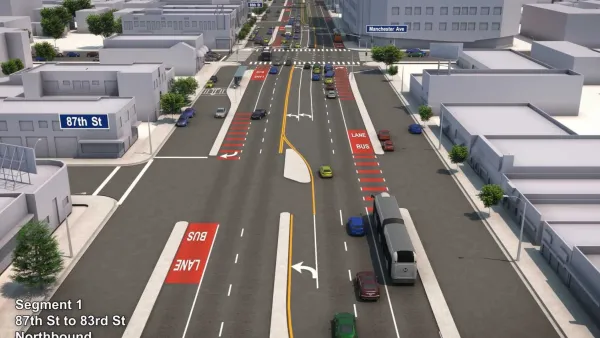
LA to bring bus rapid transit to its busiest corridor
The Vermont BRT line will feature 12.4 miles of dedicated bus lanes along the Vermont corridor.

California lawmakers approve just 5% of much-needed LA28 transportation funding
State legislators appear just as unwilling as Trump to pay for Olympics-related transportation projects.
LA Metro’s ultimatum: no extra buses for LA28 if federal funding isn’t imminently secured
If Metro does not provide additional buses, LA28 organizers will have to find a new way to manage Olympic traffic. LA28’s budget does not include a line item for transit.

Planetizen Federal Action Tracker
A weekly monitor of how Trump’s orders and actions are impacting planners and planning in America.

Chicago breaks ground on $3 billion megadevelopment
The new neighborhood, titled Foundry Park, will one day host 3,700 residences.

This MA town is drowning in its own sewage — and residents like it that way
Susan Murcott, a waste water expert, said if Carlisle didn't address their leaking sewage, the problem could turn “deadly.”

Home batteries are ushering in an energy revolution
Batteries capable of storing solar energy can stabilize the grid during peaks and keep homes running on cloudy days.

A sneak peek at NYC’s Midtown Bus Terminal rebuild
The city will turn a deck used for storage during the construction process into a park once construction is complete.

Air taxis to connect Texas airports to business hubs
Archer Aviation says its taxis will turn 90 minute drives into 20 minute flights.

FREE Course: Walkable City 1: Why Walkability?
After describing his path towards focusing on walkability as the essence of good planning, Jeff Speck marches through his five principal reasons for making more walkable places.
Reinventing Malls: Planning Alchemy—Turning Gray Fields Into Gold
The course focuses on the opportunities and imperatives that shape reinvention of mall sites.

City of Rosemead
Rutgers University, Edward J. Bloustein School of Planning and Public Policy
One Hundred Miles
The Architects Foundation
University of Cincinnati Online
Montrose County
Northern Illinois Transit Authority (NITA)
The Pocatello Development Authority

