The Vermont BRT line will feature 12.4 miles of dedicated bus lanes along the Vermont corridor.


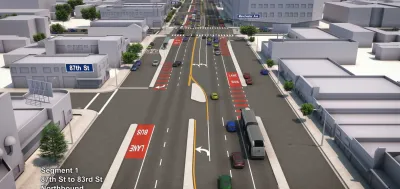
Kicking off its second project in one week, on Oct. 21 LA Metro officials broke ground a bus rapid transit line along “one of the region's busiest north-south corridors,” LA Urbanize reports. The Vermont BRT line will feature 12.4 miles of dedicated bus lanes, with 26 stops along the corridor and connections to several Metro rail systems.
“Vermont is the busiest corridor for bus riders in Metro's system, accounting for roughly 36,000 transit trips on a daily basis. Dedicated lanes are expected to grow that total to 66,000 daily passengers, more than 12,000 of whom would be new daily riders to Metro's system. Additionally, the project would cut bus travel times from 70 minutes to 53 minutes,” Steven Sharp writes for LA Urbanize.
The line secured local funding in 2016, and recently gained another $150 million in federal funding. Officials expect to finish the line before the 2028 Summer Olympics and Paralympics.
Read the full story: Metro breaks ground on Vermont bus rapid transit line


California lawmakers approve just 5% of much-needed LA28 transportation funding
State legislators appear just as unwilling as Trump to pay for Olympics-related transportation projects.
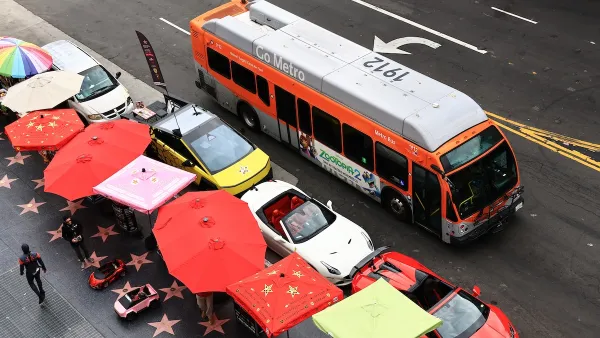
LA Metro’s ultimatum: no extra buses for LA28 if federal funding isn’t imminently secured
If Metro does not provide additional buses, LA28 organizers will have to find a new way to manage Olympic traffic. LA28’s budget does not include a line item for transit.
LA Metro is paying Angelenos up to $600 to leave their car at home
Metro will pay around 2,000 households to participate in a program designed to shift travel modes away from private car trips to transit, biking, walking and shared mobility.

Planetizen Federal Action Tracker
A weekly monitor of how Trump’s orders and actions are impacting planners and planning in America.

Denver is solving homelessness. Why aren't the rest of us?
Since 2023, Denver's street homeless population has decreased by 64%, proving that effective tools exist to support those in need of housing.

Chicago breaks ground on $3 billion megadevelopment
The new neighborhood, titled Foundry Park, will one day host 3,700 residences.

MBTA is using AI to catch drivers who park illegally
The transit agency is working in partnership with Hayden AI, and hopes the technology will improve transit safety across its network.

LA to bring bus rapid transit to its busiest corridor
The Vermont BRT line will feature 12.4 miles of dedicated bus lanes along the Vermont corridor.

The road design trend that's killing Americans
“Stroads,” street-road hybrids that channel high-speed traffic through residential areas, are increasingly common and often deadly for pedestrians.

FREE Course: Walkable City 1: Why Walkability?
After describing his path towards focusing on walkability as the essence of good planning, Jeff Speck marches through his five principal reasons for making more walkable places.
Reinventing Malls: Planning Alchemy—Turning Gray Fields Into Gold
The course focuses on the opportunities and imperatives that shape reinvention of mall sites.

City of Rosemead
Rutgers University, Edward J. Bloustein School of Planning and Public Policy
One Hundred Miles
The Architects Foundation
University of Cincinnati Online
Montrose County
Northern Illinois Transit Authority (NITA)
The Pocatello Development Authority