How the ADA transformed accessibility, and created one of public transportation’s thorniest operational challenges.



The Americans with Disabilities Act (ADA), signed into law in 1990, was a landmark declaration of the civil rights of people with disabilities. It established that disability should not be a basis for exclusion from public life, and that people living with disabilities are entitled to meaningful access to employment, public services, transportation, and the broader community.
With its passage, the ADA sent ripple effects through the built environment, notably by changing how recipients of federal funds could use that money.
In public transit, where most funding for new vehicles comes from the federal government, it required that any new vehicle purchased with federal dollars be ADA compliant. While municipalities could achieve ADA compliance for their standard-route vehicles through adding lifts and adopting low-floor buses, they also had to account for people with disabilities who are unable to use the fixed-route transportation. Paratransit, a comparable transportation service designed for people who cannot access standard-route buses, became the solution. While paratransit service can be expensive for municipalities, today’s technologies offer ways to ease the cost while still providing people with disabilities equal access to public transportation.
Lifts: helpful, but cumbersome
In the short term, making public transit ADA compliant meant aftermarket lifts retrofitted to existing bus models, a notable first step on the long march towards accessible transit.
On a good day, a lift deployment turns a 10-20 second stop into a minimum 5 minute stop once you’ve parked the bus and cycled the lift. For fixed route services where the goal is to move as many people, as quickly as possible, a couple of lift deployments can derail an entire schedule, particularly if that additional time is not planned for in the bus’ schedule or its layover.
A lift deployment can also create a nasty friction point that may build resentment between the person driving the bus trying to keep the schedule and the person needing the lift trying to get wherever they need to go.
My very first job in transit was dispatching a 10 bus fixed route and paratransit system. About half of the buses ran an hourly, fixed route service, with the other half running paratransit service. Since the fixed route buses only ran hourly, it was a big deal if one of the routes missed the timed connection downtown.
Occasionally, you could taste the ire when a driver called in to inform me (and the other drivers) of the lift deployment that just guaranteed they’ll miss the connection downtown.
I have to imagine some of that cloud of ire had to hang over the 30 seconds of mechanical whirring, traffic noise and avoided eye contact as the driver deployed the lift.
Or the 30 seconds of strained mechanical whirring, traffic noise, and avoided eye contact as the driver raised the lift, passenger in tow, back into the bus.
This was pre-bus driver Joshua days, so the best I could do was placate and hope the driver wasn’t resigned enough to give up on the schedule entirely.
Still, I have to imagine some of that cloud of ire did make it into the task at hand since some of our regular, partially ambulatory passengers’ need for the lift seemed to fluctuate heavily with who was driving the bus.

And, all of this was on a good day. On a bad day, a half deployed lift has Mary Beth stuck hanging 4 feet in the air in the middle of a downpour while the driver fights with the lift. Most lifts can be manually deployed and stowed in a pinch, but that’s typically a “get Mary Beth out of the rain and come get a new bus” kind of situation. Wouldn’t it be awkward if we went to that trouble, the lift was working fine, and the driver just missed one of the (many) steps in the pre-lift deployment check list? 👀

Responding to the friction between this new ADA requirement and the operational reality of running a fixed route bus service reliably, the American transit bus reinvented itself. Instead of lifting the passenger up into the bus, the bus was redesigned to lower itself down to the passenger. With this makeover, the modern low floor bus was invented.

The low-floor bus
Low floor bus (n) - A low floor bus has no steps between the ground and the floor of the bus at one or more entrances, and low floor for part or all of the passenger cabin.
As cities retired older buses and replaced them with newer, low floor models, fewer and fewer passengers were subject to the tyranny of the lift, or a cavernous flight of stairs to board the bus. For stops where passengers board from street level, low floor buses offer kneeling, an option to lower the bus further after coming to a complete stop. For passengers still unable to bridge the gap between the low floor and whatever terrain they were boarding the bus from, the low floor bus replaced the mechanically complex, time intensive lift with a much simpler, deployable ramp. This ramp folds out from the front door in seconds at the flip of a switch.1 Even on a bad day, this ramp can be manually deployed and stowed via the attached nylon handle.
Buses getting lower and lower, plus requirements for audible stop announcements and dedicated priority seating in transit vehicles made strides towards a more accessible public transit system. However, the ADA recognized that even when a fixed route transit system is fully accessible, there will be some individuals whose disabilities prevent them from using the system. With this acknowledgement came compulsory paratransit.
So, what's paratransit?
Have you ever been going about your day and noticed a shorter cutaway bus that looked kinda like your local transit authority’s branding?
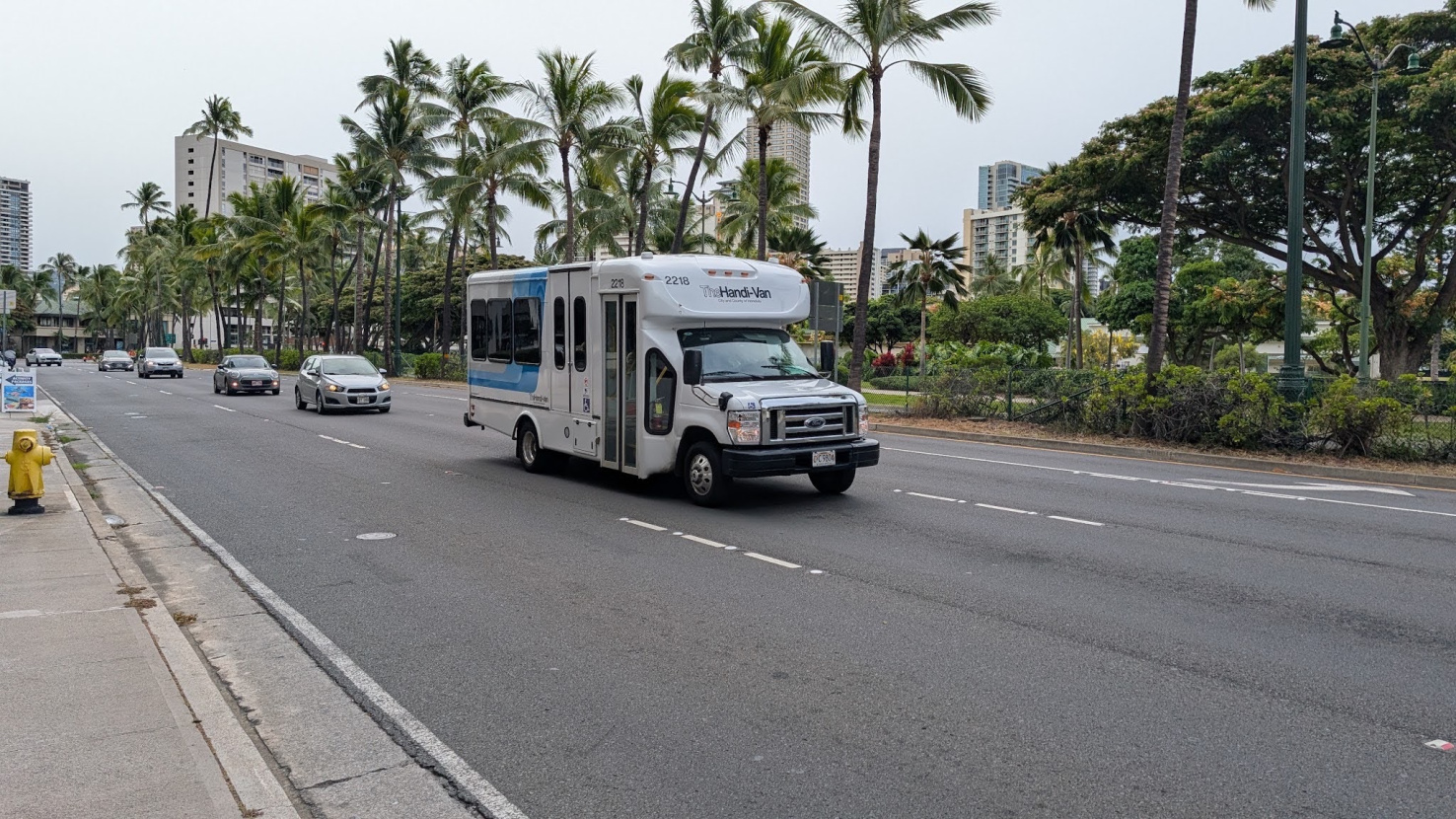
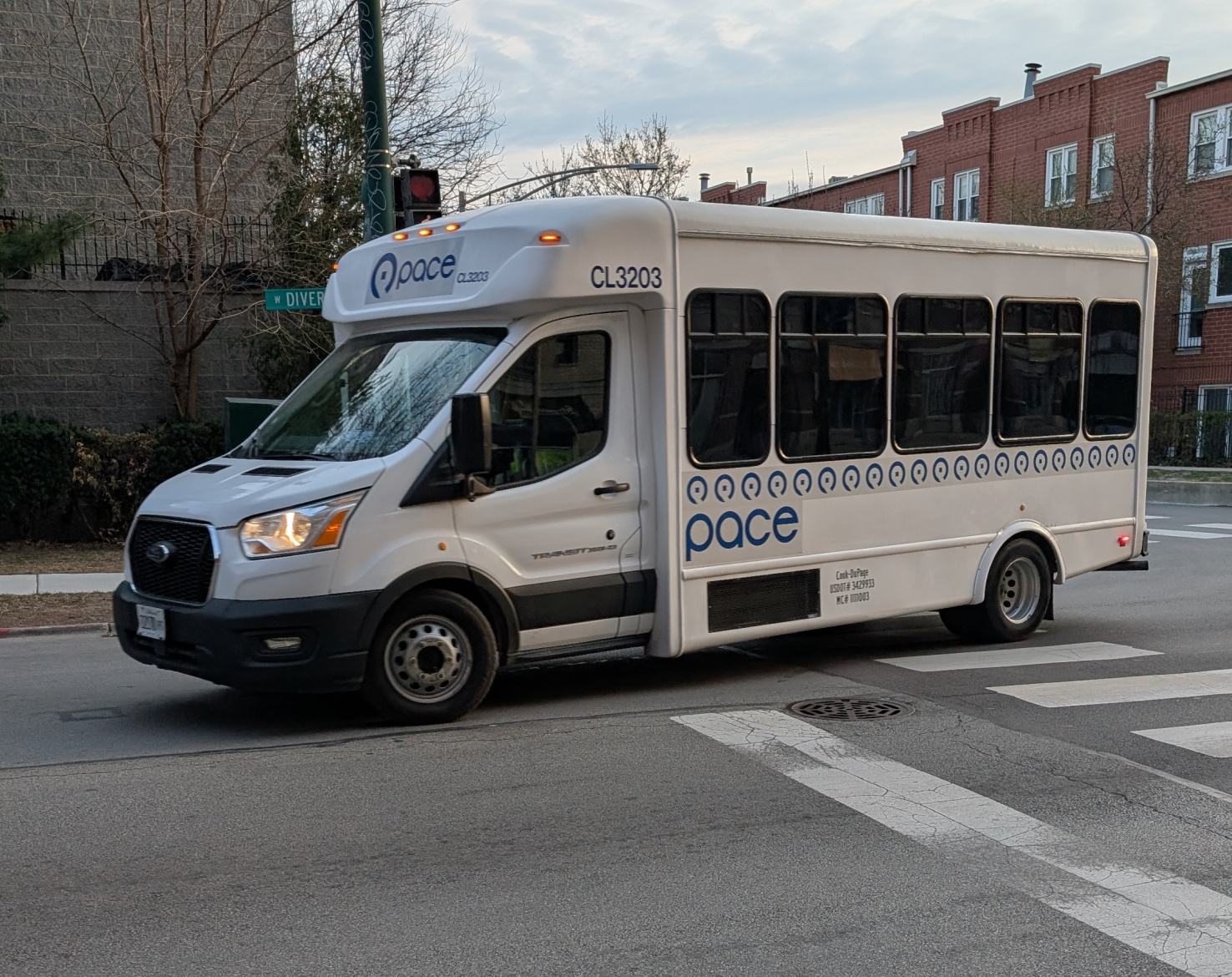
If so, there’s a good chance that the bus you saw was your transit system’s compulsory paratransit service.
Paratransit (n) - Paratransit is a comparable transportation service required by the ADA for individuals with disabilities who are unable to use fixed route transportation systems.
If you followed that bus, you would probably notice that it’s not following a discernible route, instead meandering through town taking people directly to and from their individual destinations. If you took the time to watch the bus when it stopped, you might even notice the driver hop out, manually open the double doors on the side of the vehicle, deploy the lift and help a person using a wheelchair or a walker onto the vehicle.
If you’re in Rhode Island, you might even see the ✨rare ✨Low Floor Paratransit vehicle.
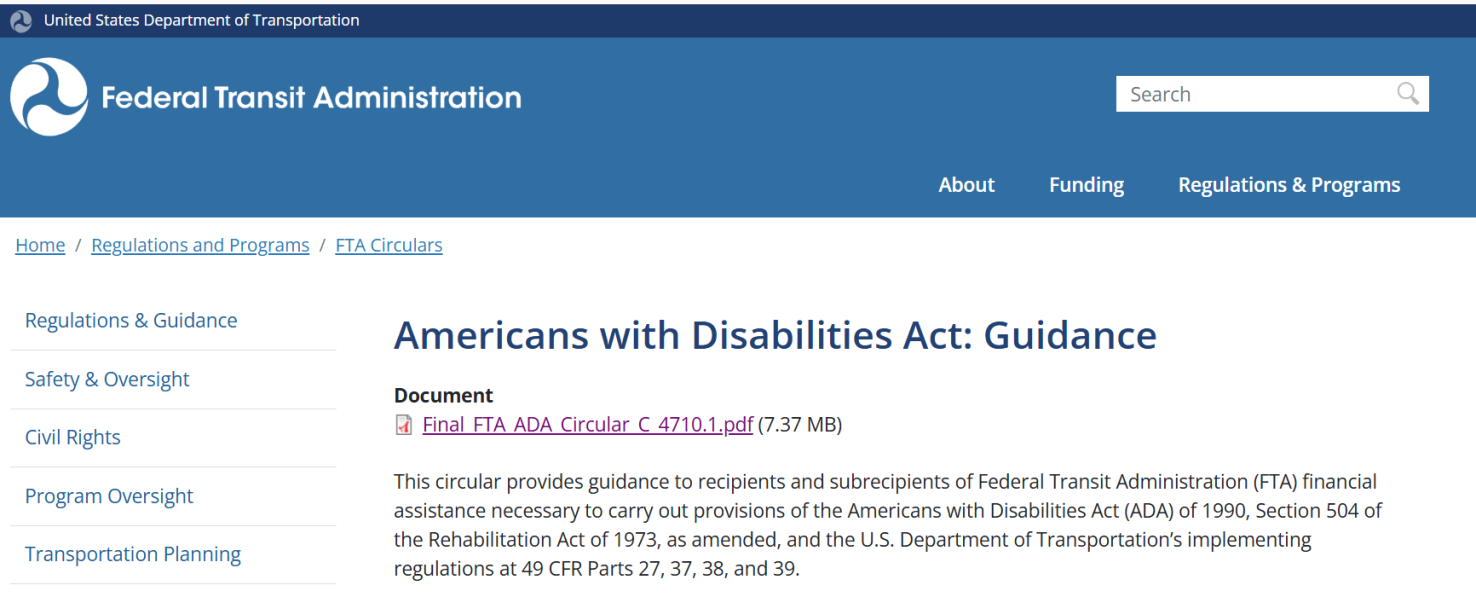
Circular 4710.1 is a document from the Federal Transit Administration that details how the ADA applies to public transportation in the United States. Chapter 8 details the ADA requirements for compulsory paratransit service. In brief, the ADA requires point to point paratransit service be offered for people living with a disability that precludes them from riding the traditional fixed route service.2 This service:
- Must operate with the same span as the fixed route service
- Can charge fares no more than double the fixed route fare
For bus services, the ADA requires paratransit within the three-fourths mile buffer surrounding each route, and any area fully contained within the resulting buffer. For rail services, the ADA requires paratransit within the three-fourths mile buffer surrounding each station.
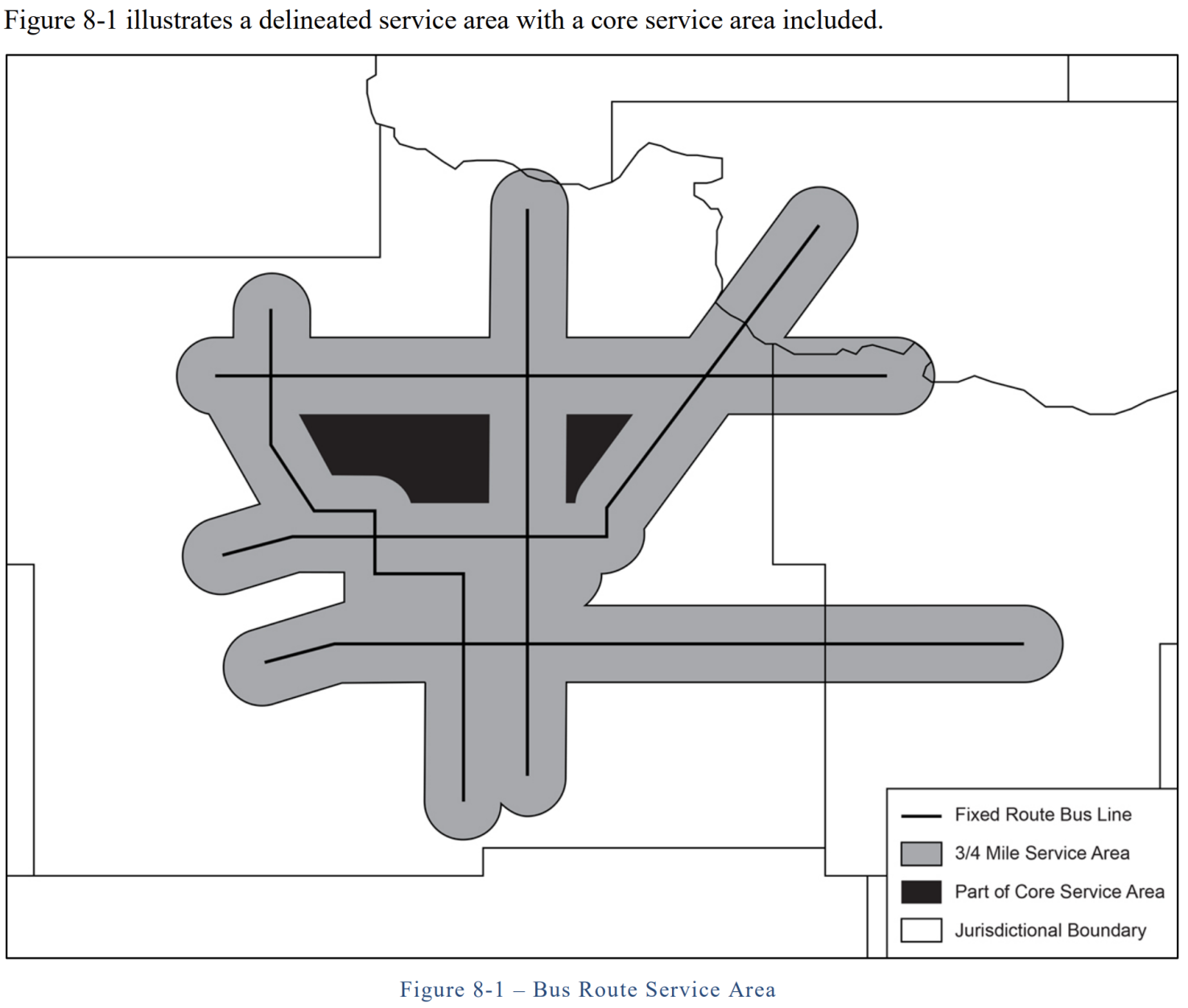
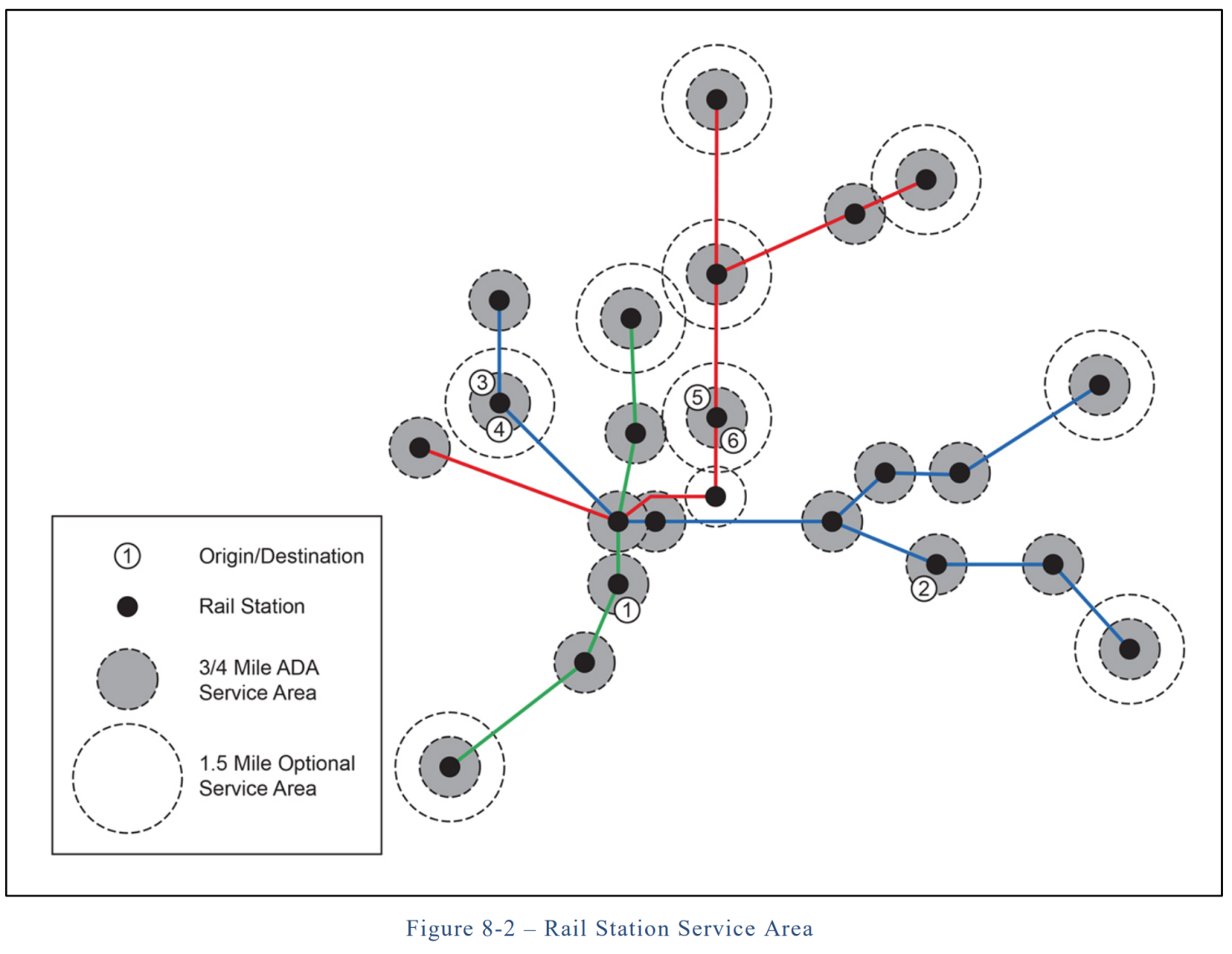
Since service spans tend to vary from route to route, paratransit service areas can technically be dynamic, depending on what routes are currently operating. In practice, many transit authorities opt for a simplified approach, defining a generalized paratransit service area and providing restricted eligibility demand response service within that area.
Chapter 9 of Circular 4710.1 details how eligibility is determined. I’ll leave that for you.
Notably, the ADA bars transit authorities from imposing any limitations on the number of trips available to paratransit eligible passengers and establishes rules against wait lists and untimely service. The spirit behind this final rule is that paratransit passengers should be able to come and go with the same level of freedom offered by a fixed route transit service. This well-intentioned rule captures well both the power and complexity of the promise offered by the Americans With Disabilities Act. If you remember Demand Response Transit from Transit Planning 101, you can probably begin to see why. If the Ebbinghaus curve is getting you, here’s a refresher.

Demand Response Transportation (DRT) - DTR is a mode of transportation where vehicles do not operate on a fixed route or schedule. Instead, vehicles are requested by passengers and the transit operator dispatches a vehicle to take the passenger from Point A to Point B.
What do we know about demand response transit?
- Demand Response Transit is good at providing coverage service in places where demand or underlying land use does not support fixed route transit.
- Demand Response Transit’s capacity is necessarily lower than fixed route transit.
Why do places operate demand response transit?
- To provide coverage service in rural or low-density areas.
- To provide transportation or people with specialized needs.
Why don’t more places operate demand response transit?
- Demand response transit generally carries a high cost per passenger, since it provides more specialized trips to fewer people.
-
Demand response transit does not scale with ridership: increases in ridership require increases in revenue hours.
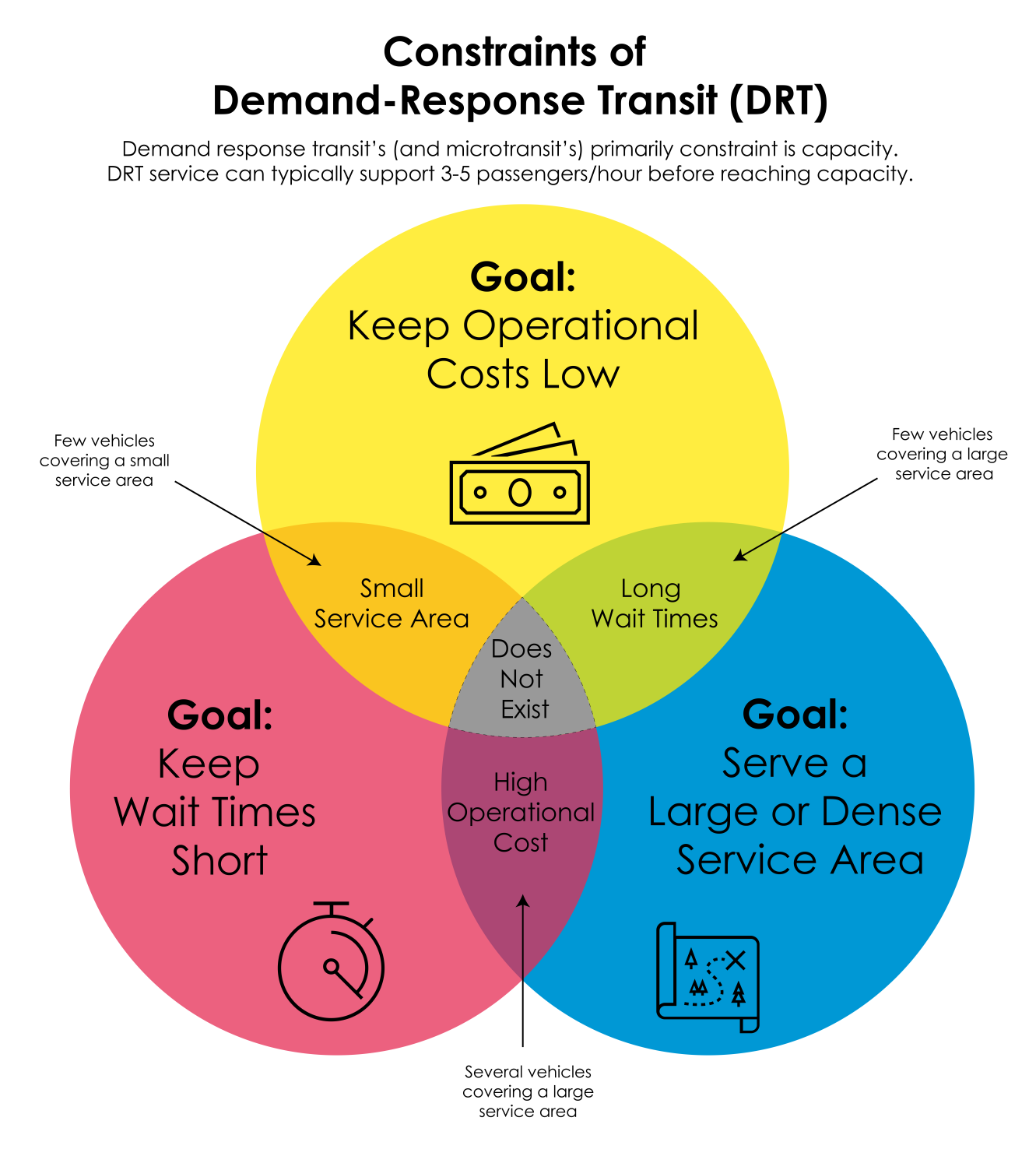
DTR is a mode of transportation where vehicles do not operate on a fixed route or schedule. Instead, vehicles are requested by passengers and the transit operator dispatches a vehicle to take the passenger from Point A to Point B. | Joshua Woods
The unfunded mandate
Labor makes up over two-thirds of the cost of operating a bus. Imagine you’re the town planner for Pontiac, IL, and you wanted to operate this fixed route transit service connecting Wally’s to Downtown Pontiac and Pontiac Township High School.
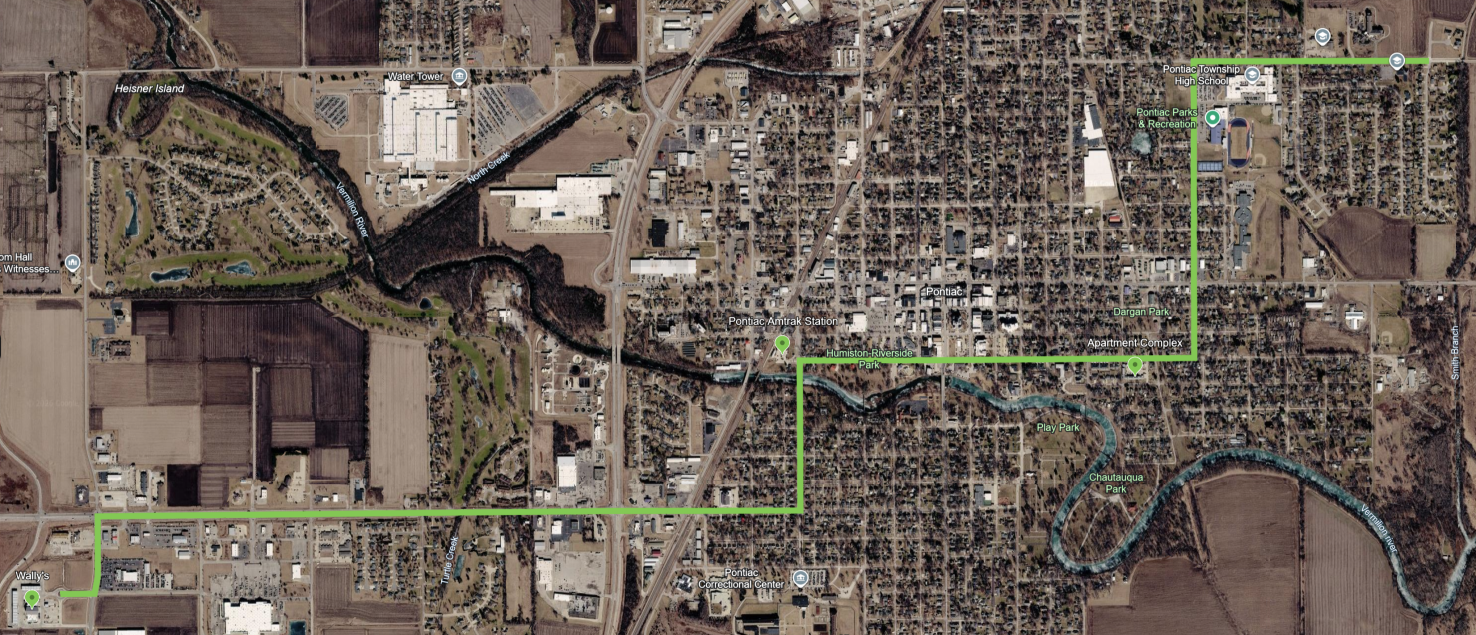
After doing the scheduling math, you estimate that you can operate this 4.3 mile route with one bus, every 40 minutes. Connect Transit in nearby Bloomington-Normal, IL operates its buses at a cost of $114 per hour. Assuming our cost is comparable to theirs, this route, operated daily from 6am to 6pm would cost the town just under $500k annually to operate.
However, since this route is a fixed route service, compulsory paratransit is required for the 7.6 mi2 covered by the 3/4 mile buffer surrounding the route.
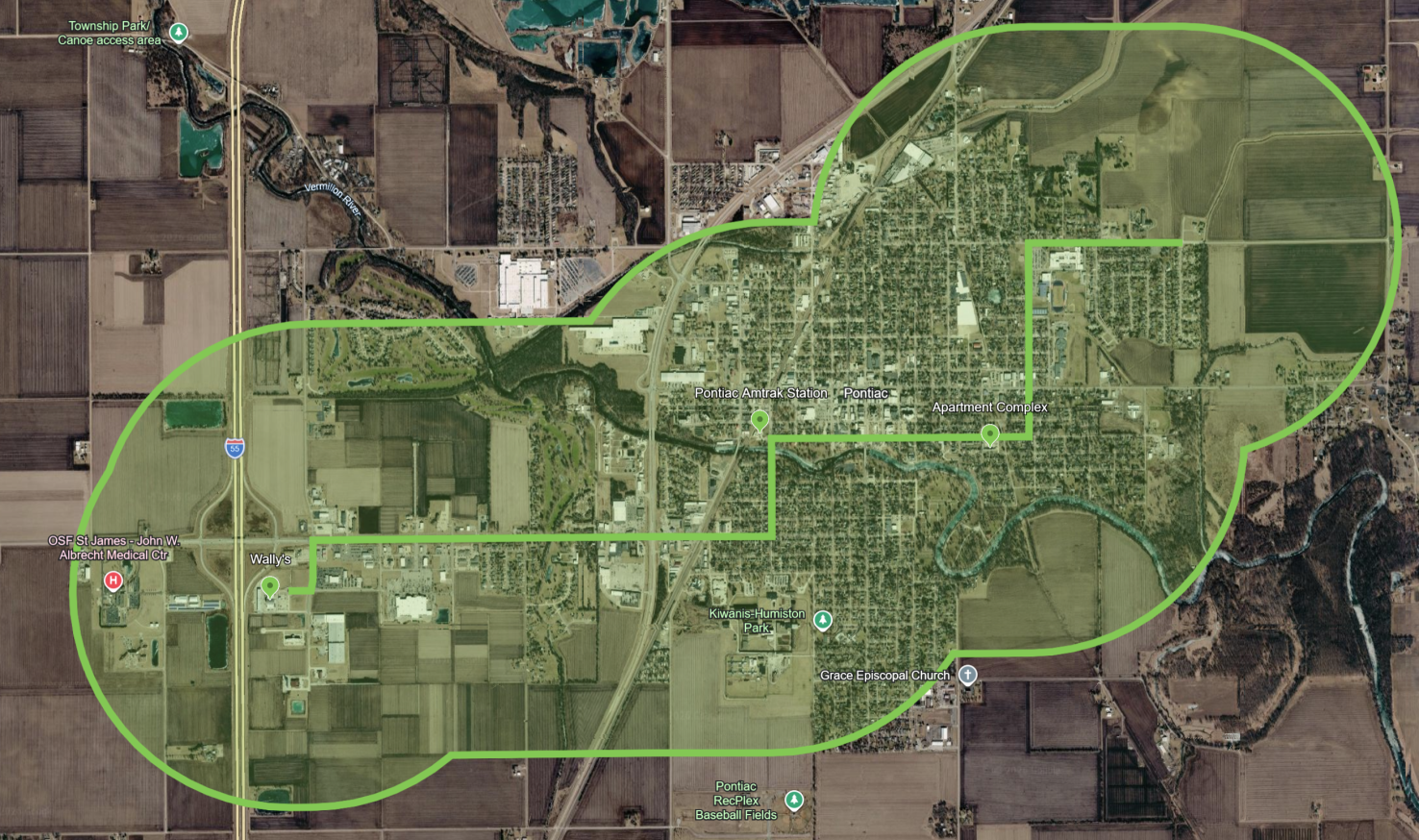
If it only takes one bus to provide this paratransit service, the cost of providing the fixed route service has still effectively doubled to nearly $1,000,000 annually to comply with the ADA.
Further compounding the challenge, fixed route service scales with added demand. If 20 people want to ride the fixed route service in an hour, it takes one bus. If 50 people want to take it in an hour, it still probably takes one bus.
If 20 people want to ride the paratransit service in an hour, unless there’s a high degree of trip sharing, several paratransit vehicles will likely be required to comply with the prohibition against paratransit capacity limitations detailed in FTA Circular 4710.1.
Presented with an annual cost anywhere between $500k and several million dollars, as a small town planner, you might reconsider your desire to launch the fixed route service at all.
This cost and capacity imbalance between fixed route and compulsory paratransit service is why the ADA is sometimes referred to as the “unfunded mandate” in transit spaces.
Working with the Unfunded Mandate
Saying something is hard is easy, and usually taken as the end of the conversation rather than its beginning.
~ “The secret to good government? Actually trying.” (The Economist)
Funded or not, the mandate to provide complementary paratransit service is written into federal law, so any public transit authorities under FTA oversight must comply with it. Fortunately, technology and best practice have come a long way since the passage of the ADA, presenting us with new tools to lessen the imbalance in meeting this requirement.
🖥️Use Technology
When I dispatched paratransit, we were a pen and paper operation. Passengers called in to schedule their pick up and drop off at least one day before their planned trip. At the end of every service day, we wrangled up all of the trip requests and bundled them into paper “manifests,” dictating the drivers’ schedule for the next day.
Under this low-tech approach, all it took was one late cancellation or “no-show” to absolutely tank the already-low productivity of the service. If I had another bus running late, or a passenger requesting an early pickup, I’d try to shift trips around to fill the gap, but a cancellation often left the bus and driver idling somewhere until their next scheduled pick up.
Fortunately, improvements in routing algorithms and driver information systems have opened up the world of dynamic dispatching for demand response services. Instead of remaining married to the paper manifest created the day before, many dispatching software products now build and automatically update the manifest throughout the day, only showing drivers their next few trips. However, these software products are only useful if we actually use them, and in 2026, a concerning number of paratransit systems still rely on pen-and-paper dispatching.
🚐Comingling Paratransit and Microtransit
Over the past decade, many transit authorities have launched and expanded their general public demand response and microtransit service options. Since operating these services often require transit authorities to procure more powerful demand response scheduling software, many are exploring the benefits of comingling paratransit and general public demand response services. Common benefits include improved paratransit rider experience, increased vehicle utilization and reduced overhead costs. Via, one of the primary providers of demand response dispatching software, offers guidance on four distinct comingled service models:
- A unified technology platform, empowering the same schedulers and dispatchers to manage both services.
- A shared fleet, with the vehicles flexing between paratransit and microtransit based on demand.
- Commingled driver shifts, so that the same drivers carry paratransit and microtransit passengers within a given shift.
- Commingled trips, with passengers from both paratransit and microtransit services onboard a vehicle at the same time.
💵Smart Fare Policy
The ADA requires that fare for paratransit can be no more than double the fixed route fare. For example, if the fixed route bus costs $1, the paratransit fare can be no more than $2. Notably, the ADA does not specify what the fixed route fare should be for paratransit eligible customers. Fortunately, best practice offers guidance. Many transit systems allow paratransit eligible riders to ride the fixed route service for free. The logic behind this choice is relatively straightforward. If a paratransit eligible customer can use fixed route services for some of their travel, it’s much cheaper for the agency for them to ride a fixed route than take a personalized paratransit trip.
Some Closing Thoughts on Paratransit
In my days as a paratransit dispatcher, we had several trips that showed up daily on each manifest. One such recurring trip we colloquially called the morning crew. Each morning, the driver set out to pick up the morning crew, filling the bus before taking them to their shared destination; the local dialysis clinic.
Some had family members that maybe could take them to and from, but many lived alone. Even for the ones with family members, transportation to and from dialysis was too large a burden for their family members to support.
After four hours, the driver returned to the clinic to take them all home to rest and prepare for their next dialysis treatment in a couple of days.3
Occasionally we’d get a call, typically from a doctor or a family member, canceling trips for one of the morning crew. Once canceled, we rarely received a call restarting the reservation.
When I find myself thinking about the unfunded mandate for paratransit, I also find myself thinking about the people that couldn’t get by without the service. Where would they be without this unfunded mandate? Thinking about these people helps me put into perspective the power and nuance baked into the promise made by the Americans with Disabilities Act.
___
1 There are actually a few more steps, but it’s still much quicker than the old lifts.
2 This requirement excludes nonstop services like commuter and intercity bus and rail.
3 There were actually 2 morning crews, one Monday, Wednesday and Friday crew, and one Tuesday, Thursday crew.

TriMet will eliminate 'Hand-to-Hand' paratransit service for half of its users
Roughly 300 Portland-area paratransit riders will lose access to a program that lets drivers escort them into their destination.

West Hollywood makes delivery robots paying road users
Cities are looking for creative ways to regulate food delivery robots, in some cases putting them to work gathering data for ADA compliance or collecting revenue for sidewalk maintenance.

90% of NYC Intersections Lack Audible Crossing Signals for Blind Pedestrians
People with vision impairments rely on a complex network of tactile and audible signals to navigate cities.

Planetizen Federal Action Tracker
A weekly monitor of how Trump’s orders and actions are impacting planners and planning in America.

Amtrak, CN end decades-long dispute with eight-year agreement
The new operating agreement establishes an updated framework for the companies to work together, including processes to resolve disputes.

Judges permit Denver to divert 77,000 acre feet from the Colorado River for reservoir expansion
Overuse and climate change have caused the Colorado River’s water levels to plummet.

How ‘post-disaster gentrification’ alters neighborhoods after natural calamities
After hurricanes, fires or other calamities, the original residents of a community are often replaced by younger, wealthier residents.

Maryland local governments examine if they should have more power to raise property taxes
Maryland’s housing market is out of reach for the majority of moderate-income residents.

Northwest rail fans eager for Sept. 30 debut of Amtrak’s Airo fleet
Get ready for that new train smell and more seats. But they won’t go faster or run more frequently on the Cascades route in Washington and Oregon.

FREE Course: Walkable City 1: Why Walkability?
After describing his path towards focusing on walkability as the essence of good planning, Jeff Speck marches through his five principal reasons for making more walkable places.
Reinventing Malls: Planning Alchemy—Turning Gray Fields Into Gold
The course focuses on the opportunities and imperatives that shape reinvention of mall sites.

Harvard University Graduate School of Design
KFH Group Inc.
Greater Baltimore Committee
The Architects Foundation
University of Cincinnati Online
The Pocatello Development Authority
The Urban Renewal Agency of the City of Pocatello

