The automated license plate readers are causing backlash from community members concerned about surveillance and privacy.


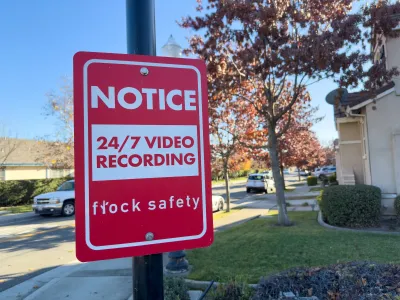
A piece published in Route Fifty by City & State highlights eight key takeaways from their coverage of automated license plate readers like Flock cameras, which have prompted furious backlash from communities where they've been installed. "Public concerns stem from law enforcement’s ability to capture a vehicle’s license plate, make, model, color, bumper stickers, dents, exact location, and timestamp."
Some key points:
- Over 5,000 law enforcement agencies and 6,000 communities use Flock cameras, according to the company.
- The American Civil Liberties Union and other critics say the cameras pose a privacy risk because they "photograph every vehicle that passes, regardless of any suspicion of wrongdoing. All the data collected – license plate data, vehicle descriptions, location, and time – are stored, and a majority of that data is in a centralized, searchable national database that is accessible to law enforcement on demand without court approval."
- "The company estimates that roughly 10% of reported crimes in the U.S. are solved using Flock technology, amounting to more than 700,000 crimes each year."
Read the full story: What the Flock? 8 things to know about automated license plate readers in Pennsylvania

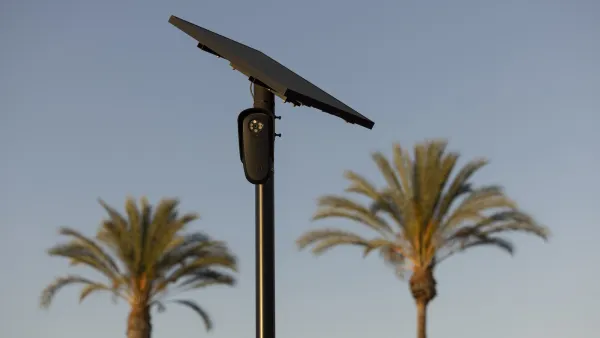
Flock cameras misread license plates in 71% of cases in California study
An analysis of 1,500 reports showed a shockingly high rate of error when reading license plates.
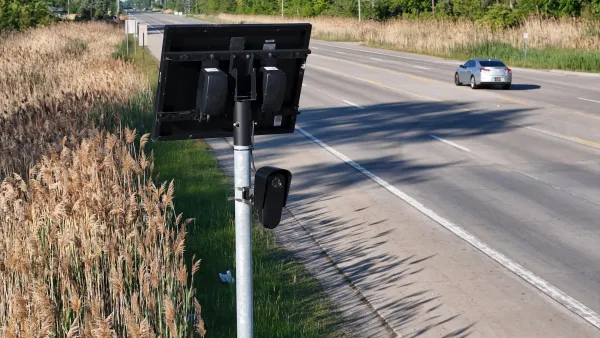
Commentary: Legitimate privacy fears undermine legitimate, life-saving speed camera programs
Automated traffic enforcement works — but excessive surveillance threatens to derail this key safety initiative.
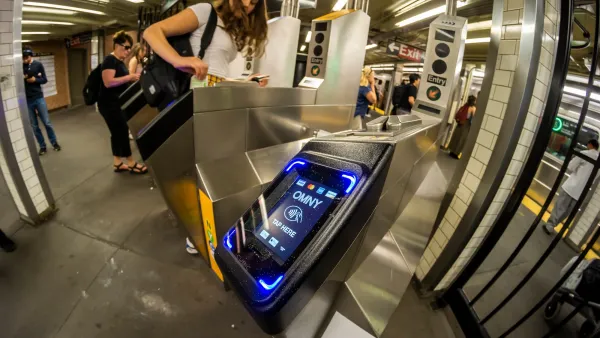
Popular transit payment system linked to Palantir could give ICE access to rider data
The tap-to-pay system is being used widely in transit systems including New York City, Boston and Chicago.

Planetizen Federal Action Tracker
A weekly monitor of how Trump’s orders and actions are impacting planners and planning in America.

California plans to bury El Niño’s downpour
If the state plays its cards right, it may be able to store a billion acre-feet of El Niño’s water in aquifers.

Chicago breaks ground on $3 billion megadevelopment
The new neighborhood, titled Foundry Park, will one day host 3,700 residences.

One of Denver’s busiest corridors to gain BRT
The project will span 18 miles and contain 74 bus rapid transit stations.

275,000 bus trips are at stake on Seattle's ballot
If passed, the Seattle Transit Measure would trigger a 0.3% sales tax and raise an average of $138 million per year to maintain and expand Seattle’s bus services.

Texas may pay Israeli company billions to ease water woes
Texas awarded IDE Technologies the contract for its Harbor Island project, which is slated to become the Western Hemisphere's largest desalination plant.

FREE Course: Walkable City 1: Why Walkability?
After describing his path towards focusing on walkability as the essence of good planning, Jeff Speck marches through his five principal reasons for making more walkable places.
Reinventing Malls: Planning Alchemy—Turning Gray Fields Into Gold
The course focuses on the opportunities and imperatives that shape reinvention of mall sites.

City of Rosemead
Rutgers University, Edward J. Bloustein School of Planning and Public Policy
One Hundred Miles
Hunter College, City University of New York (CUNY)
The Architects Foundation
University of Cincinnati Online
City of Cambridge
Montrose County
The Pocatello Development Authority