The tap-to-pay system is being used widely in transit systems including New York City, Boston and Chicago.


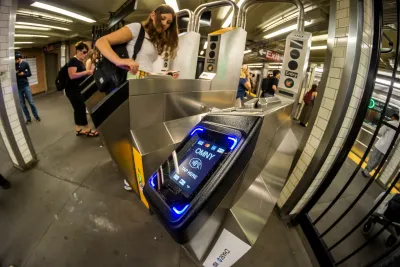
Civil rights and immigrant advocates are warning that data from public transit payment systems could be passed on to law enforcement agencies like Immigration and Customs Enforcement.
As Whitney Curry Wimbish explains in The American Prospect, multiple transit systems around the country have installed tap-to-pay fare systems operated by Cubic Corporation, a defense contractor. "Cubic executives—all of whom have a background at major weapons manufacturers—signed a partnership late last year with Palantir, the artificial intelligence company that built ImmigrationOS for Immigration and Customs Enforcement (ICE) to help federal agents hunt immigrants."
The Cubic technology captures credit card, phone and fare card information in a cloud database that critics worry could be shared with ICE. "Cubic says its analytics come with a 'de-identification' of sensitive and personally identifiable information, turning it 'into an analytics ready dataset that can be securely consumed for research, monetization schemes, and other internal and external purposes' and that its offerings include 'personalized actionable information' sent directly to riders’ phones."
Read the full story: Tech Industry Transit Systems Endanger Immigrants, Advocates Fear

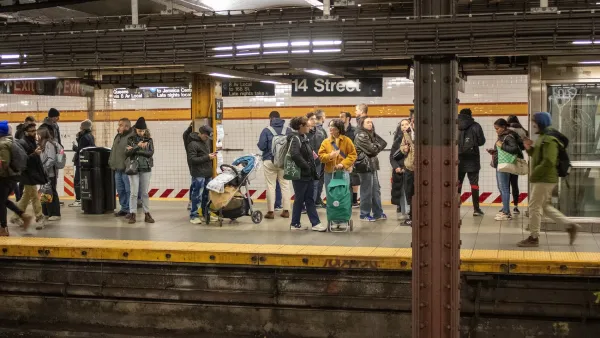
Report: Expanding MTA Fair Fares subway program would benefit New Yorkers more than free buses
A report from the city's Citizens Budget Commission recommends subsidizing fares for more low-income subway riders rather than making buses free for everyone.
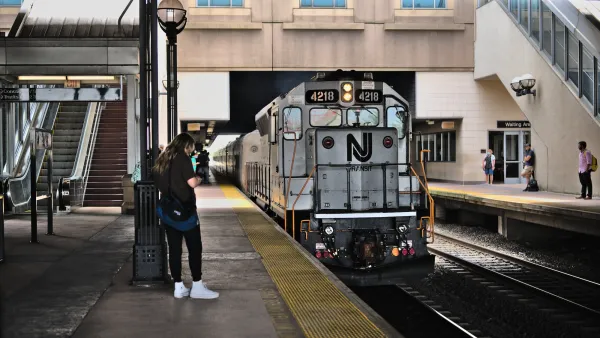
New Jersey AG Says Governor Can’t Bar ICE From Transit
An executive order prohibits ICE from using state-owned property, but the AG says it doesn’t apply to public spaces like train stations.

NYC mayor walks back free buses promise
Mayor Mamdani admitted that a key campaign promise, 'fast and free buses,' won't be fulfilled this year.

Planetizen Federal Action Tracker
A weekly monitor of how Trump’s orders and actions are impacting planners and planning in America.

‘Going backwards:’ Baltimore mayor, students rally against state's transit funding plan
Maryland's proposed six-year plan provides no funding for Baltimore’s BMORE bus program and reduces its road maintenance funding.

Detroit to transform waterfront with $2.2 billion investment
Developers will convert about 18 acres of unused parking lot space into civic spaces.

HUD modernizes 50-year-old manufactured housing framework
The Next Generation Manufactured Housing Action Plan establishes new energy-efficiency standards for manufactured homes, and new guidelines for anchoring them.

New CA housing laws tear down development red tape
Recently-signed legislation makes building starter homes and ADUs cheaper and faster in California.

Metrolink finishes first expansion in 20 years
The transit agency is now one of very few in the United States to connect two major airports.

FREE Course: Walkable City 1: Why Walkability?
After describing his path towards focusing on walkability as the essence of good planning, Jeff Speck marches through his five principal reasons for making more walkable places.
Reinventing Malls: Planning Alchemy—Turning Gray Fields Into Gold
The course focuses on the opportunities and imperatives that shape reinvention of mall sites.

One Hundred Miles
County of Mendocino
planning NEXT
The Architects Foundation
University of Cincinnati Online
Montrose County
Northern Illinois Transit Authority (NITA)
The Pocatello Development Authority