Automated traffic enforcement works — but excessive surveillance threatens to derail this key safety initiative.


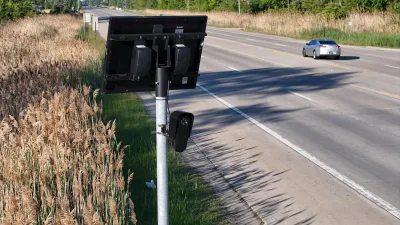
The battle over speed and red-light cameras is coming to a head as concerns over broader surveillance and abuse of Flock devices is prompting backlash around the country. At the federal level, lawmakers have proposed a bill that would outlaw the cameras under the guise of protecting privacy.
But the problem, writes Ren Zaro Fitzgerald in Streetsblog USA, is that traffic enforcement cameras do work. In San Francisco, speeding dropped by 72% at locations where cameras were installed. "Speed- and red-light cameras prevent hundreds of road deaths every year, but they collect far less data, and under more-strict regulations, than Flock’s devices. For instance, traffic enforcement cameras do not collect data except when prompted to do so by an active violation."
For Fitzgerald, "Increased conflation between privately operated license plate readers and standard traffic enforcement could increase public support for anti-speed enforcement bills – including the ones that won’t rein in Flock at all." For people concerned about road safety, it's key to help ensure that people see the difference between surveillance and effective enforcement. "Traffic enforcement cameras deter reckless driving by capturing specific illegal behaviors. Flock cameras watch everyone, everywhere, all of the time."
Read the full story: ‘Flock Off’: Mass Surveillance Surge Jeopardizes Lifesaving Crash Reduction Strategy

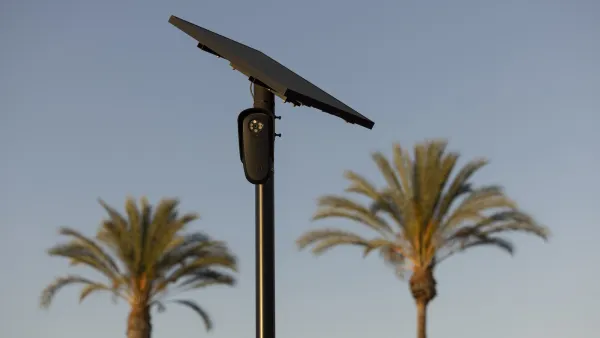
Flock cameras misread license plates in 71% of cases in California study
An analysis of 1,500 reports showed a shockingly high rate of error when reading license plates.
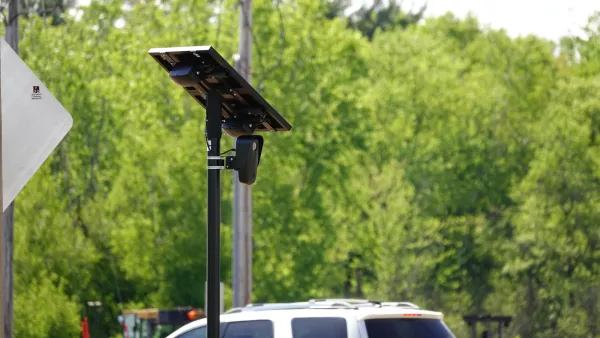
San Jose Moves to Rein in Flock Cameras, Joining in Backlash Amid Privacy Concerns
The city’s police chief is asking to limit the company’s data retention and sharing abilities.
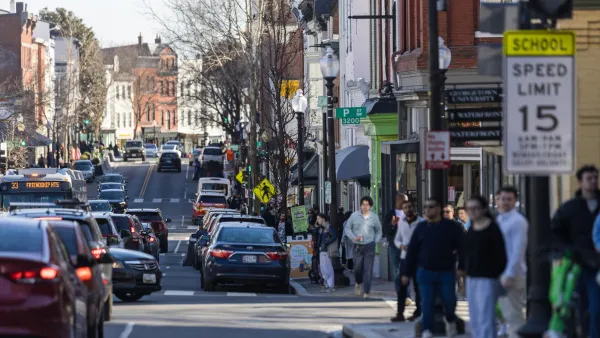
USDOT Formally Moves to Ban DC Traffic Cameras
Despite the proven success of automated traffic enforcement in other cities, the Trump administration wants to eliminate D.C.’s speeding and red light cameras.

Planetizen Federal Action Tracker
A weekly monitor of how Trump’s orders and actions are impacting planners and planning in America.

California plans to bury El Niño’s downpour
If the state plays its cards right, it may be able to store a billion acre-feet of El Niño’s water in aquifers.

Chicago breaks ground on $3 billion megadevelopment
The new neighborhood, titled Foundry Park, will one day host 3,700 residences.

California High-Speed Rail Authority CEO resigns after $600,000 scandal
Under Ian Choudri, the authority used taxpayer dollars to fund first class flights and trips to nightclubs.

Want to study the Missouri River? Soon, you may need unanimous approval from 10 states
Legislation would require 10 governors’ permission to study or build projects moving water outside the basin.

Desperate measures: Advocates weigh draining Lake Powell to fill Colorado River
Draining the reservoir could reduce evaporation losses by a couple hundred thousand acre-feet.

FREE Course: Walkable City 1: Why Walkability?
After describing his path towards focusing on walkability as the essence of good planning, Jeff Speck marches through his five principal reasons for making more walkable places.
Reinventing Malls: Planning Alchemy—Turning Gray Fields Into Gold
The course focuses on the opportunities and imperatives that shape reinvention of mall sites.

City of Rosemead
Rutgers University, Edward J. Bloustein School of Planning and Public Policy
One Hundred Miles
Hunter College, City University of New York (CUNY)
The Architects Foundation
University of Cincinnati Online
City of Cambridge
Montrose County
The Pocatello Development Authority