A new study indicates that structural disinvestment can translate into serious risk for vulnerable communities.


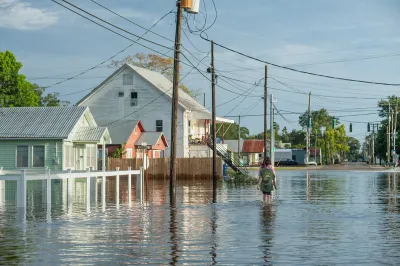
A new study analyzing flood models and historical lending and redlining practices reveals that historically redlined neighborhoods are at higher risk of catastrophic floods.
According to an article in Bioengineer, "Technically, the work uses flood-risk projections to estimate how often different locations would experience “extreme flood” conditions, then contrasts modeled exposure levels across neighborhood groups. This approach helps isolate not only where water reaches, but which communities are most likely to be repeatedly affected."
The study highlights "persistent structural disadvantages—limited infrastructure investment, older housing stock, and constrained adaptation capacity—that can translate hazard into lived risk."
The study notes that this correlation varies by region. "In some areas, legacy patterns of underinvestment appear to compound modern flood threats, making extreme events more damaging and harder to recover from."
Read the full story: Redlined U.S. neighborhoods face disproportionate exposure to extreme flood risks

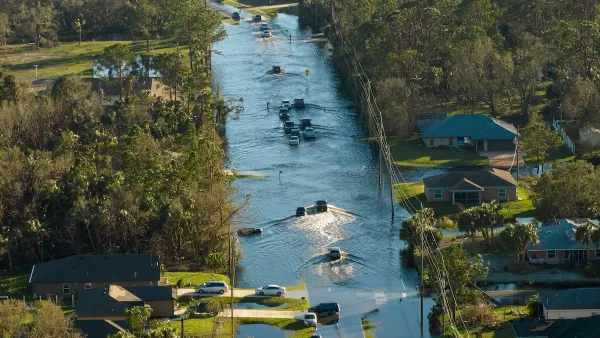
New Florida Law Bars Communities From Planning for Climate, Disaster Resilience
A law aimed at speeding up redevelopment after hurricanes bars “burdensome” land use regulations that could help communities rebuild with more resilience.
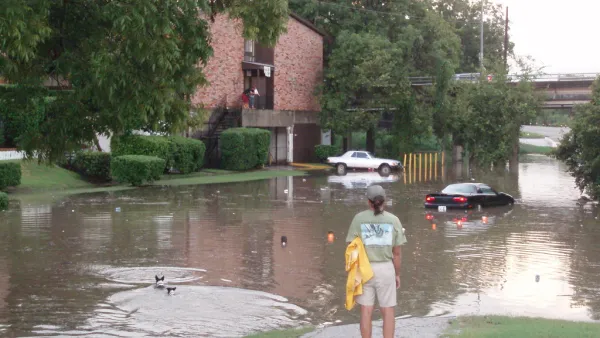
Report: One-Fifth of Houston Homes in Flood Areas
The 2025 State of Housing in Harris County and Houston report highlights the health risks posed by inadequate housing.
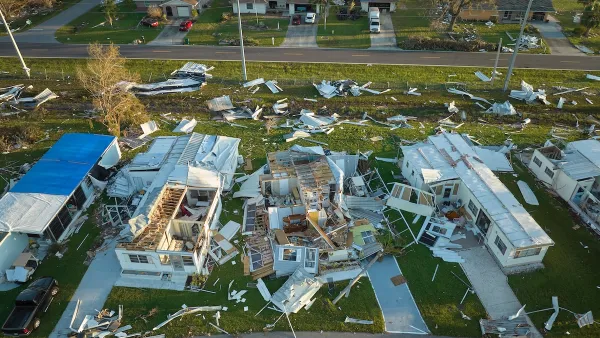
Florida Home Insurers Disproportionately Dropping Low-Income Households
Non-renewal rates are highest in inland counties, not the coastal areas most immediately vulnerable to storms.

Planetizen Federal Action Tracker
A weekly monitor of how Trump’s orders and actions are impacting planners and planning in America.

Chicago breaks ground on $3 billion megadevelopment
The new neighborhood, titled Foundry Park, will one day host 3,700 residences.

This MA town is drowning in its own sewage — and residents like it that way
Susan Murcott, a waste water expert, said if Carlisle didn't address their leaking sewage, the problem could turn “deadly.”

Home batteries are ushering in an energy revolution
Batteries capable of storing solar energy can stabilize the grid during peaks and keep homes running on cloudy days.

A sneak peek at NYC’s Midtown Bus Terminal rebuild
The city will turn a deck used for storage during the construction process into a park once construction is complete.

Air taxis to connect Texas airports to business hubs
Archer Aviation says its taxis will turn 90 minute drives into 20 minute flights.

FREE Course: Walkable City 1: Why Walkability?
After describing his path towards focusing on walkability as the essence of good planning, Jeff Speck marches through his five principal reasons for making more walkable places.
Reinventing Malls: Planning Alchemy—Turning Gray Fields Into Gold
The course focuses on the opportunities and imperatives that shape reinvention of mall sites.

City of Rosemead
Rutgers University, Edward J. Bloustein School of Planning and Public Policy
One Hundred Miles
The Architects Foundation
University of Cincinnati Online
Montrose County
The Pocatello Development Authority
The Urban Renewal Agency of the City of Pocatello