A visual tour of uncomfortable, useless and downright dangerous 'bike infrastructure.'


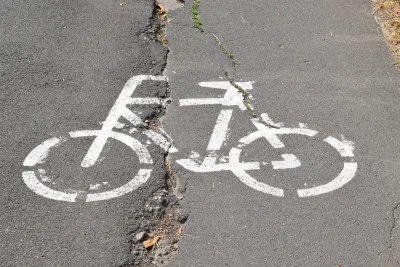
A list in Momentum Magazine highlights 30 of the worst bike lanes in the world — lanes that, in many cases, would be better off not existing.
According to Ron Johnson, "The photos reveal a common problem: a painted line alone doesn’t create safe cycling infrastructure. A bike lane only works when it forms part of a connected, well-designed network that keeps riders protected from beginning to end."
Examples of poorly thought-out bike lanes include those that end at highway ramps or other high-speed street segments, lanes blocked by trees, poles, grates and other dangerous obstacles and some… uniquely designed bike lanes that make one wonder what the planners were thinking.
See the source article for photos of the worst offenders.
Read the full story: 30 of the World’s Worst Bike Lanes That Should Never Have Been Built

Las Vegas is building its first protected bike lane
The new lane connects Henderson and the Las Vegas Raiders headquarters via Starr Avenue.

Nashville installs concrete barriers to protect bike lanes
The new 'Toronto barriers' provide a physical buffer between cars and bike lanes.

USDOT secretary plans to pull $1.73B from 'DEI bike lanes'
The move jeopardizes dozens of road safety projects around the country.

Planetizen Federal Action Tracker
A weekly monitor of how Trump’s orders and actions are impacting planners and planning in America.

Data reveals that NYC’s bet on congestion pricing has paid off
After almost two years of the program, reports show positive impacts on traffic and air quality and no disruptions to parking.

Denver is solving homelessness. Why aren't the rest of us?
Since 2023, Denver's street homeless population has decreased by 64%, proving that effective tools exist to support those in need of housing.

CA city to shut down airport, transform it into utopian park
The western side of the 200-acre park will feature a dog park, nature education center and arboretum.

NYC to vote on supporting outdoor dining, streamlining bus and bike lane creation
The city has five proposed amendments to its municipal constitution on the ballot this November.

Chicago breaks ground on $3 billion megadevelopment
The new neighborhood, titled Foundry Park, will one day host 3,700 residences.

FREE Course: Walkable City 1: Why Walkability?
After describing his path towards focusing on walkability as the essence of good planning, Jeff Speck marches through his five principal reasons for making more walkable places.
Reinventing Malls: Planning Alchemy—Turning Gray Fields Into Gold
The course focuses on the opportunities and imperatives that shape reinvention of mall sites.

City of Rosemead
Rutgers University, Edward J. Bloustein School of Planning and Public Policy
One Hundred Miles
The Architects Foundation
University of Cincinnati Online
Montrose County
Northern Illinois Transit Authority (NITA)
The Pocatello Development Authority