A group of women created a safe space that gave them the opportunity to buy homes and build wealth in a supportive community.


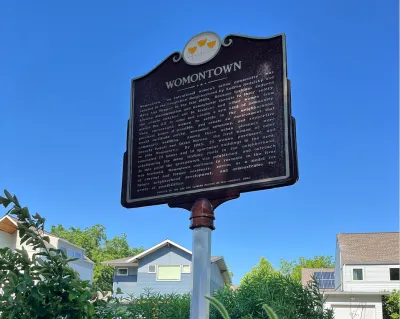
A modest historical plaque in a Kansas City neighborhood reveals a little-known queer oasis founded by women in the 1990s.
As Rebecca Barker explains in an article for Rewire News Group, "Womontown—which is not a misspelling, but rather how the neighborhood’s residents demonstrated their intentions to exist outside of patriarchal structures—was started by couple Andrea Nedelsky and Mary Ann Hopper. It functioned as a rare enclave where lesbians could unapologetically be themselves, love their partners openly, and establish both community and financial autonomy by purchasing homes."
The intentional community grew as more women bought homes in the neighborhood, reaching a peak population of 80 people owning and living in 28 homes and 14 apartment buildings. "Because the neighborhood’s real estate had been considered undesirable, it offered Womontown residents an economically viable opportunity to build financial stability through home ownership. They were also able to create their own safe space, where they had control over who was invited into their homes."
Women from across the country moved to Womontown to take part in the community. Eventually, the organized part of the community fell away, but some of the older residents remain. The commemorative marker states, "Womontown continues to resonate in the lives of current and former residents, serves as a model for future neighborhood development, and demonstrates the power of possibilities."
Read the full story: How a Group of Lesbians Created ‘Womontown,’ a Queer Utopia in Missouri
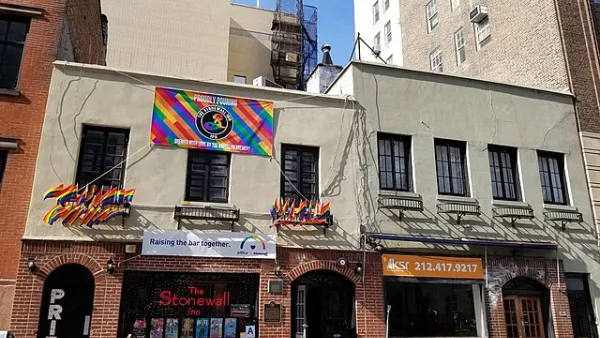
'Mapping the Gay Guides' Highlights LGBTQ Safe Spaces
Using a series of mid-century guidebooks, a new project seeks to uncover historic LGBTQ spaces around the country.
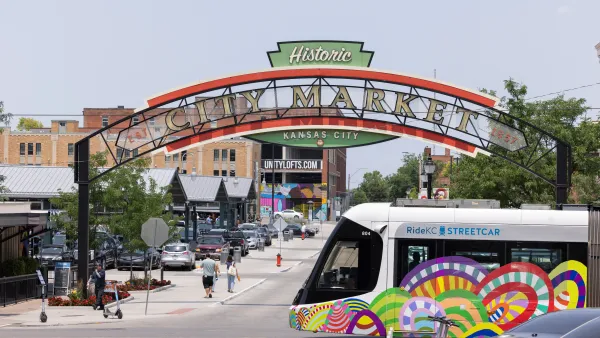
How Kansas City quietly built one of the best streetcars in America
A detailed and completely unbiased history of one of American transit's greatest comebacks.
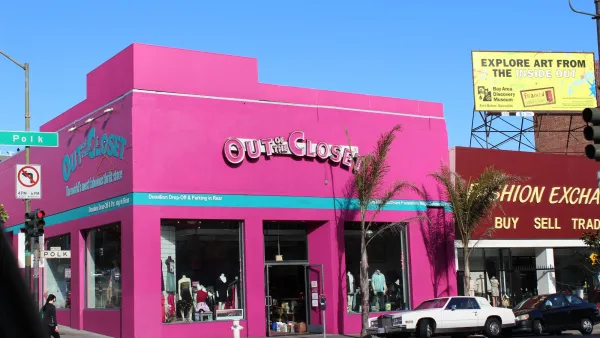
Thrift stores, public libraries and genderless bathrooms: How public amenities become trans infrastructure
Amenities like ample public transit, affordable retail and non-gendered bathroom spaces can make cities more safe and welcoming for transgender residents — and everyone else.

Planetizen Federal Action Tracker
A weekly monitor of how Trump’s orders and actions are impacting planners and planning in America.

Eastern Nebraska is running out of electricity
Data centers and electrification are straining eastern Nebraska’s grid, throttling economic development.

Study reveals best places in the U.S. for cycling, walking
New research from Streetlight Data examines bicycle and pedestrian miles per capita in the 100 largest U.S. cities by population.

Why does it take an emergency for the U.S. to expedite infrastructure projects?
In June 2023, Philadelphia repaired a melted interstate in 12 days thanks to an emergency order.

Federal government nominates new FTA administrator
Mark Aesch is currently the founder and CEO of a transportation management consulting firm.

Developers reveal $10 billion stadium plan as ‘Hail Mary’ to keep Bears in Chicago
The plan would also boast a public park, high- and mid-rise buildings and a youth sports complex.

FREE Course: Walkable City 1: Why Walkability?
After describing his path towards focusing on walkability as the essence of good planning, Jeff Speck marches through his five principal reasons for making more walkable places.
Reinventing Malls: Planning Alchemy—Turning Gray Fields Into Gold
The course focuses on the opportunities and imperatives that shape reinvention of mall sites.

City of Charlotte
City of Rosemead
Rutgers University, Edward J. Bloustein School of Planning and Public Policy
University of Michigan School for Environment and Sustainability (SEAS)
Hunter College, City University of New York (CUNY)
The Architects Foundation
City of Cambridge
The Pocatello Development Authority
The Urban Renewal Agency of the City of Pocatello