A brief exploration of dating through history highlights how the spaces in which we live and move shape our social lives and relationships.


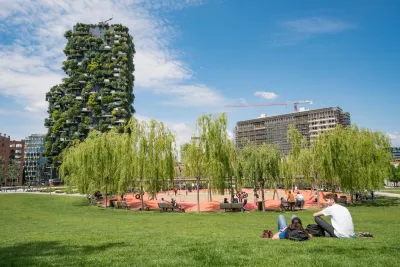
This is the first in a three-part series on the relationship between urban design and romance that explores how the way we build cities and mobility infrastructure affects modern dating.
The dating crisis
Nearly half of U.S. adults say dating has become harder over the past decade, and a majority of single adults report having difficulty finding someone to date.
The potential culprits to this dating crisis are endless: porn, dating apps, social media, financial insecurity, careerism. Name a modern ill and someone has blamed it for the dating crisis. But among that list of culprits, one suspect rarely makes the list: the way we build our cities.
We already know that urban design shapes mental health and social connection outcomes. Residents of walkable communities report stronger social ties, and urban sprawl has been linked to greater loneliness and psychological distress. Yet we know surprisingly little about how the built environment impacts dating and partner formation.
That thought drove my Columbia University thesis, "Planning for Love," advised by Eric Klinenberg, in which I surveyed 152 adults under 30 across Miami to ask whether car-centric infrastructure shapes how people search for a romantic partner. This is the first in a three-part series unpacking what I found.
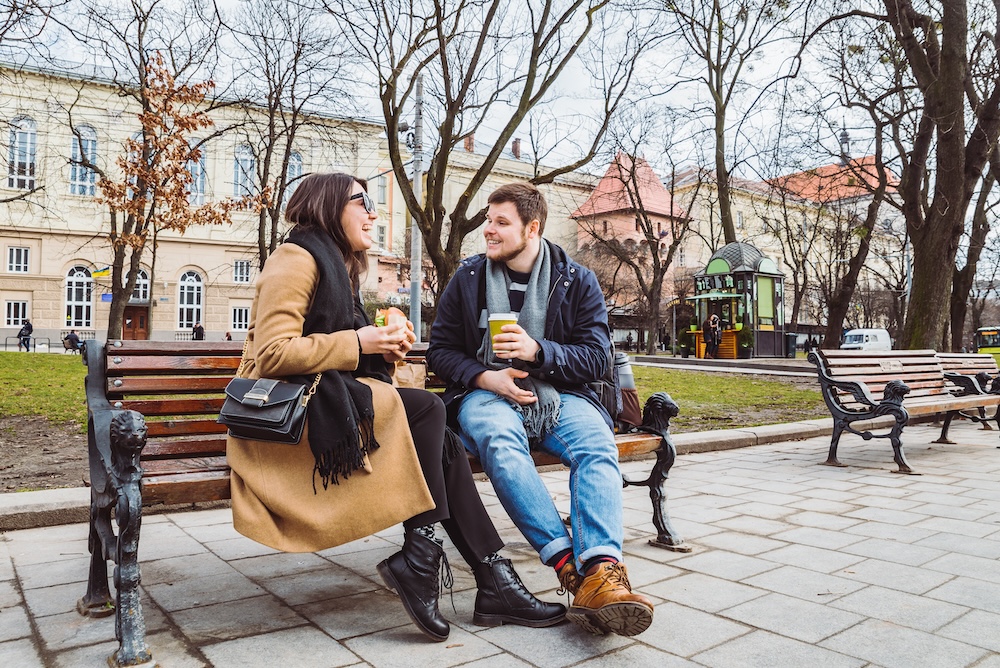
How we got here
Before we can understand where dating is today, we need to understand where it came from.
Dating, as we know it, is new. To understand it, you have to start with marriage. Both are expressions of pair bonding, and their histories are inseparable. For most of human history, you did not choose a partner — your family did. The choice was based on alliances, property or political power, not love, as Stephanie Coontz documents in "Marriage: A History."
Coontz writes that for millenia, love was not a qualification for marriage — it was a warning sign, too irrational and destabilizing to build a family on. Marriage came first; love, if it came at all, followed.
The concept of marriage appears in nearly every human society, but its meaning, rules and form have never been universal. In China, ghost marriages (mínghūn) wed the living to the dead to keep a family line intact. Among the Igbo of Nigeria, women could marry other women as di nwanyị — female husbands — and be recognized as legal fathers. In Indonesia, the Minangkabau husband is called a sumando, a "borrowed man," because lineage and property belong to the wife. Among the Hopi of the American Southwest, the bride's family presents the groom to the household — not the reverse.
As societies settled into agricultural life, marriage became a tool for protecting wealth and securing legitimate heirs — and with that came dramatically tighter control over women. Assyrian law strictly regulated adultery and gave husbands the legal right to physically punish their wives for it. In Confucian China, women were bound by three obediences — father, husband, then son — from birth to death.
Ancient Greece expected love to happen outside of marriage entirely, with historians like Evan Cantarella noting that the deepest emotional bonds more likely formed between men than between spouses.
Many features of modern marriage were shaped by the medieval Christian Church. It promoted monogamy to limit succession disputes common in polygamous dynasties, expanded incest prohibitions to include even distant cousins — not for health reasons, but to weaken powerful kinship networks and shift authority from noble families to the Church — and discouraged divorce to prevent nobles from trading spouses for political alliances.
The 19th century marked a turning point in marriage, as romantic novels by writers such as Jane Austen and Charlotte Brontë popularized the idea that marriage should be based on love while industrialization encouraged individualism. Yet despite these romantic ideals, marriage remained deeply shaped by gender inequality, property and social status.
!["A receipt [i.e. recipe] for courtship", a Dec. 21st 1805 caricature mildly satirizing the courting customs or romance rituals of 1805 England.](/files/inline-images/1805-courtship-caricature.jpg)
That said, the birth of modern dating can be traced to the 1920s, when 'calling' — the family-supervised tradition of courtship — gave way to young people meeting publicly, spending time unsupervised, and choosing partners for themselves.
The commodification of dating is not as new as it seems. Long before dating apps, newspaper personal ads had people market themselves to strangers outside their social networks, turning courtship into a marketplace of self-presentation.
Location-based dating apps first emerged for the gay community with Grindr and Scruff in 2009-2010 before Tinder brought the format to mainstream audiences in 2012. By 2017, online dating had become the most common way heterosexual couples met in the United States, rising from just 2% of couples before 1995 to 39%.
The new dating landscape
And there it is: thousands of years of partner formation condensed into a few paragraphs. By many historical measures, the conditions for dating in the United States have arguably never been better.
Yet, many Americans report a growing dissatisfaction with the dating experience. A survey of 4,860 U.S. adults found that more than half say dating is harder now than it was 10 years ago, 67% of single adults report their dating life is going not too well or not at all well, and 75% say they have struggled to find people to date in the past year. Additionally, in 2019, roughly 38% of adults aged 25 to 54 were unpartnered, up sharply from 29% in 1990.
It is not just that dating feels harder — the search for a partner looks different now too.
While 52% of seniors say they did not know their spouse at all before dating and only 21% were friends first, 44% of young adults today report having been close friends with their partner before becoming romantically involved. Only 35% saying they did not know their partner before dating, suggesting younger generations are dating from within their social circles rather than approaching strangers. A 1932 study of 5,000 Philadelphia marriage licenses found that 16% of couples had lived within one block of each other, 33% within five blocks, and more than 50% within 20 blocks, whereas only about 10% of heterosexual couples met as neighbors between 1960 and 1990.

A crisis — or a change?
But is this really a dating "crisis" at all, or simply social change? And why does it even matter?
It’s true that many concerns about declining dating and marriage rates are ideological rather than empirical; 52% of conservatives view the decline in marriage as bad for America, compared to just 23% of liberals. As history demonstrates, pair bonding often functioned as a system of social control, and the freedom to opt out is itself a product of social progress. Plus, modern partnership comes with new challenges — research finds single people are often more socially connected than married ones, reflecting what sociologist Arlie Hochschild calls the 'hyper-symbolization' of love: the growing expectation that one person replace an entire community.
This isn't an argument that people must date, partner or marry in any specific way or at all, nor that romantic relationships should be the centerpiece of a fulfilling life.
Dating matters because the social ties that once sustained us have been eroding. In 2022, researchers found that 32.1% of U.S. adults reported feeling lonely, a figure that climbs to 43.3% among adults aged 18 to 34. As community bonds weakened over generations, a trend increasingly linked to car-centric urbanism, romantic relationships remained one of the few spaces where deep human connection still regularly forms. Now, even that is slipping.
Romantic bonds carry real health benefits. Research links them to emotional wellbeing, social integration and greater meaning in life. Additionally, dating shapes the very foundations of later romantic relationship development. Research finds that exploring potential partners openly leads to greater long-term satisfaction, and that the person we actually want rarely matches who we think we want. Romantic desire tends to emerge from real interaction, not online profiles.
Dating also opens pathways to forms of deep connection that extend well beyond conventional marriage. Queer communities, long denied legal recognition and traditional family support, build chosen families and care networks that demonstrate something important: deep belonging does not require a conventional structure, and dating can be where it begins.
Even though dating is considered a lesser concern than other social issues, it’s one of the many ways humans seek love and connection. Love, in whatever form it takes, remains one of the most fundamental parts of being human.
So, if the design of cities shapes just about every form of social life, it seems worth finding out whether cities shape this one too.
–
Hannah Kosoff is an urban planner and researcher interested in how urbanism shapes the human experience, particularly in the context of suburban sprawl. She explores these questions through filmmaking, design and research, with a focus on how the built environment influences social connection, well-being and everyday life.

Planning for Love, Part 2: What happens to dating in a car-centric world?
A survey of over 150 adults about their dating lives reveals stark differences based on their neighborhood's walkability.
Planning for Love, Part 3: Enhancing human connection through walkability
In the third and final installment of this series, author Hannah Kosoff examines what her research findings say about modern dating and urban form.
Report: The State of Public Spaces
A 50-year-old institution takes stock of placemaking in the public realm today.

Planetizen Federal Action Tracker
A weekly monitor of how Trump’s orders and actions are impacting planners and planning in America.

Amtrak, CN end decades-long dispute with eight-year agreement
The new operating agreement establishes an updated framework for the companies to work together, including processes to resolve disputes.

Judges permit Denver to divert 77,000 acre feet from the Colorado River for reservoir expansion
Overuse and climate change have caused the Colorado River’s water levels to plummet.

Atlanta City Council unanimously backs $3.5 billion Beltline light rail project
The resolution was drafted after Atlanta Mayor Andre Dickens pulled support for the Atlanta Streetcar extension last year.

SEPTA to bring nearby frequent transit to over 1 million new riders as part of decade-long plan
The agency's Accelerate plan will also bring frequent transit to twice the amount of jobs that are currently located near it.

NYC plants over 18,000 trees, the most new foliage in a decade
Many of the trees were planted in communities vulnerable to extreme heat.

FREE Course: Walkable City 1: Why Walkability?
After describing his path towards focusing on walkability as the essence of good planning, Jeff Speck marches through his five principal reasons for making more walkable places.
Reinventing Malls: Planning Alchemy—Turning Gray Fields Into Gold
The course focuses on the opportunities and imperatives that shape reinvention of mall sites.

City of Thousand Oaks
City of Wisconsin Rapids
Harvard University Graduate School of Design
The Architects Foundation
University of Cincinnati Online
The Pocatello Development Authority
The Urban Renewal Agency of the City of Pocatello


