The city was allowed to install speed cameras as part of a five-year pilot program approved by California in 2023.


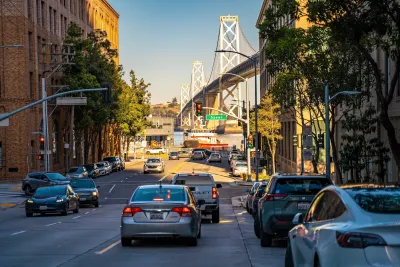
San Francisco, the first California city to install traffic cameras, saw an almost 80% drop in speeding since the start of the program, reports James Salazar in the San Francisco Examiner.
In the areas where speed cameras were installed, only 2% of drivers are now exceeding the posted speed limit by 10 miles per hour or more, a 9% decrease from before the cameras were there.
According to Salazar, a report from the San Francisco Municipal Transportation Agency found that 65% of drivers who received a citation did not reoffend. "According to the report, the camera next to Joe DiMaggio Playground and the North Beach Branch Library on Columbus Avenue saw the biggest decrease in speeding — a 98% reduction."
The results of an 18-month evaluation of the program could result in the relocation of cameras or an increase in their numbers. The cameras were installed after California passed Assembly Bill 645, which authorized San Francisco and five other cities to create a five-year speed camera pilot program.
FULL STORY: Cameras led to nearly 80% drop in speeding, SFMTA says

Study Assesses Attitudes on Traffic Cameras in Boston’s Black Communities
Residents are wary of the new technology’s potential for surveillance, but support boosting enforcement while reducing interaction with police.
USDOT Blocks Federal Funding for Traffic Cameras
Applicants to the Safe Streets and Roads for All grant program will not be allowed to use funds for automated traffic enforcement.
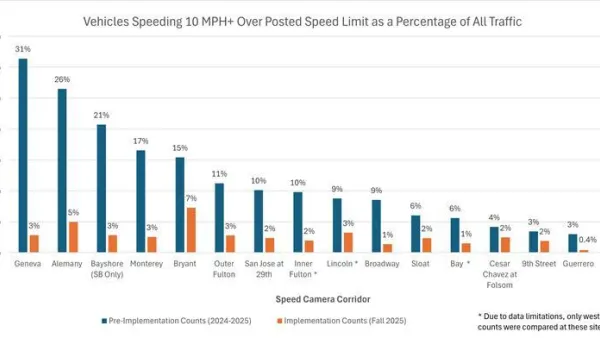
Data: San Francisco Traffic Cameras Reduce Speeding by 72%
The city’s automated enforcement program has led to a dramatic drop in speeding at camera locations.

The state-sanctioned urbicide of Austin
People don’t kill cities. Freeways do.

US to reduce Colorado River water deliveries to Mexico
A new Colorado Treaty amendment reduces Mexico’s Colorado River water allocation by 250,000 acre feet.

New Jersey’s second-largest city bans standalone data centers
Jersey City will continue to allow co-location facilities, such as those meant for research institutions that store their own data.

Amtrak not solely to blame for New Jersey commuter rail's unreliability, report finds
A new study from the Garden State Initiative found that NJ Transit’s budget grew 20% across a 4 year period, but reliability declined significantly over the same period.

EPA erases limits on planet-warming pollution from power plants
Under Monday’s plan, power plants would still have some limits on how much mercury, arsenic and other contaminants they can emit.

Phoenix announces new on-demand transit service, more frequent RAPID buses
Both new services will launch in October, and are part of Phoenix's Project Effective Access Solutions for Easing Congestion.

FREE Course: Walkable City 1: Why Walkability?
After describing his path towards focusing on walkability as the essence of good planning, Jeff Speck marches through his five principal reasons for making more walkable places.
Reinventing Malls: Planning Alchemy—Turning Gray Fields Into Gold
The course focuses on the opportunities and imperatives that shape reinvention of mall sites.

Eagle County Government
Harvard University Graduate School of Design
Nashville Planning Department
The Architects Foundation
University of Cincinnati Online
The Pocatello Development Authority
The Urban Renewal Agency of the City of Pocatello
Journal of the American Planning Association