Babcock Ranch discourages driving with ample walking and rolling infrastructure and dense development that offers many of the services residents need within a short walk or ride.


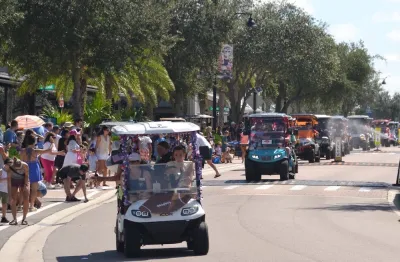
New residents of Babcock Ranch, a planned community in Florida, received a free golf cart when they bought a house in 2025 — and home sales are booming, writes Kea Wilson in Streetsblog USA.
The community bills itself as a haven for the "joy of golf cart living" and is designed for low-speed, non-automotive transportation with dense land use and robust pedestrian and golf cart infrastructure. "Collectively, those initiatives have made leaving the car at home the sensible choice for all sorts of daily trips — from 'Publix to the pool,' the community says, referring to the popular grocery chain."
According to the article, Babcock Ranch has over 100 miles of bike trails, keeps speed limits to 10 miles an hour in school zones and has plans to introduce smaller delivery vehicles to reduce the number of large e-commerce vans driving on its streets. While community leaders acknowledge that a fully car-free lifestyle is difficult in the autocentric Fort Myers metro, they hope that it offers a model for car-light living.
Editor's note: This article was updated to clarify that the free golf cart promotion is no longer active.
FULL STORY: Florida Town Gives New Residents Free Golf Carts to Replace Their Cars

When ‘Prioritizing All Modes’ Is a Lie
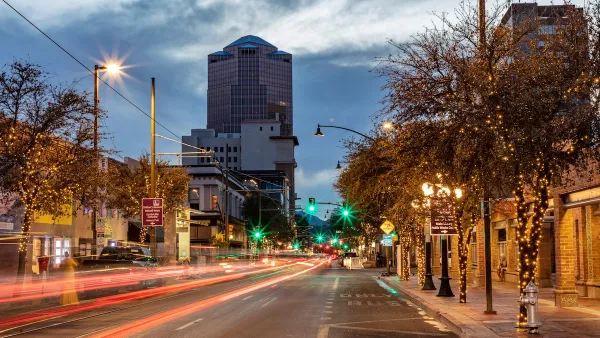
In many cases, it’s impossible to prioritize the safety of pedestrians and other vulnerable road users without sacrificing some speed.
The Web of Walkability
Steve Mouzon visually documents his walkable day-to-day life, and all the places he can get to regularly on foot from his house.
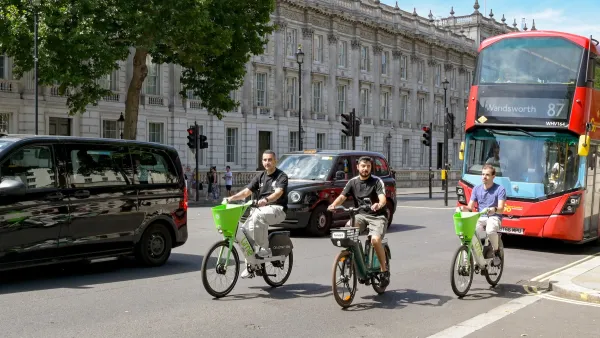
Bike use in London grew by 43% since 2019, but car use remains roughly the same
The city's efforts to reduce car use have stalled despite ambitious programs like congestion pricing and low-traffic neighborhoods.

Planetizen Federal Action Tracker
A weekly monitor of how Trump’s orders and actions are impacting planners and planning in America.

The state-sanctioned urbicide of Austin
People don’t kill cities. Freeways do.

US to reduce Colorado River water deliveries to Mexico
A new Colorado Treaty amendment reduces Mexico’s Colorado River water allocation by 250,000 acre feet.

5 New England states march closer to 800 megawatt wind energy project
Securing federal approval for the project may be complicated under the Trump administration, which has historically been hostile towards domestic wind power.

Baltimore to break ground on $50 million Transit Priority Project
The project will bring faster bus trips, safer streets and better bike connections to Baltimore.

Airbnb launches $250 million 'last-dollar financing' housing accelerator, makes first investment in Austin
The company will put $6.4 million towards affordable housing development in Texas’ capital.

FREE Course: Walkable City 1: Why Walkability?
After describing his path towards focusing on walkability as the essence of good planning, Jeff Speck marches through his five principal reasons for making more walkable places.
Reinventing Malls: Planning Alchemy—Turning Gray Fields Into Gold
The course focuses on the opportunities and imperatives that shape reinvention of mall sites.

Eagle County Government
Harvard University Graduate School of Design
Nashville Planning Department
The Architects Foundation
University of Cincinnati Online
The Pocatello Development Authority
The Urban Renewal Agency of the City of Pocatello
Journal of the American Planning Association