Riders can currently travel up to 79 miles between San Francisco and Gilroy, California.


Caltrain is the latest Bay Area transit agency to announce plans for drastic service cuts, reports Noe Padilla for USA Today. Caltrain faces an annual shortfall of roughly $75 million starting in 2027 if voters don't approve a regional sales tax going on the ballot this November.
"Without a stable, long-term funding solution, we will be forced to make difficult decisions that would significantly reduce service and impact the communities that rely on Caltrain every day," said Caltrain Executive Director Michelle Bouchard in a statement.
The Caltrain board was presented with multiple options for cuts, including eliminating all weekend service, reducing train frequency to one hour, ending service by 9 p.m., and, as a last resort, closing around one-third of its 31 stations. "The agency is also attempting to raise funds through other sources that aren't operating costs, such as advertising and naming rights, and by monetizing its real estate."
The announcement comes despite a strong surge in ridership, particularly since Caltrain introduced new, more reliable electric trains.
FULL STORY: Caltrain could close one-third of stations if it can't find funding

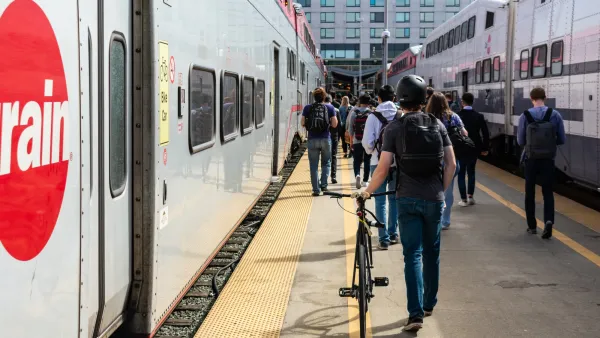
Caltrain Outlaws Cargo Bikes, Child Seats as Demand Overwhelms Bike Cars
Around 20 percent of Caltrain passengers use a bike to get to or from stations.
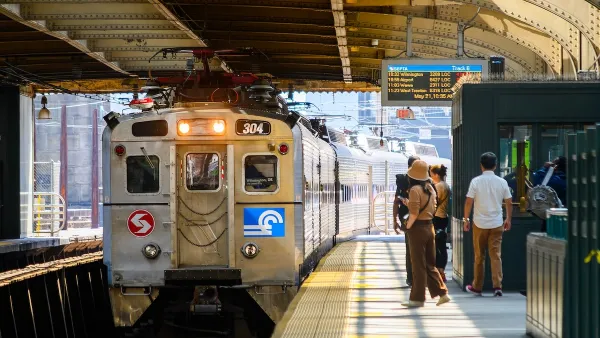
Judge Orders SEPTA to Stop Service Cuts, Fare Increases
The Philadelphia transit agency planned a ⅕ reduction in service and fare hikes to make up for its $213 million budget deficit.
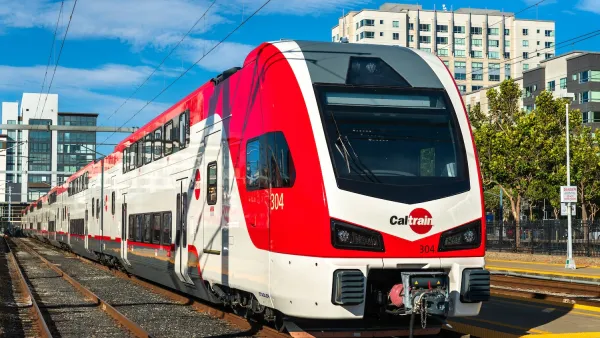
Passengers Flock to Caltrain After Electrification
The new electric trains are running faster and more reliably, leading to strong ridership growth on the Bay Area rail system.

Planetizen Federal Action Tracker
A weekly monitor of how Trump’s orders and actions are impacting planners and planning in America.

The state-sanctioned urbicide of Austin
People don’t kill cities. Freeways do.

US to reduce Colorado River water deliveries to Mexico
A new Colorado Treaty amendment reduces Mexico’s Colorado River water allocation by 250,000 acre feet.

Mamdani overhauls NYC's Vision Zero plan with 100 new policy goals
The overhaul aims to reduce traffic deaths and make streets safer for pedestrians, cyclists and drivers through lower speed limits, new safety infrastructure and more.

Amtrak not solely to blame for New Jersey commuter rail's unreliability, report finds
A new study from the Garden State Initiative found that NJ Transit’s budget grew 20% across a 4 year period, but reliability declined significantly over the same period.

EPA erases limits on planet-warming pollution from power plants
Under Monday’s plan, power plants would still have some limits on how much mercury, arsenic and other contaminants they can emit.

FREE Course: Walkable City 1: Why Walkability?
After describing his path towards focusing on walkability as the essence of good planning, Jeff Speck marches through his five principal reasons for making more walkable places.
Reinventing Malls: Planning Alchemy—Turning Gray Fields Into Gold
The course focuses on the opportunities and imperatives that shape reinvention of mall sites.


Eagle County Government
Harvard University Graduate School of Design
Nashville Planning Department
The Architects Foundation
University of Cincinnati Online
The Pocatello Development Authority
The Urban Renewal Agency of the City of Pocatello
Journal of the American Planning Association