Around 20 percent of Caltrain passengers use a bike to get to or from stations.


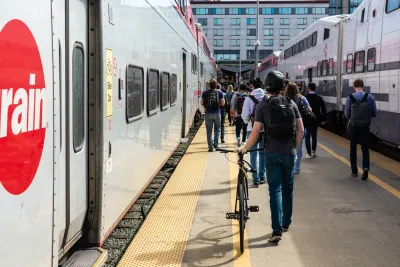
The San Francisco Bay Area’s Caltrain system announced it will begin banning cargo bikes, other larger bikes, and pannier bags from its bike trains as demand for bike space outpaces supply, reports Roger Rudick in Streetsblog San Francisco.
Bikes with “wide of extra-fat tires,” “extra-long frames or wheelbases,” cargo bikes and longtails, and attachments such as baskets, panniers, and child seats will no longer be allowed on Caltrain — meaning many families who travel with small children will now be unable to do so.
According to the San Francisco Bicycle Coalition’s Christopher White, “While crowded bike trains have been an issue as Caltrain has increased its ridership, the core problem is that they haven't allotted enough space on their updated fleet of trains to accommodate an appropriate volume of people riding bikes.” Shirley Johnson of advocacy group BIKES ONBoard said, “Instead of a ban, it would be better to ask people with larger bicycles to use their discretion and travel off-peak whenever possible. Caltrain needs to remember that every passenger with a bicycle is a paying customer.”
Advocates say Caltrain set itself up for the overcrowding by not including enough bike cars on its trains, and the new rules will likely shift bike and transit trips to cars. Over 20 percent of Caltrain riders arrive to or leave transit stations by bike.
FULL STORY: As Bike Cars Overflow, Caltrain Bans Large Bikes and Panniers


Despite 47% growth in ridership, Caltrain could close a third of its stations
Riders can currently travel up to 79 miles between San Francisco and Gilroy, California.
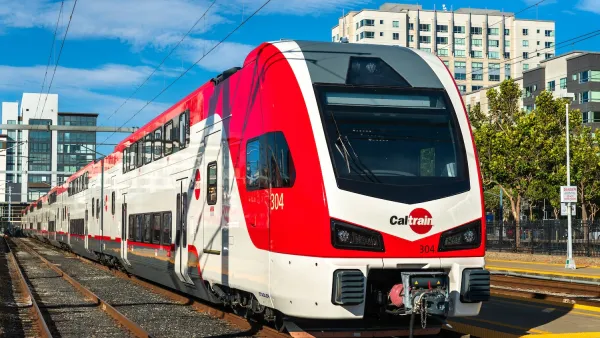
Passengers Flock to Caltrain After Electrification
The new electric trains are running faster and more reliably, leading to strong ridership growth on the Bay Area rail system.
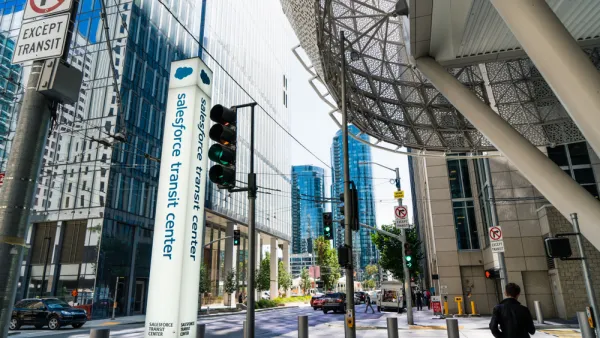
San Francisco Tunnel Project Balloons in Cost
The plan to extend a Caltrain line to the Salesforce Transit Center is now expected to cost $6.7 billion as the agency faces a budget shortfall for its electrification project.

Planetizen Federal Action Tracker
A weekly monitor of how Trump’s orders and actions are impacting planners and planning in America.

The state-sanctioned urbicide of Austin
People don’t kill cities. Freeways do.

US to reduce Colorado River water deliveries to Mexico
A new Colorado Treaty amendment reduces Mexico’s Colorado River water allocation by 250,000 acre feet.

Baltimore to break ground on $50 million Transit Priority Project
The project will bring faster bus trips, safer streets and better bike connections to Baltimore.

Airbnb launches $250 million 'last-dollar financing' housing accelerator, makes first investment in Austin
The company will put $6.4 million towards affordable housing development in Texas’ capital.

Guerilla urbanists are building DIY bus stop benches in Chicago
A before-and-after of one of the bus stops with a new bench. The new benches are not officially sanctioned or permitted, but the residents who placed them hope they will be the start of a network of DIY benches across the city.

FREE Course: Walkable City 1: Why Walkability?
After describing his path towards focusing on walkability as the essence of good planning, Jeff Speck marches through his five principal reasons for making more walkable places.
Reinventing Malls: Planning Alchemy—Turning Gray Fields Into Gold
The course focuses on the opportunities and imperatives that shape reinvention of mall sites.

Eagle County Government
Harvard University Graduate School of Design
Nashville Planning Department
The Architects Foundation
University of Cincinnati Online
The Pocatello Development Authority
The Urban Renewal Agency of the City of Pocatello
Journal of the American Planning Association