The world is watching Iran right now through the narrow lens of conflict. When governments see the world through a target reticle, smoke fills the frame — and the places people actually live get ignored.


At night in Isfahan, people gather beneath the arches of Khaju Bridge. Some sit in the stone chambers built into the bridge’s structure. Others lean against its railings, listening as voices echo over the water. Singing drifts through the vaulted spaces while strangers pause to listen. This is a country divorced from the headlines that define it.
The world is watching Iran right now through the narrow lens of conflict. When governments see the world through a target reticle, smoke fills the frame — and the places people actually live get ignored.
Walk long enough in any city — Tehran, Moscow, Washington, Beijing — and the same pattern appears. Lovers find benches. Old men claim corners for backgammon. Kids invent games in leftover spaces adults forgot to design. This is the country underneath every government, the one people actually live in, and it rarely makes the news.

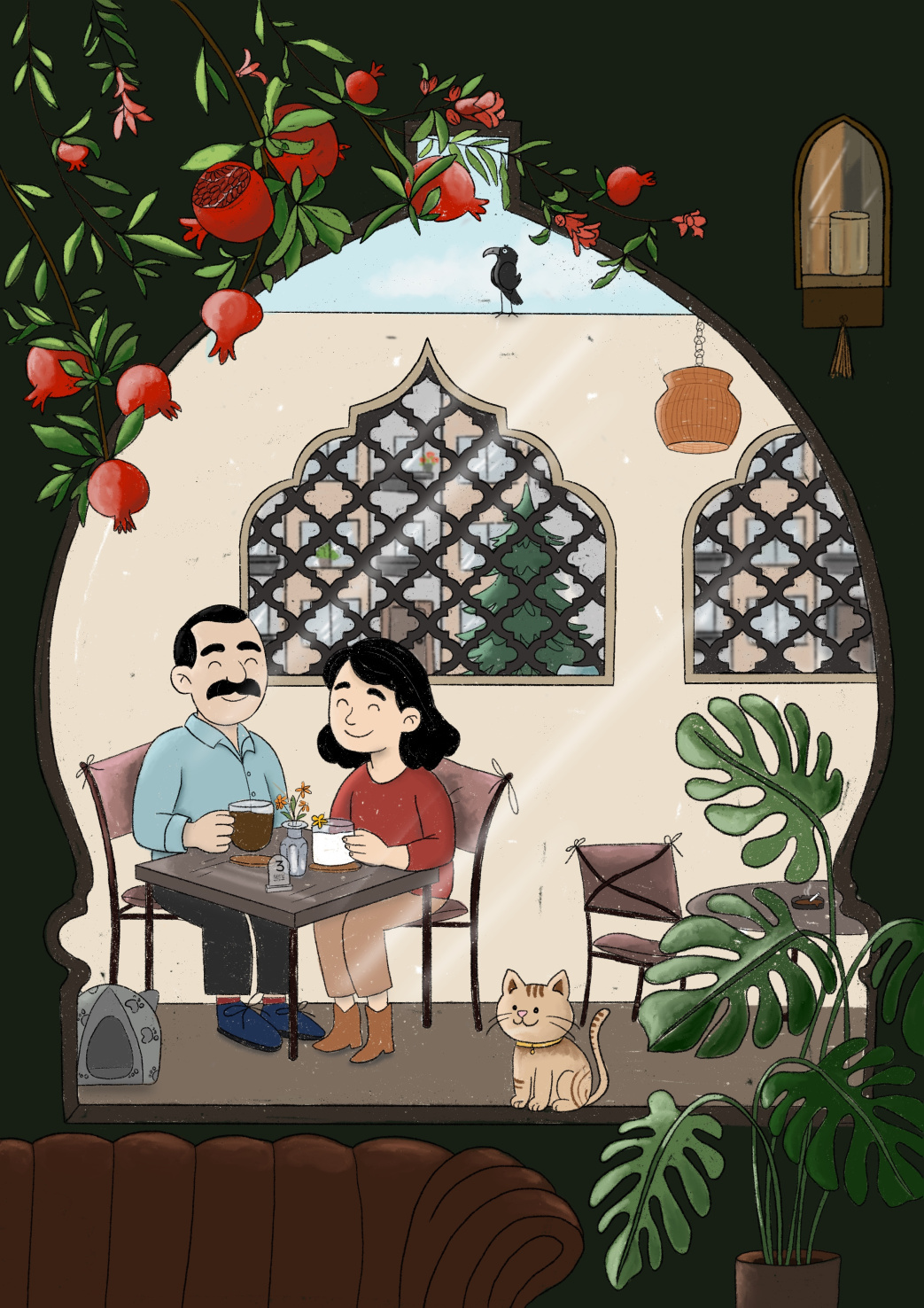
For everyday people in Tehran, daily life might mean a long walk along Pahlavi Street with no particular destination, the city’s longest avenue lined with old plane trees, where the walking itself becomes the point. In Bandar Abbas, it’s a quiet pier where someone goes during hard moments to sit with the sea. In Mashhad, it’s a small café courtyard with a pomegranate tree and a resident cat, the place where someone once met their future spouse. Beyond the typical landmarks, these are the places where people talk, grieve, celebrate, or just sit and catch their breath.
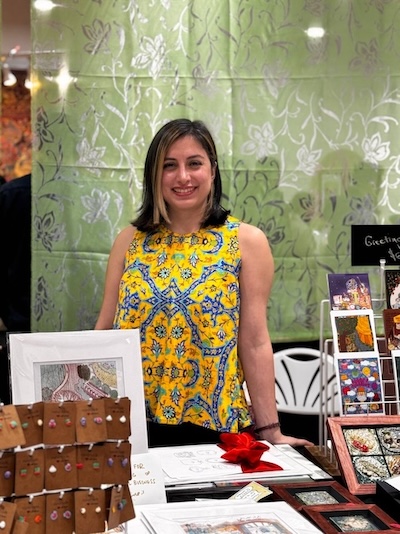
That gap, between big political stories and real life, is where Lili Razi works. She’s an Iranian-American artist and urban designer in Philadelphia, focused on how everyday spaces hold memory and identity. Her approach is simple: pay attention first. A lot of placemaking skips that step.
Before she left Iran for the United States, her family worried about the uncertainty ahead. Emigration is rupture, and families feel it. What was unusual was her response: she sat them down at the kitchen table and approached their fears the way she would later approach community work — listening carefully, mapping their concerns, researching possibilities, presenting findings. The woman hadn’t finished packing and she was already doing what she would spend her career doing.
That instinct had already shaped her early work in Tehran, where her undergraduate studies put her directly into the city’s streets and neighborhoods, examining how ordinary people move through and claim one of the world’s most complex urban environments. That curiosity followed her to Rutgers University–Camden, where she earned a Master of Public Affairs and Community Development, and eventually into the American placemaking field. She entered already carrying the right questions.
Her latest project responds to a problem familiar to anyone who studies cities: entire societies get flattened into political caricatures.
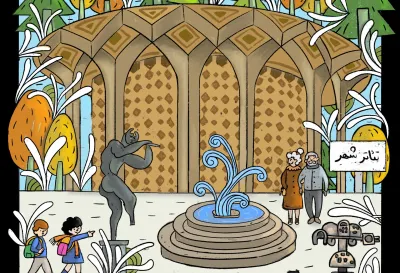
“Iranian Places: Iranians’ Favorite Public Spaces” documents 45 places across 20 cities and six climate zones, built entirely from community voice. Participants described their favorite places in their own words. A collective of illustrators — Arteam Group, mostly women, though several men also contributed — translated those stories into drawings rather than photographs. The choice is deliberate. Illustration forces you to reveal what mattered, not just what was visible. It captures atmosphere and memory in a way a photograph often can’t.
Nature (24%), parks (20%), and bazaars (16%) dominate the responses. The places people chose are where life actually happens. It’s a pattern that urban planners know well but policymakers tend to overlook. Nobody in her survey submitted a nuclear facility as their favorite place.
One person celebrated a birthday deep in a forest, blowing out a candle under the trees. Another went to the water before sunrise after a sleepless night and found calm in the wind and the waves. A 65-year-old retired teacher in Mirash watches young people leave and wonders what the village is becoming — and still calls it his favorite place. A woman describes Persepolis as a place that returns her to a sense of pride and ownership over a history that belongs to her. Not an archaeological site, but a homecoming.
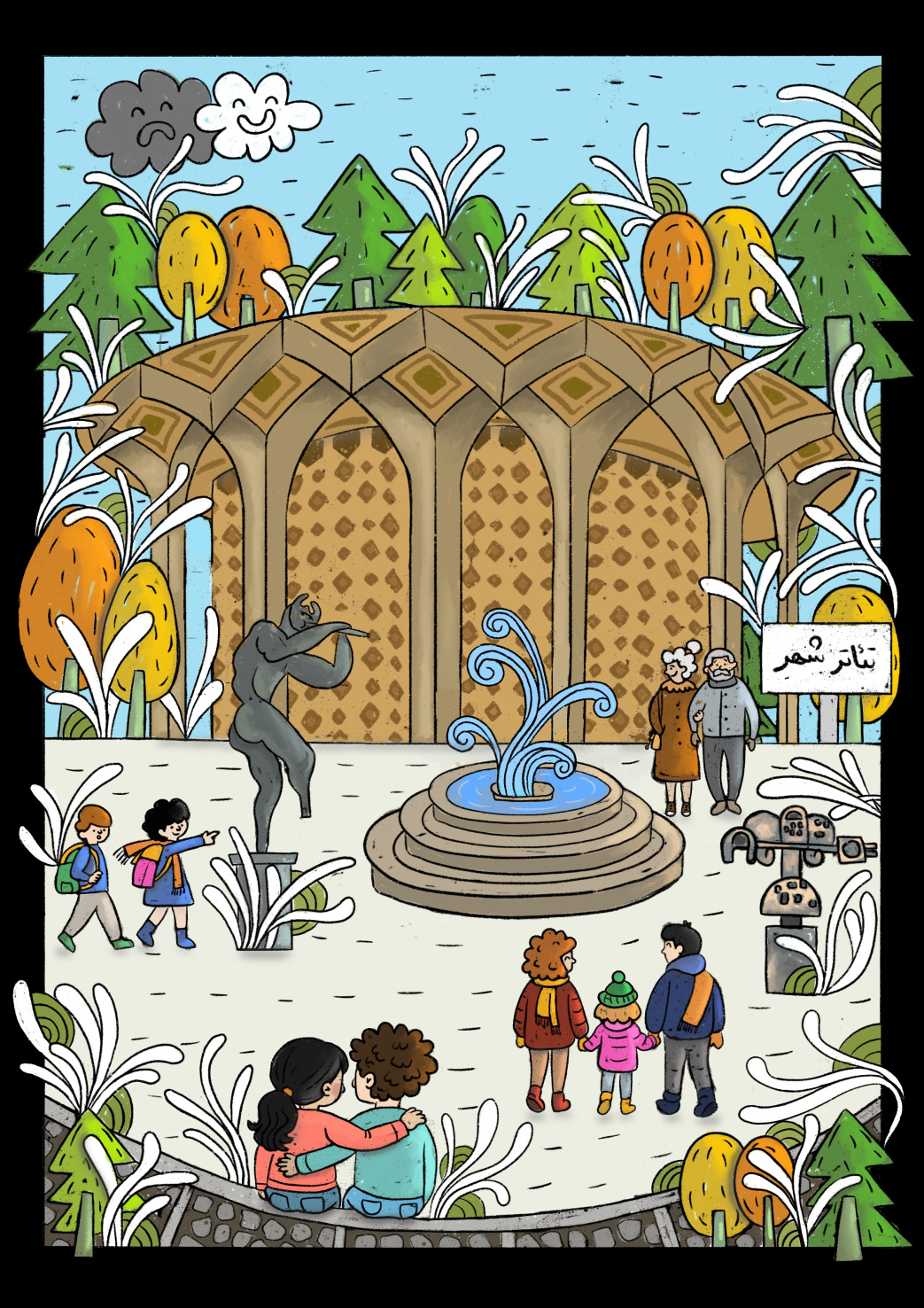
Taken together, the answers are simple: people experience their country through the places that hold their lives. Markets connect neighborhoods and economies. Streets become informal meeting grounds. Parks provide breathing room in dense cities. The planners call it infrastructure. The people in this project call it belonging.
It’s worth naming the harder story these places carry. Iran’s public spaces have been sites of joy, but also profound suffering — women arrested on street corners, protesters killed in city squares, a regime that has spent 47 years attempting to control how ordinary people move through and inhabit public life.
Razi’s project does not document that layer directly. Most of her collaborators are inside Iran, living these realities, and they are trying to bring a more human view — one that centers the lives people actually live. The sunset boat ride, the backgammon bench, the café where someone fell in love. This is what the regime has failed to extinguish, and what the collateral destruction of war now threatens to put at risk.
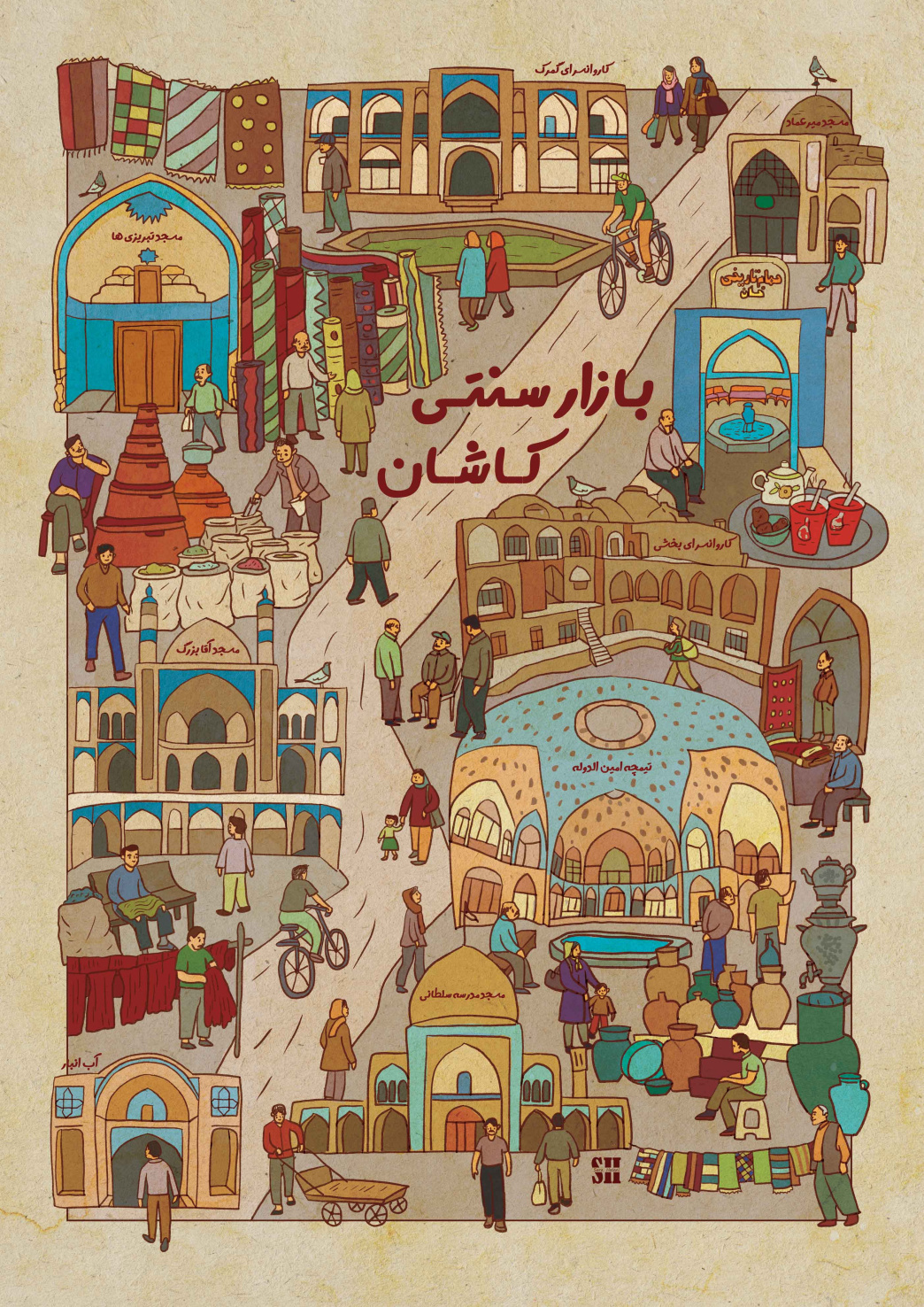
Underneath every government is a country people actually live in — and Lili Razi and her collaborators are documenting theirs, one beloved place at a time.
Follow the project at @placemakingmosaic.
—
Lili Razi is an Iranian-American artist, curator, and urban designer based in Philadelphia, where she works as a project manager at Mural Arts Philadelphia. With training in urban studies in Tehran and a Master of Public Affairs and Community Development from Rutgers University–Camden, her work explores how everyday public spaces carry memory, identity, and community life.
Ryan Smolar is Director of PlacemakingUS, a national network advancing community-driven approaches to public space, local economies, and cultural activation. He has traveled to more than 50 countries studying how placemaking, resilience, and local food systems shape everyday life and civic identity through the global PlacemakingX network.
“Iranian Places: Iranians’ Favorite Public Spaces” grew out of a 2024 PlacemakingUS Public Realm Roundtable in New York City, where Razi found herself increasingly restless. Practitioners were talking about public space—food, art, green infrastructure, pedestrian streets—but culture kept falling out of the conversation. For many people, the places that matter most were never designed at all. A Community Engagement grant funded the place mosaic work, and the Arteam Group has now produced over 90 works across the full collection.

The Parking Lot Maternity Leave
New parenthood is the stress test of suburbia. I’ve learned the hard way just how spectacularly it fails.
“Skin, Like a City, Will Tell You if You’ve Ignored its History”
Once an urban planner, Sean Colgrave traded in infrastructure for ink when he became a tattoo artist. Now he says: one profession has a lot to learn from the other.
William Whyte’s Seminal Urban Film Restored
‘The Social Life of Small Urban Spaces’ changed the way planners view public space and ushered in a new way of understanding urban patterns.

Planetizen Federal Action Tracker
A weekly monitor of how Trump’s orders and actions are impacting planners and planning in America.

The state-sanctioned urbicide of Austin
People don’t kill cities. Freeways do.

US to reduce Colorado River water deliveries to Mexico
A new Colorado Treaty amendment reduces Mexico’s Colorado River water allocation by 250,000 acre feet.

5 New England states march closer to 800 megawatt wind energy project
Securing federal approval for the project may be complicated under the Trump administration, which has historically been hostile towards domestic wind power.

Baltimore to break ground on $50 million Transit Priority Project
The project will bring faster bus trips, safer streets and better bike connections to Baltimore.

Airbnb launches $250 million 'last-dollar financing' housing accelerator, makes first investment in Austin
The company will put $6.4 million towards affordable housing development in Texas’ capital.

FREE Course: Walkable City 1: Why Walkability?
After describing his path towards focusing on walkability as the essence of good planning, Jeff Speck marches through his five principal reasons for making more walkable places.
Reinventing Malls: Planning Alchemy—Turning Gray Fields Into Gold
The course focuses on the opportunities and imperatives that shape reinvention of mall sites.

Eagle County Government
Harvard University Graduate School of Design
Nashville Planning Department
The Architects Foundation
University of Cincinnati Online
The Pocatello Development Authority
The Urban Renewal Agency of the City of Pocatello
Journal of the American Planning Association

