New parenthood is the stress test of suburbia. I’ve learned the hard way just how spectacularly it fails.


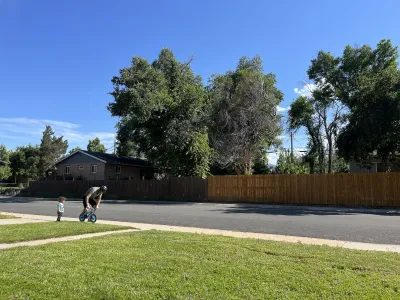
Apples and oranges
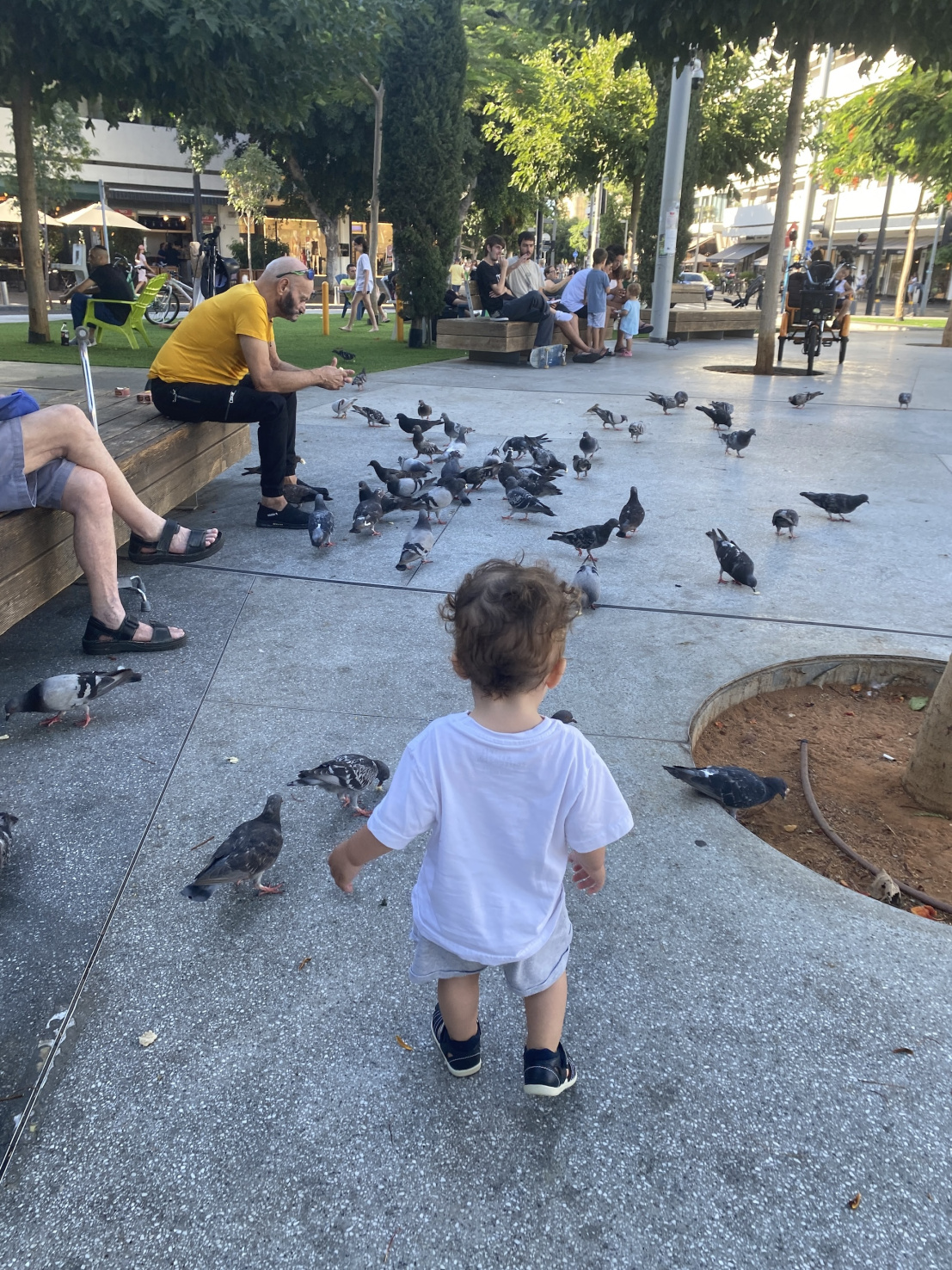
My oldest son was born in an urban paradise. He had his first cry in a hospital just a 15-minute walk from our apartment in Tel Aviv. His first roll happened in the park down the street—a happy, chaotic green patch filled with life. His first steps? In the tiny lobby of our building. His first croissant came not long after.
I was lucky enough to spend the first eight months of his life at home with him. Or rather, outside with him. In sunny Israel, the streets were our kingdom. We walked everywhere; when we got tired, we hopped on a bus home. We ran errands without touching a car, saving it exclusively for weekend trips to visit family and friends. Our days were dotted with baby activities, generously offered for free by the municipality, and fueled by too much coffee and way-too-expensive brunches.
Of course, it wasn’t perfect. My stroller — and my emerging identity — didn’t fit through every doorway. Bus drivers, though usually kind, often ran out of patience when yet another mom needed help getting off, and some sidewalks just weren’t made for sleeping babies. Construction sites turned us into crane fanatics but also made fresh air harder to come by. Yet, in that delicate, foggy time after giving birth, the city gave me comfort. There was something deeply soothing in the nighttime background noise of vague conversations, footsteps, or someone yelling into a phone. These tiny sounds reminded me I wasn’t alone. Someone else was always awake.
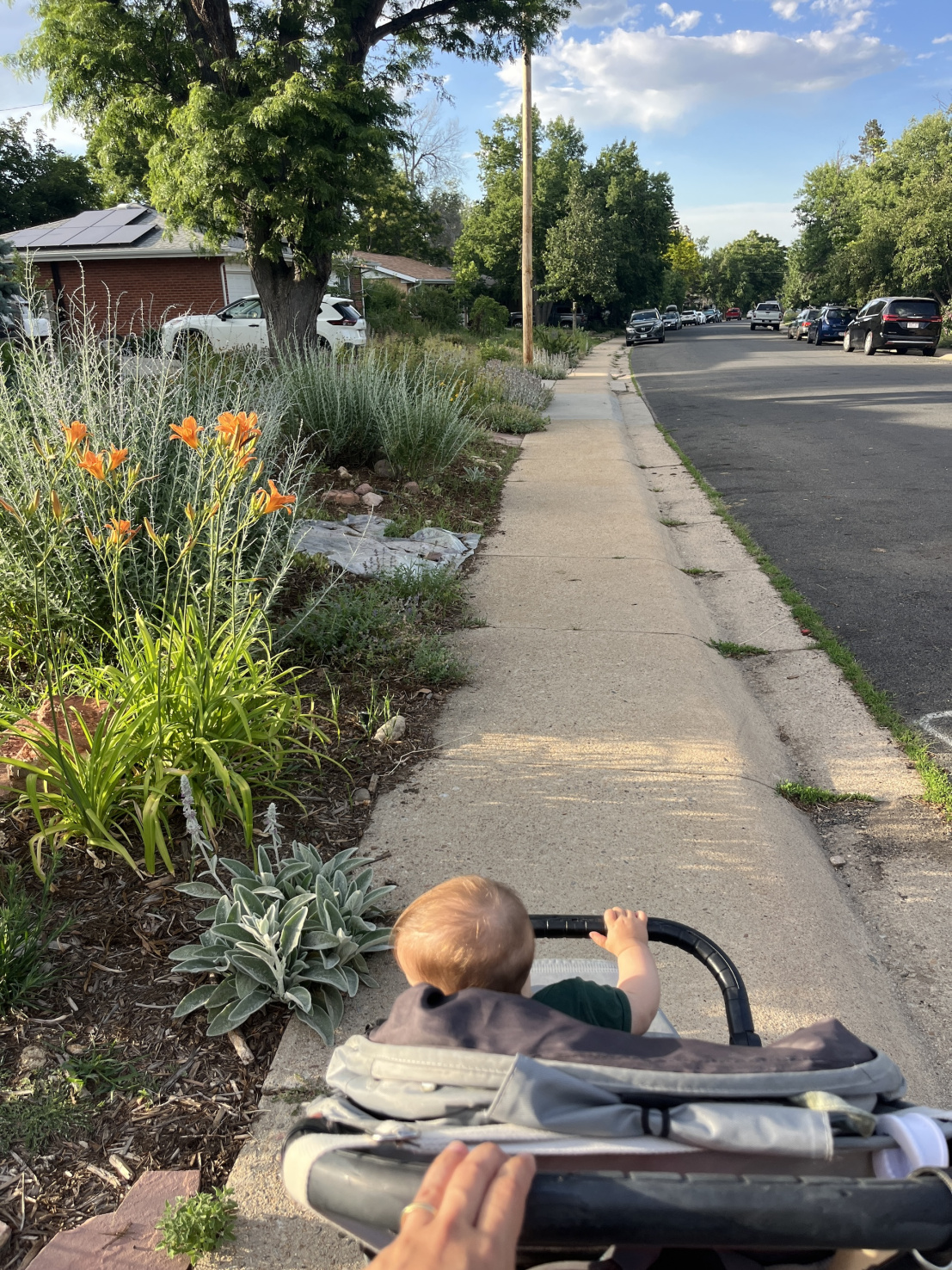
Then came my younger son, born in Boulder, Colorado. A paradise, no doubt, but not of the urban kind. Though technically a city, Boulder is more of a spacious suburb — a quiet town with far too many neighborhoods and far too few parks where you can also buy a cup of coffee. My youngest baby will probably learn to climb mountains before he learns the difference between ice cream and sherbet, and that’s perfectly fine. Not everyone needs to live like a city dweller.
But as the urbanist mom that I am, I can’t help but analyze the core differences between my two maternity leaves. In the States, the "city adventure" is replaced by the car logistics. When I want to make something of my day beyond playing on the living room floor, I must use my car. I’m lucky to have a park and a shopping center within walking distance, but even so, the majority of my errands are a car ride away.
A car seat that goes both in your car and fits your stroller is something I never used in Israel; here, it is a survival necessity. Only parents who know the pain of a baby waking up every time you transfer them to a car seat can truly understand the struggle of trying to pull off a day of errands. Between naps, feeds, diapers, changing clothes, and changing moods (myself included), I never really had the time or the stamina to achieve much beyond grocery shopping. The "user journey" of a suburban parent is one of constant friction, and new parenthood entails fewer resources for actual community engagement.
The walk to nowhere
As an urbanist, I know the value of walking isn't just the destination. I would wander my days away in Tel Aviv even when I wasn’t going anywhere. But there’s a deeper issue with the suburban landscape: it isn’t just that I don’t have anywhere to go; it’s that I don’t get anything from the walk besides steps counted.
The walk itself isn’t interesting. There are no public, low-pressure, engaging places to be. If I want to stand in line for a good bakery, I do it in a boring and sometimes dangerous parking lot. When I’m done with my ”baby and me” class, the only place to hang out is the asphalt. If I want to have an ice cream, I have to sit at the table looking at a parking lot.
There are no urban plazas, no commercial fronts, no pocket parks, no hidden urban gems. This lack of public touchpoints is what creates the sense of alienation. Interest is manufactured where there is an outlier, a departure from the routine. In the city, this is provided by the "active ground floor": windows to look into, a street musician to watch, a colorful tile on a wall. In the suburb, the visual landscape is a repetitive loop of garage doors and manicured lawns. There are no messy play corners and no places to make accidental eye contact.
This is an inherent truth of the suburban landscape, and in fact, it is one of its most defining characteristics. It is only when you are alone with an infant all day that these seemingly small interactions and micro-amenities transform into literal lifelines. Even the simple ability to observe others - their pace, their mood, their dogs - makes you feel as though you are still part of the world, sleep-deprived as you may be. There is something therapeutic about being anonymous in a crowd, and something deeply human about being seen, even by strangers. In this sense, early parenthood serves as a vital stress test for street design and urban usage. It reveals the vulnerability of "delicate users" who simply have a heightened need for what every citizen deserves: a place to safely feel like themselves, to be intrigued by their surroundings, and to be recognized by their community.
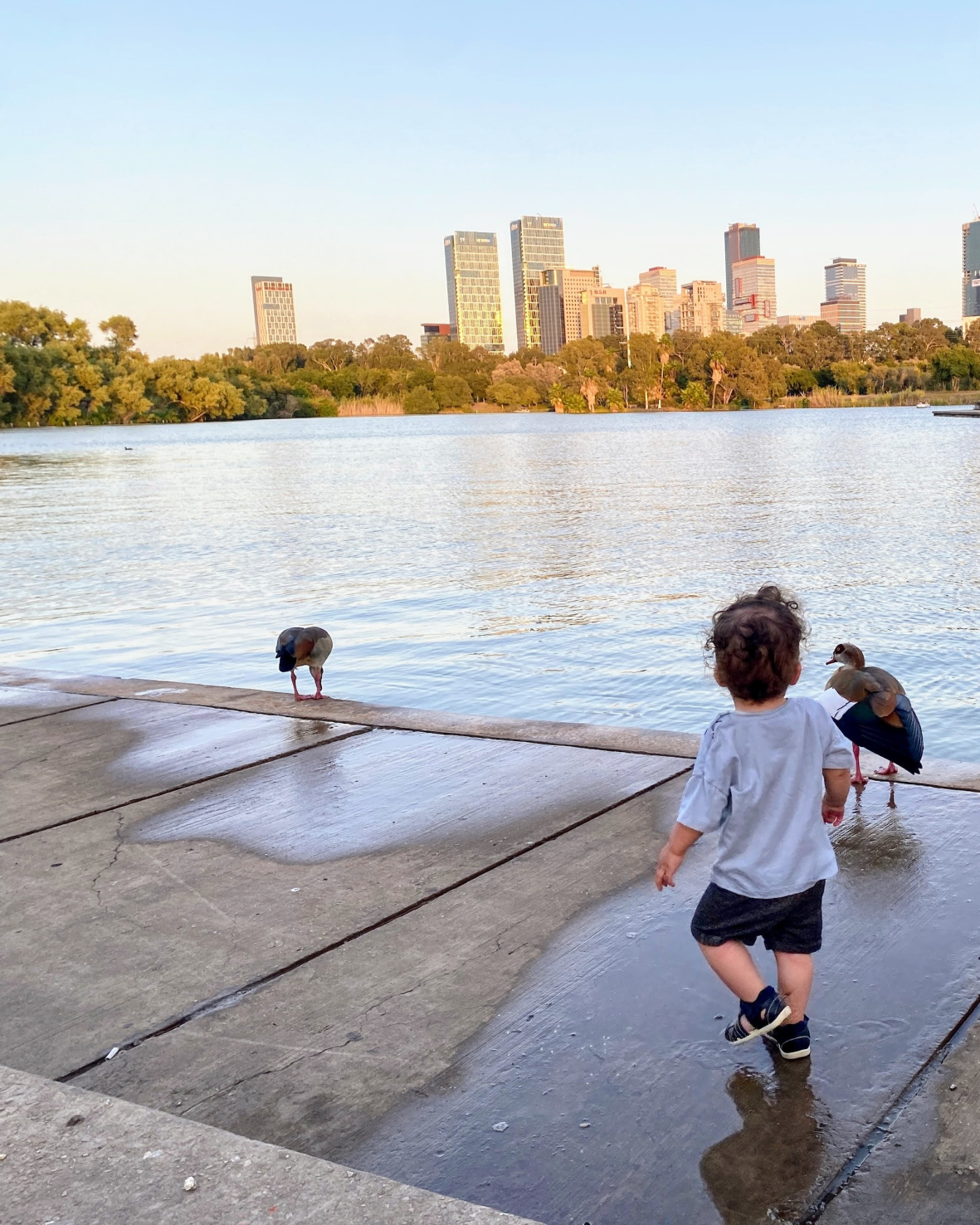
Even when being outside is the better option, the physical environment feels tailored for the "standard user" - the able-bodied person in a car - rather than the caregiver. I often walk around my neighborhood, but if my baby gets hungry, I’m stuck. The streets are green and inviting, but the grass is private property. My stroller fits fine on the sidewalk, but there’s no shade to protect us from the brutal Colorado sun.
My options are to stop on someone’s lawn and hope they’re charmed by the screaming baby, feed while walking (and sacrifice my back), or just head home. This is where "urban empathy" is missing. A bench is not just a piece of furniture; for a mother with an infant, it is a critical utility. Its absence is a design choice that dictates whether I am welcome in the public realm or confined to my private living room.
The safety of the crowd
I love our life in Boulder. It is full of friends and adventures, weather like nowhere else, and a whole lot of mountain air. And yet I think often about the privilege I had in Tel Aviv. Relatively good public transport, high street density, active ground floors, and "many eyes on the street" made my days there a pleasure — screaming baby and all. In a counterintuitive way, the more crowded it was, the safer it felt.
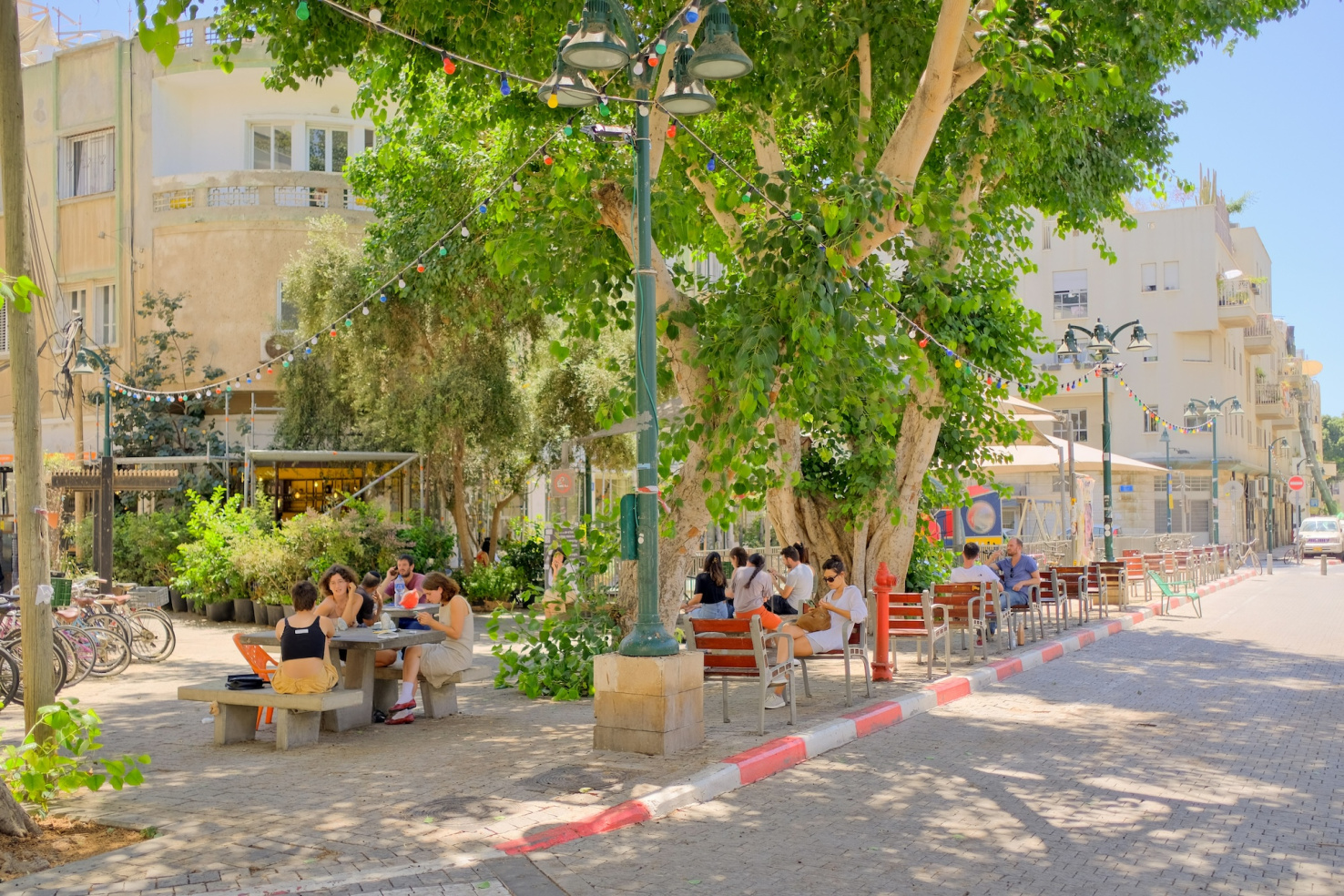
As Jane Jacobs famously argued, the safety of the street is maintained by a "complex, unconscious network of voluntary controls and standards among the people themselves." In Tel Aviv, if I couldn't fit my stroller in a small restroom, I would leave my baby outside with a stranger. It sounds crazy to the American ear, but the logic was sound: if there are a dozen women around, the collective "eyes" provide a layer of safety. In my quiet Boulder neighborhood, the silence is what feels unsettling. If only one person passes me on a 30-minute walk, the social contract is thin. In a time of life when I could use help at any given moment, there is quite literally no one around to ask.
Making space for the edge-user
Cities can either support us or isolate us, but that outcome is not set in stone. While the dream of changing zoning laws remains a necessary long-term goal, cities do not have to evolve only through formal policy-making. Small, intentional placemaking interventions that address the real needs of actual people – well-placed benches, consistent shade, and communal, "watched-upon" green spaces - can go a long way.
My baby and I walk in circles, but there is no story unfolding. No characters, no plot twists, no chance encounters. There is only the repetition of steps and streets. But our living room shouldn’t be the only place where life happens; we are just as entitled to the streets as any other user.
Cities do not need to be reinvented to support new parents; they simply need to make space for us by accommodating the needs of the edge-user. In such a fragile and foundational time of life, we all deserve the dignity of being "seen" by the streets we call home.
Tal Eldar is a Service Designer and behavioral researcher specializing in the intersection of urban psychology and inclusive design. Holding an M.A. in Political Science and Urban Studies, her work utilizes 'urban empathy' to map the relationship between the built environment and human well-being. By blending behavioral economics with extensive qualitative research, she translates human narratives into strategic insights for more resilient, human-centric urban environments. She explores these themes further at Street Jetlag.

How Urban Design Can Benefit Parents and Kids
Designing thoughtful, child-friendly public spaces can ease the burdens of modern parenting and offer safe spaces for children to learn self-reliance and resilience.

The Popsicle Test: What Makes a City Good for Children?
Low crime rates and affordable property preoccupy adults, but kids need something more: the ability to walk the streets and play out on their own. In The Guardian, Viv Groskop explores the "popsicle test" and other elements of child-friendly cities.
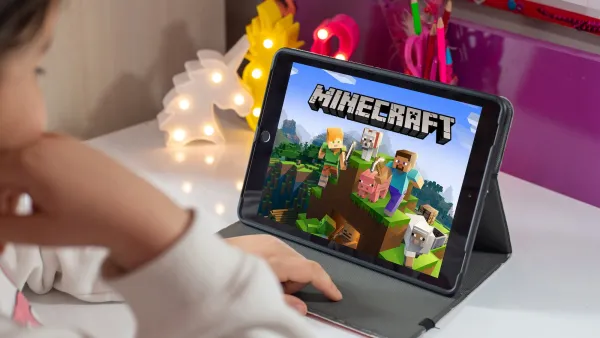
Children in 55 countries are redesigning their cities in Minecraft
A U.N.-backed program lets students and community members reimagine sites in their neighborhoods in the game — and translate them into real-life buildings.

Planetizen Federal Action Tracker
A weekly monitor of how Trump’s orders and actions are impacting planners and planning in America.

Chicago breaks ground on $3 billion megadevelopment
The new neighborhood, titled Foundry Park, will one day host 3,700 residences.

This MA town is drowning in its own sewage — and residents like it that way
Susan Murcott, a waste water expert, said if Carlisle didn't address their leaking sewage, the problem could turn “deadly.”

Iowa taxpayers are paying thousands to clean manure out of their water
While the Clean Water Act makes states responsible for regulating factory farms that discharge pollutants, Iowa has turned a blind eye to the polluting farms.

Amtrak cuts ribbon on Seattle Airo maintenance facility
The $250 million, nearly 100,000-square-foot building can house an entire Cascades Airo trainset.

To power data centers, Google seeks autonomous control of thousands of homes’ electricity
The tech company has signed a deal to indirectly pay Mid-Atlantic residents to reduce their power demand when the grid is strained.

FREE Course: Walkable City 1: Why Walkability?
After describing his path towards focusing on walkability as the essence of good planning, Jeff Speck marches through his five principal reasons for making more walkable places.
Reinventing Malls: Planning Alchemy—Turning Gray Fields Into Gold
The course focuses on the opportunities and imperatives that shape reinvention of mall sites.

City of Rosemead
Rutgers University, Edward J. Bloustein School of Planning and Public Policy
One Hundred Miles
The Architects Foundation
University of Cincinnati Online
Montrose County
The Pocatello Development Authority
The Urban Renewal Agency of the City of Pocatello

