A recent crash involving the former head of Uber’s self-driving division is drawing scrutiny once more to issues with Tesla’s ‘self-driving’ mode.


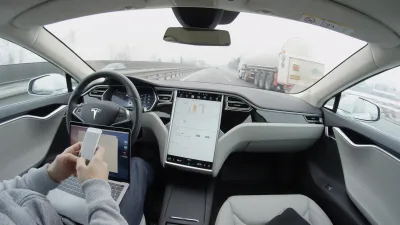
A report from Electrek and a recent crash are raising new questions about Tesla’s ‘full self-driving’ or FSD mode, which the report claims lulls drivers into “a false sense of security, making it harder to react when emergencies arise.”
In an article in Tech Times, Jose Enrico explains that FSD’s smooth operation can actually increase risk, reducing the human driver’s attention and engagement at key moments. “According to Boingboing, the Insurance Institute for Highway Safety found that prolonged use of driver-assist systems significantly increases driver distraction, with users more likely to check phones or divert attention.”
Enrico adds that the Chinese government has stricter market regulations on cars with autonomous features, barring automakers from labeling software as “self-driving” or “autonomous” when it isn’t. “[Chinese] automakers like BYD have adopted more transparent policies, even offering coverage for damages caused by certain autonomous features.”
Read the full story: Tesla Full Self-Driving Crash Raises Safety Concerns as Expert Warns of 'Supervision Trap'
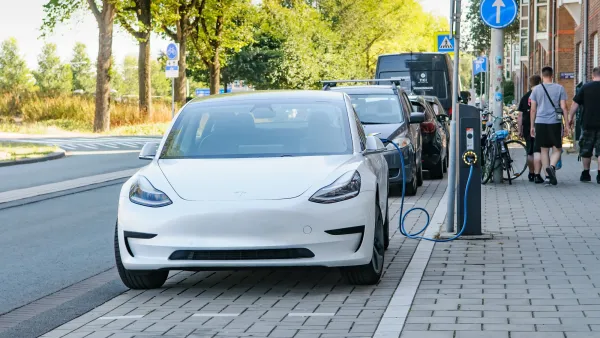
Tesla gains first European approval for 'Full Self-Driving' mode
The company will be allowed to sell cars with FSD in the Netherlands.
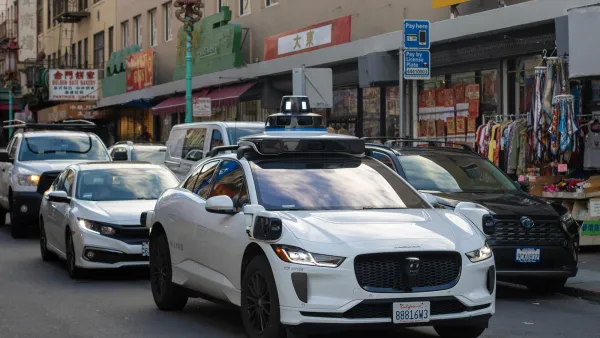
New Jersey bill would require AVs to use 3 sensing technologies — banning Tesla's robotaxi fleet
Elon Musk has been 'largely alone' in his conviction that radar and lidar sensors are not necessary for the safe operation of autonomous cars.
California Threatens to Suspend Tesla Sales Over ‘Deceptive’ Sales Language
The company says it won’t comply with an order to change its marketing of ‘self-driving’ features, which could lead to a 30 day sales ban and a possible manufacturing ban in the state.

Planetizen Federal Action Tracker
A weekly monitor of how Trump’s orders and actions are impacting planners and planning in America.

Eastern Nebraska is running out of electricity
Data centers and electrification are straining eastern Nebraska’s grid, throttling economic development.

Study reveals best places in the U.S. for cycling, walking
New research from Streetlight Data examines bicycle and pedestrian miles per capita in the 100 largest U.S. cities by population.

Next-generation nuclear reactors are coming to Texas
The reactors will not require towering containment structures thanks to new safety features.

California distributes $1.3 billion to prevent transit service cuts, bolster projects
Twenty-eight projects across California received a portion of the funding.

Pennsylvania Democrats have 15 affordability, clean energy bills for flipped state Senate
Bills in consideration include a bill supporting geothermal energy and a bill supporting solar on warehouses.

FREE Course: Walkable City 1: Why Walkability?
After describing his path towards focusing on walkability as the essence of good planning, Jeff Speck marches through his five principal reasons for making more walkable places.
Reinventing Malls: Planning Alchemy—Turning Gray Fields Into Gold
The course focuses on the opportunities and imperatives that shape reinvention of mall sites.

City of Charlotte
City of Rosemead
Rutgers University, Edward J. Bloustein School of Planning and Public Policy
University of Michigan School for Environment and Sustainability (SEAS)
Hunter College, City University of New York (CUNY)
The Architects Foundation
City of Cambridge
The Pocatello Development Authority
The Urban Renewal Agency of the City of Pocatello