The answer lies largely in political will.


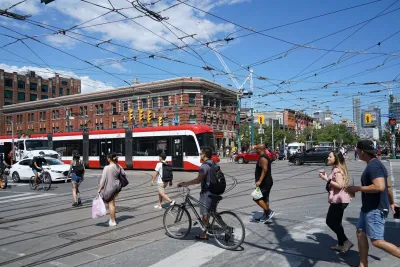
Why does Canada’s public transit cost so much less to build and get so many more passengers than transit lines in the United States? In an article for The McGill International Review, George Wu attempts to answer this question.
Wu points to some illuminating examples of this discrepancy: Montreal’s REM light rail system gets over 1.1 million passengers a day. Chicago, a city with a million more residents, records 200,000 fewer daily trips across its entire bus and rail system.
For Wu, the purpose of U.S. transit systems is one culprit. “Most US transit systems were designed with one specific goal in mind: funnelling commuters from the suburbs into downtown business districts, even though, in practice, the most common form of commute in North America has become suburb-to-suburb.” The gap in connections and frequency means commuters who have to switch lines often see their trips extended.
Another reason that Canadian transit is better-funded and more successful, Wu notes, is political will. While Canadian provincial governments such as Quebec’s offer strong backing to transit projects, “many public transport projects conceived in the United States go through long phases of political turmoil and remain in limbo for years before they are ultimately approved for construction and funding, if ever.”
Wu concludes, “It is striking how much a transit agency and a municipal government can accomplish when they work together toward a common goal—and how rarely that happens in the United States.”
FULL STORY: How Canada Is Beating the US in the Public Transportation Race

Is the Bus Still Running? Seriously… is the Bus Still Running??
Faced with increased operating costs and the end of pandemic-era federal support, many transit systems across the United States find themselves grappling with tough decisions.
Oklahoma City bets on transit
The city's mayor is urging residents to support a new sales tax that would fund transit expansion in the growing city.
Report: BUILD Act would strip over $2B in transit projects from California and New York alone
The proposed federal transportation bill would eliminate billions in funding from the Federal Transit Administration, the Federal Railroad Administration and other federal agencies that fund transit and multimodal transportation programs.

Planetizen Federal Action Tracker
A weekly monitor of how Trump’s orders and actions are impacting planners and planning in America.

The state-sanctioned urbicide of Austin
People don’t kill cities. Freeways do.

US to reduce Colorado River water deliveries to Mexico
A new Colorado Treaty amendment reduces Mexico’s Colorado River water allocation by 250,000 acre feet.

5 New England states march closer to 800 megawatt wind energy project
Securing federal approval for the project may be complicated under the Trump administration, which has historically been hostile towards domestic wind power.

Baltimore to break ground on $50 million Transit Priority Project
The project will bring faster bus trips, safer streets and better bike connections to Baltimore.

Airbnb launches $250 million 'last-dollar financing' housing accelerator, makes first investment in Austin
The company will put $6.4 million towards affordable housing development in Texas’ capital.

FREE Course: Walkable City 1: Why Walkability?
After describing his path towards focusing on walkability as the essence of good planning, Jeff Speck marches through his five principal reasons for making more walkable places.
Reinventing Malls: Planning Alchemy—Turning Gray Fields Into Gold
The course focuses on the opportunities and imperatives that shape reinvention of mall sites.

Eagle County Government
Harvard University Graduate School of Design
Nashville Planning Department
The Architects Foundation
University of Cincinnati Online
The Pocatello Development Authority
The Urban Renewal Agency of the City of Pocatello
Journal of the American Planning Association