Though disaster has been averted for now, by reneging on critical infrastructure commitments, the administration has set a “dangerous national precedent.”


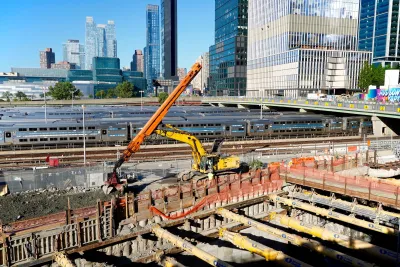
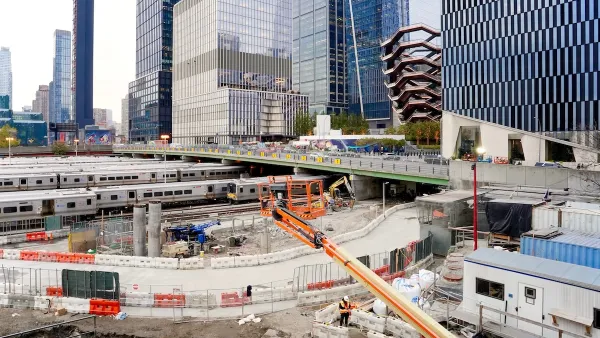
Last October, the Trump administration paused contractually obligated funding for Amtrak’s Gateway Tunnel Project, which would build two new rail tunnels under the Hudson River and rehabilitate the existing North River Tunnels, in service since 1910 and heavily damaged by Hurricane Sandy. After the project ran out of money on February 6th and more than 1,000 workers were sent home, a federal judge ordered to reverse the stoppage, releasing funds and allowing work to resume.
Tom Wright, President and CEO of the Regional Plan Association (RPA), spoke unequivocally about the matter at a webinar, Gateway at Risk: “This sets a dangerous national precedent.” If the federal government can renege on any commitment it has made, he posed, “what does that mean for large scale infrastructure projects nationwide? How is a company going to bid on a project not having full confidence that the federal government would honor its obligations, not knowing if the financing is clear?” California, following the cancellation of $4 billion in grant funding for California High Speed Rail, has decided that “the federal government is not a reliable, constructive, or trustworthy partner.” New York City Mayor Zohran Mamdani has also spoken about the need to “Trump-proof” the city’s economy due to the federal government’s instability.
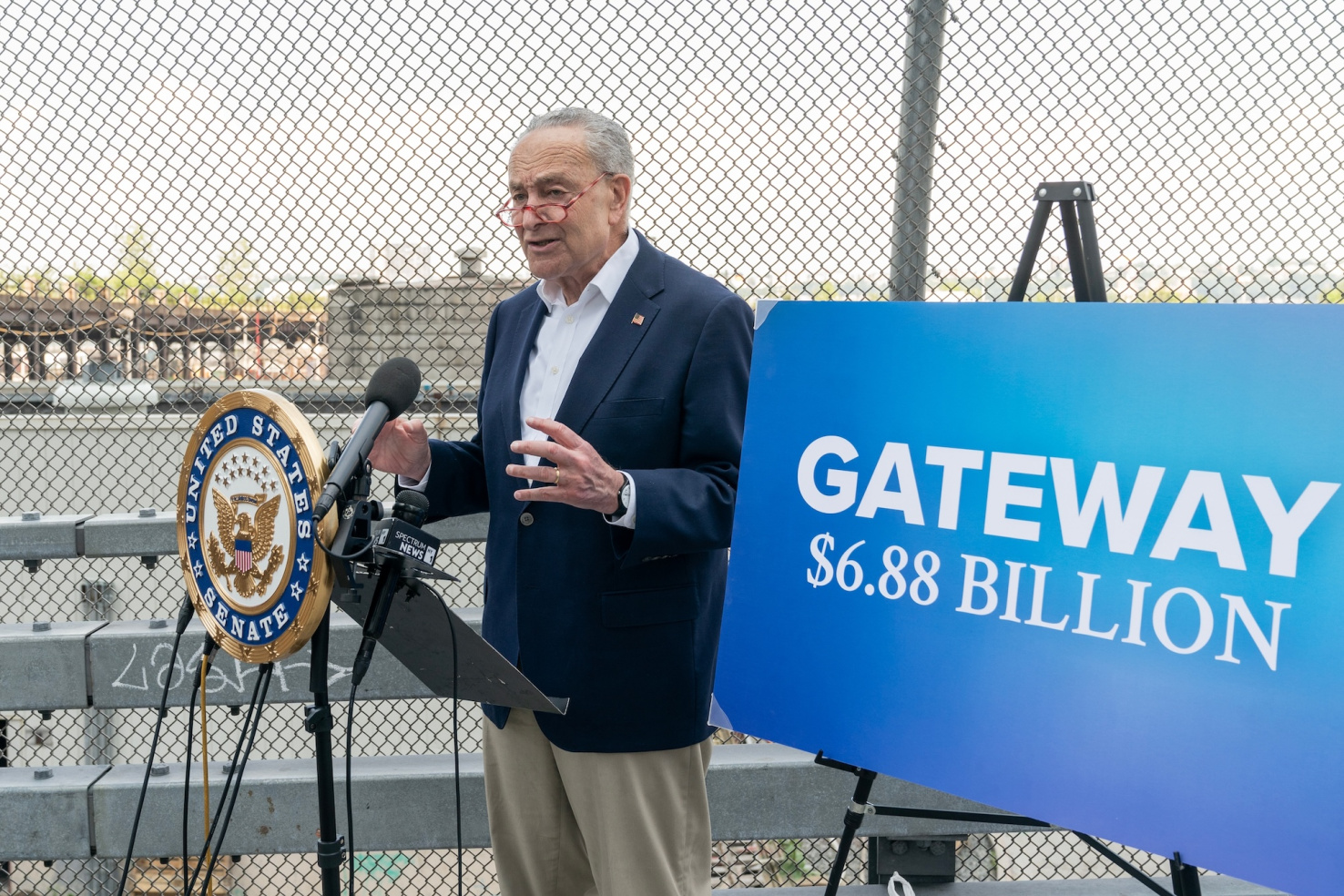
Infrastructure projects such as Gateway are not like tariffs, which can be raised one day and lowered the next. They require long timelines, big budgets, and consistent commitment. The costs of even a six-month delay, the RPA estimated, could cost in the range of $720 million to $1.34 billion. The costs of tunnel failure would be even more disastrous. If one of the existing tunnels were to shut down, train capacity would decrease 75 percent, causing an estimated $16 billion impact to the local economy, and a decline of property values of around $22 billion. But these impacts are felt beyond dollars. This would have impacts beyond the nearly 200,000 daily commuters that rely on the tunnels. 250,000 drivers, nearly half of whom drive outside of Manhattan, would have longer commutes, with over half of commutes increasing by 30 minutes or more. This means less time that parents can spend with their children and loved ones, missing dinners, football games, and dance recitals.
While the crisis appears to have been averted for now, this administration has shown it is willing to use infrastructure funding to threaten the livelihoods of millions of Americans. The Gateway Tunnel is not an abstraction, nor does its importance fluctuate with election cycles; it is necessary relief for a century-old artery in the busiest rail corridor in the country. The Trump administration often speaks of renewal and greatness, but greatness is not measured by reverence for past achievements. It is measured by the willingness to achieve new great things. A country does not become strong by pointing at bridges its grandfathers built. It becomes strong by building bridges (or tunnels) that its grandchildren will inherit.
Julian Wexer is a planner at Topology. Growing up in New York City, Julian has always been aware of the importance of vibrant, walkable spaces and carries this sensibility with him in his career as a planner. Julian works to create more livable places through effective and holistic land use implementation, where his work focuses on land use applications, zoning, and zoning officer.

Judge Delays Restoration of Gateway Tunnel Funding
The judge that ordered the administration to release federal funds for the New York-New Jersey tunnel project approved a temporary stay, delaying the release by at least a few more days.
NYC-NJ Gateway Tunnel Project to Stop Work Next Week if DOT Doesn’t Release Funding
The federal government hasn’t released funding frozen during last October’s government shutdown.
Trump's Threat to “Terminate” NYC Tunnel Project Could Kill the Penn Station Redevelopment's Purpose
The Hudson River tunnels are a key rail connection between the Northeast and the South.

Planetizen Federal Action Tracker
A weekly monitor of how Trump’s orders and actions are impacting planners and planning in America.

The state-sanctioned urbicide of Austin
People don’t kill cities. Freeways do.

US to reduce Colorado River water deliveries to Mexico
A new Colorado Treaty amendment reduces Mexico’s Colorado River water allocation by 250,000 acre feet.

Mamdani overhauls NYC's Vision Zero plan with 100 new policy goals
The overhaul aims to reduce traffic deaths and make streets safer for pedestrians, cyclists and drivers through lower speed limits, new safety infrastructure and more.

Amtrak not solely to blame for New Jersey commuter rail's unreliability, report finds
A new study from the Garden State Initiative found that NJ Transit’s budget grew 20% across a 4 year period, but reliability declined significantly over the same period.

EPA erases limits on planet-warming pollution from power plants
Under Monday’s plan, power plants would still have some limits on how much mercury, arsenic and other contaminants they can emit.

FREE Course: Walkable City 1: Why Walkability?
After describing his path towards focusing on walkability as the essence of good planning, Jeff Speck marches through his five principal reasons for making more walkable places.
Reinventing Malls: Planning Alchemy—Turning Gray Fields Into Gold
The course focuses on the opportunities and imperatives that shape reinvention of mall sites.

Eagle County Government
Harvard University Graduate School of Design
Nashville Planning Department
The Architects Foundation
University of Cincinnati Online
The Pocatello Development Authority
The Urban Renewal Agency of the City of Pocatello
Journal of the American Planning Association

