Millions in federal dollars for safe streets could be in jeopardy after federal agencies changed conditions for grant funding.



Changes to federal funding could discourage Detroit’s efforts to improve traffic safety through road diets, reports Malachi Barrett in Bridge Detroit.
“The Trump administration’s Safe Streets and Roads for All program makes it more difficult to receive funding for projects that reduce lane capacity for vehicles, according to a funding notice issued last year.” Now, the city may have to make changes to a project funded by a $12.5 million federal grant that would redesign Gratiot Avenue, one of the city’s most dangerous corridors.
According to Barrett, “The change in federal policy comes as Detroit moves forward with various planning efforts to address unsafe streets, affecting several grant-funded projects.” These include a Safe Routes to School program and an update to its 2006 non-motorized plan and its 2022 Streets for People Safety Action Plan. “The city urges residents to paint murals on crosswalks and residential streets to encourage vehicles to slow down” — a program that could face backlash from federal authorities, who have required cities to remove decorative crosswalks.
FULL STORY: Feds won’t fund Detroit road diets

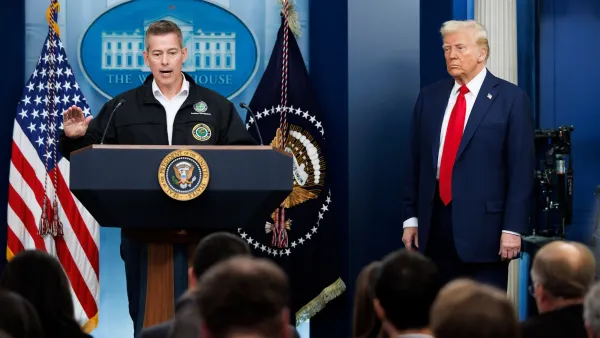
USDOT secretary plans to pull $1.73B from 'DEI bike lanes'
The move jeopardizes dozens of road safety projects around the country.

USDOT Blocks Federal Funding for Traffic Cameras
Applicants to the Safe Streets and Roads for All grant program will not be allowed to use funds for automated traffic enforcement.
How Cities are Spending Safe Streets Funds
New federal grant programs are injecting millions of dollars into road safety projects in an effort to stem the alarming growth of traffic deaths on U.S. roads.

Planetizen Federal Action Tracker
A weekly monitor of how Trump’s orders and actions are impacting planners and planning in America.

The state-sanctioned urbicide of Austin
People don’t kill cities. Freeways do.

US to reduce Colorado River water deliveries to Mexico
A new Colorado Treaty amendment reduces Mexico’s Colorado River water allocation by 250,000 acre feet.

5 New England states march closer to 800 megawatt wind energy project
Securing federal approval for the project may be complicated under the Trump administration, which has historically been hostile towards domestic wind power.

Baltimore to break ground on $50 million Transit Priority Project
The project will bring faster bus trips, safer streets and better bike connections to Baltimore.

Airbnb launches $250 million 'last-dollar financing' housing accelerator, makes first investment in Austin
The company will put $6.4 million towards affordable housing development in Texas’ capital.

FREE Course: Walkable City 1: Why Walkability?
After describing his path towards focusing on walkability as the essence of good planning, Jeff Speck marches through his five principal reasons for making more walkable places.
Reinventing Malls: Planning Alchemy—Turning Gray Fields Into Gold
The course focuses on the opportunities and imperatives that shape reinvention of mall sites.

Eagle County Government
Harvard University Graduate School of Design
Nashville Planning Department
The Architects Foundation
University of Cincinnati Online
The Pocatello Development Authority
The Urban Renewal Agency of the City of Pocatello
Journal of the American Planning Association