The Trump administration is pulling hundreds of millions allocated under the 2022 Inflation Reduction Act.


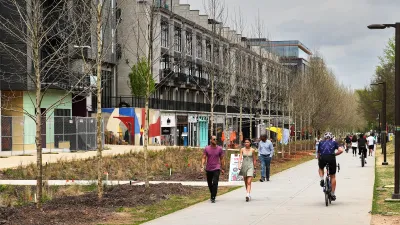
Walking and biking trail projects around the country are losing hundreds of millions in federal funding as the Trump administration targets programs perceived as related to ‘DEI,’ including the Neighborhood Access and Equity Program.
As Shalina Chatlani explains in News From the States, at least $750 million earmarked for walking paths and bike lanes was cancelled from that program. “In the aftermath of last year’s cuts and uncertainty over the future of federal funding, some states and cities have seen their projects completely stall, while others have found ways to move forward while decreasing their reliance on federal support.”
Now, cities and states are scrambling to find other funding sources and create new revenue streams or risk having to kill projects that were reliant on federal funding. A spokesperson for the Urban Institute noted that “It’s a pretty big hit across the board for the places that had built that into their financial plans.”
FULL STORY: Bike and walking trails lose hundreds of millions under Trump

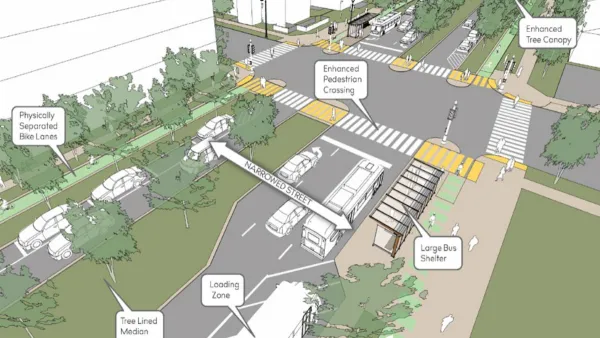
Trump Killed Funding for Milwaukee's Dreamy Multimodal Street. They're Determined to Make it Happen Anyway.
The administration rescinded a $36 million Reconnecting Communities grant aimed at redesigning a 2.6-mile segment of 6th Street.
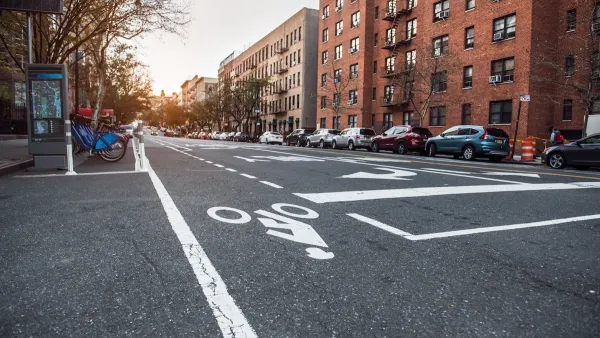
Safe Streets Grants: What to Know
This year’s round of Safe Streets for All grant criteria come with some changes.
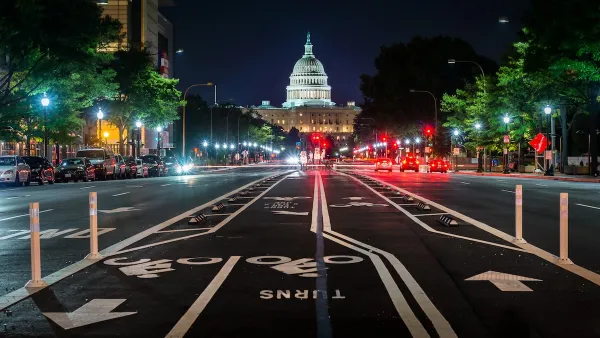
Safe Streets Funding in Jeopardy
The Trump administration is specifically targeting bike infrastructure and other road safety projects in its funding cuts.

Planetizen Federal Action Tracker
A weekly monitor of how Trump’s orders and actions are impacting planners and planning in America.

The state-sanctioned urbicide of Austin
People don’t kill cities. Freeways do.

US to reduce Colorado River water deliveries to Mexico
A new Colorado Treaty amendment reduces Mexico’s Colorado River water allocation by 250,000 acre feet.

Mamdani overhauls NYC's Vision Zero plan with 100 new policy goals
The overhaul aims to reduce traffic deaths and make streets safer for pedestrians, cyclists and drivers through lower speed limits, new safety infrastructure and more.

Amtrak not solely to blame for New Jersey commuter rail's unreliability, report finds
A new study from the Garden State Initiative found that NJ Transit’s budget grew 20% across a 4 year period, but reliability declined significantly over the same period.

EPA erases limits on planet-warming pollution from power plants
Under Monday’s plan, power plants would still have some limits on how much mercury, arsenic and other contaminants they can emit.

FREE Course: Walkable City 1: Why Walkability?
After describing his path towards focusing on walkability as the essence of good planning, Jeff Speck marches through his five principal reasons for making more walkable places.
Reinventing Malls: Planning Alchemy—Turning Gray Fields Into Gold
The course focuses on the opportunities and imperatives that shape reinvention of mall sites.

Eagle County Government
Harvard University Graduate School of Design
Nashville Planning Department
The Architects Foundation
University of Cincinnati Online
The Pocatello Development Authority
The Urban Renewal Agency of the City of Pocatello
Journal of the American Planning Association