The agency wants to speed up the rulemaking process to as little as 30 days.


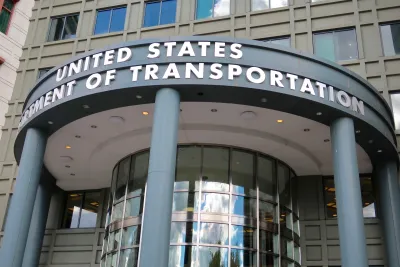
The U.S. Department of Transportation (USDOT) plans to use Google’s Gemini artificial intelligence tool to write federal transportation regulations, reports Jesse Coburn for ProPublica.
Gregory Zerzan, the agency’s general counsel, said in a meeting presenting the plan that “We don’t need the perfect rule on XYZ. We don’t even need a very good rule on XYZ,” saying the agency only wants “good enough” rules in high quantity.
Writes ProPublica:
These developments have alarmed some at DOT. The agency’s rules touch virtually every facet of transportation safety, including regulations that keep airplanes in the sky, prevent gas pipelines from exploding and stop freight trains carrying toxic chemicals from skidding off the rails. Why, some staffers wondered, would the federal government outsource the writing of such critical standards to a nascent technology notorious for making mistakes?
USDOT says the tool could help generate proposed rules much faster. “The goal is to dramatically compress the timeline in which transportation regulations are produced, such that they could go from idea to complete draft ready for review by the Office of Information and Regulatory Affairs in just 30 days,” according to Zerzan.
Critics of the decision warn that AI tools are not yet up to the task of generating complicated government regulations. “Just because these tools can produce a lot of words doesn’t mean that those words add up to a high-quality government decision,” said Ohio State University professor Bridget Dooling.
FULL STORY: Government by AI? Trump Administration Plans to Write Regulations Using Artificial Intelligence


New USDOT safety strategy highlights enforcement, embraces autonomous cars
The new National Roadway Safety Strategy emphasizes safety technology and enforcement and promises to further crack down on immigrant truck drivers with illicitly obtained licenses.
USDOT will stop enforcing a key civil rights law
The agency will no longer enforce Title VI, eliminating disparate impact protections for federally protected groups.

New DOT Beautification Council Will Guide the Aesthetics of Transportation Infrastructure
The council is tasked with creating a design guidebook to align with Trump’s preference for neoclassical architecture.

The state-sanctioned urbicide of Austin
People don’t kill cities. Freeways do.

US to reduce Colorado River water deliveries to Mexico
A new Colorado Treaty amendment reduces Mexico’s Colorado River water allocation by 250,000 acre feet.

New Jersey’s second-largest city bans standalone data centers
Jersey City will continue to allow co-location facilities, such as those meant for research institutions that store their own data.

Amtrak not solely to blame for New Jersey commuter rail's unreliability, report finds
A new study from the Garden State Initiative found that NJ Transit’s budget grew 20% across a 4 year period, but reliability declined significantly over the same period.

EPA erases limits on planet-warming pollution from power plants
Under Monday’s plan, power plants would still have some limits on how much mercury, arsenic and other contaminants they can emit.

Phoenix announces new on-demand transit service, more frequent RAPID buses
Both new services will launch in October, and are part of Phoenix's Project Effective Access Solutions for Easing Congestion.

FREE Course: Walkable City 1: Why Walkability?
After describing his path towards focusing on walkability as the essence of good planning, Jeff Speck marches through his five principal reasons for making more walkable places.
Reinventing Malls: Planning Alchemy—Turning Gray Fields Into Gold
The course focuses on the opportunities and imperatives that shape reinvention of mall sites.

Eagle County Government
Harvard University Graduate School of Design
Nashville Planning Department
The Architects Foundation
University of Cincinnati Online
The Pocatello Development Authority
The Urban Renewal Agency of the City of Pocatello
Journal of the American Planning Association